

Lethal injections are not typically administered by doctors, given executions are incompatible with their oath to protect lives.
Articles on Capital punishment
Displaying 1 - 20 of 60 articles

The constitutional prohibition of cruel and unusual punishment has shaped legal discourse around failed executions, but courts have not stopped states from attempting to execute the same person again.
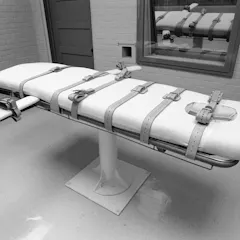
The constitutional prohibition of ‘cruel and unusual punishment’ has shaped legal discourse around failed executions, but courts have not stopped states from attempting to execute the same man again.

This development reverses decades of global movement towards abolition of the death penalty, while normalising executions in an occupied territory.

Florida leads the nation in executions in a year that has seen an increase in the number of inmates put to death nationwide.
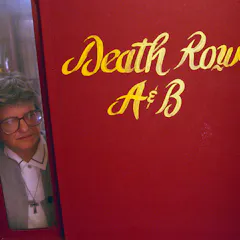
Catholic opposition to the death penalty is relatively new in the church’s history, but has helped shape public debate.

Countries that retain the death penalty often argue that the public supports it. In Zimbabwe, research helped challenge this narrative.

Death penalty experts Carolyn Hoyle and Parvais Jabbar explain the route to abolition in Zimbabwe for The Conversation Weekly podcast.

While some opposition is to be expected, indications are that the general Zimbabwean public will take the government’s lead on abolition.

A democracy must respect the right to life of all its citizens.
Ghana is a signatory to several international conventions that oblige it to guarantee the right to life.
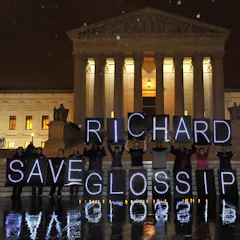
Despite support for clemency from Oklahoma’s top prosecutor, a death row inmate appears set to die on May 18.

Research finds that the threat of being sentenced to death has no bearing on how people contemplate violent crime.
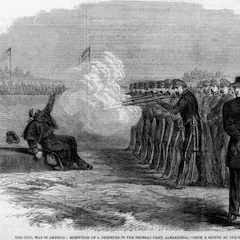
South Carolina has had trouble securing enough lethal injection drugs for executions. So it has turned to an old form of killing: the firing squad, last used in the Civil War.
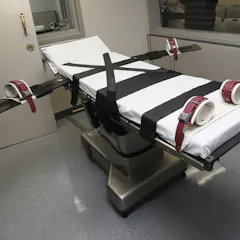
Alabama has paused the carrying out of death sentences after a series of cases in which the state struggled with the procedure.

In 1972, justices handed down a decision that attacked discriminatory and capricious death sentences. But it left the door ajar for states to continue the practice.
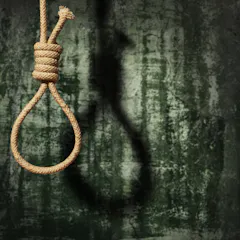
The Malawi court’s decision provides a roadmap for future challenges to the death penalty in other southern African countries.

The execution of Lisa Montgomery in the U.S. earlier this year demonstrates how society misunderstands the effects of mental illness and trauma on criminal behaviour.

The most commonly used justification for capital punishment is not actually supported by evidence.

Victim impact statements give survivors a voice in the criminal justice process. But research shows their wrenching personal testimonies may not bring closure and can add racial bias into sentencing.
Top contributors
-

William Nelson Cromwell Professor of Jurisprudence and Political Science, Amherst College
-
Director of the University of Oxford Death Penalty Research Unit, Centre for Criminology, Faculty of Law, University of Oxford
-
Professor in Human Rights and International Law, University of Newcastle
-
Professor, Director of the Institute for Crime and Justice Policy Research, Birkbeck, University of London, Birkbeck, University of London
-
Co-Founder and Co-Executive Director, Death Penalty Project and Visiting Professor of Practice, University of Oxford
-
Senior Lecturer, School of Law and Politics, Cardiff University
-
Term Assistant Professor, Department of Criminology Law and Society, George Mason University
-
Associate Professor of History, Emory University
-
Professor of Religious Studies, College of the Holy Cross
-
Associate Professor in Political Science and International Relations, The University of Western Australia
-
Professor of Law, University of Florida
-
Lecturer in Human Rights, University of Essex
-
Visiting Professor, War and Security Studies/International Genetics, King's College London
-
Associate Professor of Criminology and Human Rights, Swansea University
-
Postdoctoral Research Fellow, Laboratory for Innovation in Galleries, Libraries, Archives and Museums (iGLAM), UNSW