
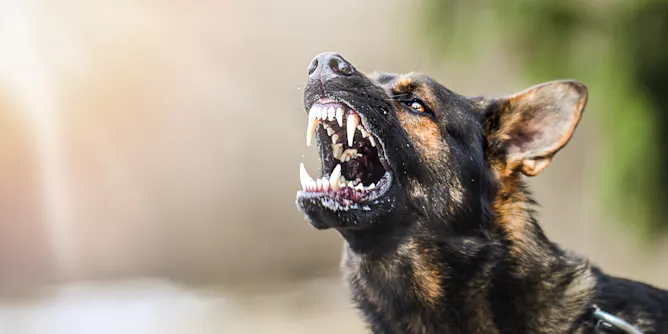
You can’t spot an aggressive dog just from its looks or breed. Genetic testing could better predict which dogs will bite.
Articles on Canines
Displaying 1 - 20 of 21 articles
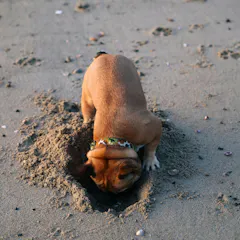
Dogs don’t stockpile food due to anxiety about impending disaster – they’re revealing how their evolutionary past still shapes modern behaviours.
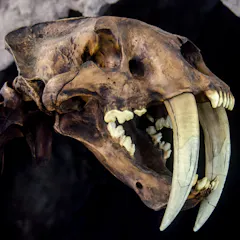
The long, sharp, blade-like canines found in many extinct predators evolved at least five times throughout history.
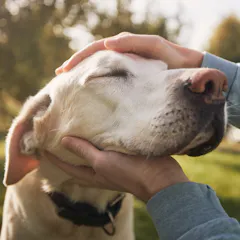
Dogs have rich emotional lives in which they can coexist with different species, and even forge bonds outside of their own species.
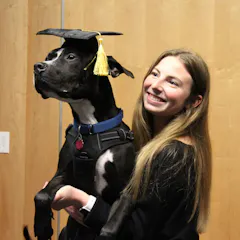
Shelter dogs get a new shot at life through a college course that teaches them how to be faithful companions once again.

Studies in Yellowstone National Park show plant matter (mostly grass) is found in up to 74% of wolf scats, suggesting the behaviour may be inherited from the beginning of doggy time.
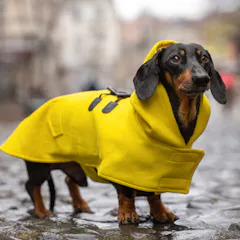
Want to check your canine friend isn’t suffering when an Antarctic blast hits? Start with their ears and feet.

With the right training, dogs can sniff out more than 90% of COVID cases.
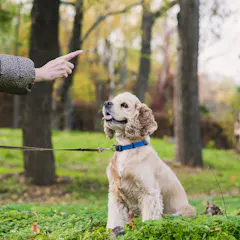
A happy and fulfilling relationship with your canine companion is built on good training

If you’re interested in the history, traits and skills of these amazing dogs – and perhaps have wondered about owning one yourself – here’s what you need to know.
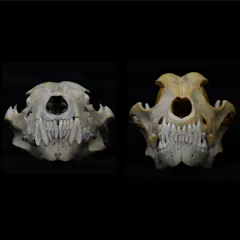
The researchers found tooth shape varied, depending on the types of food a carnivore regularly bites into – in much the same way we choose a kitchen knife depending on what we’re cutting up.

Who’s a good doggie? Sniffer dogs might one day be able to screen people for COVID-19 in large crowds. But not when they’re hungry or need a good lie down.
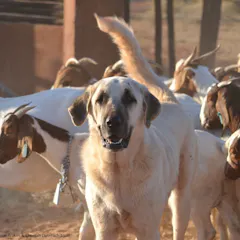
Livestock guarding dogs are considered a non-lethal method for farmers to control wild predators.

More than 300 dogs in WA and the NT have tested positive to canine ehrlichiosis, a potentially fatal disease transmitted by ticks.

Different councils and different rescue organisations can have different rules about how long they can keep animals.
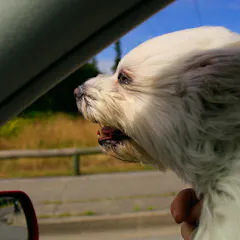
Travel can come with danger, so dogs have mostly evolved to avoid being over-adventurous. That said, dogs may see some kinds of travel as a chance to find things they want – like food or a mate.

Many dog owners have tales of their faithful companion licking away their tears. Researchers investigated whether, beyond being comforting, canines would actually take action to help an upset owner.

Dogs like a little TV – and researchers have been investigating why.
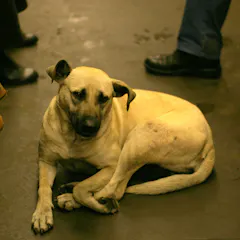
The answer lies in the history we share with our canine companions.
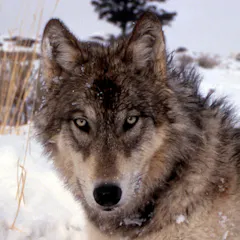
Wolves, lions and other large carnivores rely on meat for sustenance and there are only so many wild animals to go round. Sometimes, dinner means cow or sheep. Farmers can use guard dogs or protective…
Top contributors
-

Postdoctoral Researcher in Veterinary Science, University of Sydney
-
Associate Professor, Epidemiology, Deakin University
-
Senior Lecturer in Animal Science, Nottingham Trent University
-
Professor, School of Veterinary Science, University of Sydney
-
Postdoctoral Research Fellow, Evans EvoMorph Laboratory, Monash University
-
Emeritus professor, Murdoch University
-
Anthrozoologist, external advisor, Nottingham Trent University
-
Associate professor, Murdoch University
-
Professor, Chair of Computational Biology and Animal Genetics, University of Sydney
-
Associate Professor, School of Animal and Veterinary Science, Adelaide University
-
Environmental Social Scientist, Newcastle University
-
PhD candidate in Veterinary Bioscience, Adelaide University
-
Associate Professor of Psychology, Saint Francis University
-
Senior Post-Doctoral Research Fellow | Lecturer in Veterinary Public Health and Epidemiology, Murdoch University
-
PhD Candidate, School of Veterinary Science, University of Sydney