
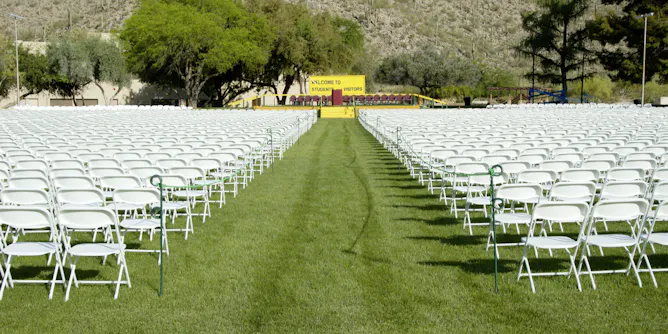
It’s no longer uncommon for scheduled university commencement speakers to have their invitations rescinded following backlash over their politics.
Articles on Cancel culture
Displaying 1 - 20 of 57 articles
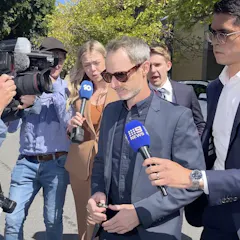
What do we tell a young person asking why their favourite book has disappeared – or why it hasn’t? A children’s writer wrestles with how to handle Craig Silvey’s books.

We live in an era that increasingly seeks to cancel authors for their political views, even when these views are not reflected in their creative works.
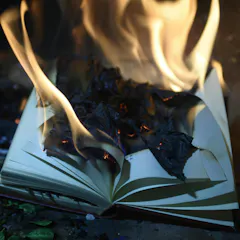
In That Book is Dangerous! author Adam Szetela argues we exist in a ‘Sensitivity Era’ and publishing is paying the price. Is he right?

When every difference of opinion risks being framed as offensive, space for genuine communication and learning disappears.
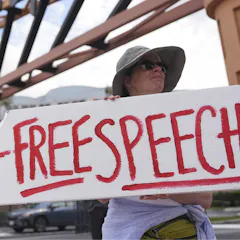
Whether left or right, practising the politics of cancellation is always a mistake. Inclusion is always the antidote and the best method of problem-solving.

There’s another, lesser-known reason Trump’s attacks on the important institution have ramped up in recent months.
The author of the new book ‘Attention and Alienation’ wonders if the online world can ever become a place where kindness and human flourishing are the prevailing ethos.
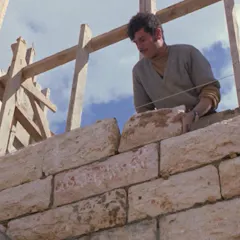
Cancellation of screenings of the documentaries ‘Russians at War’ (TIFF) and ‘Rule of Stone’ (RIDM) means that provocative and timely films are silenced.
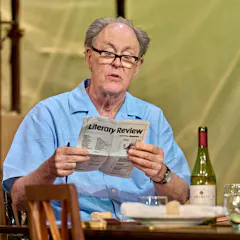
The play features a masterly performance by John Lithgow in the role of Dahl.
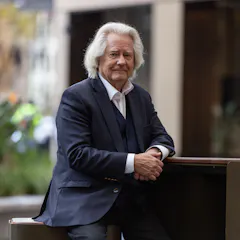
A. C. Grayling’s new book Discriminations explores the history and ethics of cancelling and exclusion, sounding a warning against ideological intolerance.
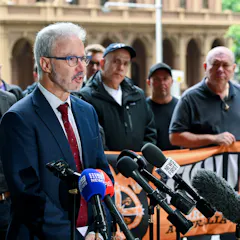
Josh Bornstein, the employment lawyer who represents Antoinette Lattouf in her case against the ABC (as well as various union clients), argues that individual liberty is under threat.
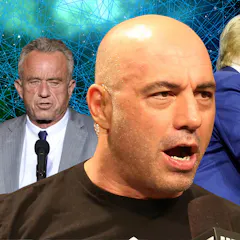
Donald Trump was supported by a group of converted Democrats, like Joe Rogan, Elon Musk, RFK Jr and Tulsi Gabbard, who are united by membership of the intellectual dark web. What is it?
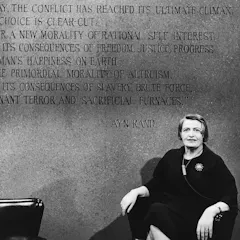
The shadow of Ayn Rand (beloved by Donald Trump and Elon Musk) looms large over new novels by Lexi Freiman and Lionel Shriver, which satirise cancel culture. One of them is a useful critique of our age.
The Auckland Philharmonia’s performance of the opera Tristan und Isolde raises the inevitable ‘Wagner question’. But cancel culture is not the answer.
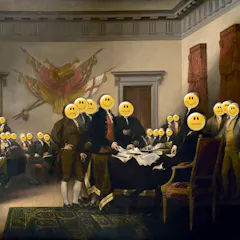
Americans associate with each other more online than off these days. How people interact in digital communities could have a big impact on democracy.
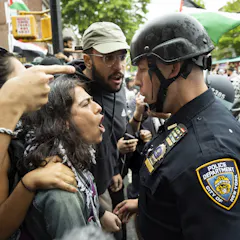
Each side is righteously sensitive to any perceived hate speech from the other, but seems unwilling to limit their own punitive strategies or inflammatory language.
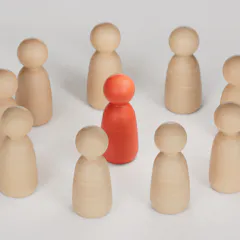
There is no shortage of horror stories about online shaming, but it’s not always a bad thing. It comes down to who is doing the shaming and how cohesive the online community is.

Cancel culture leads to educational detriments that can harm democracy.
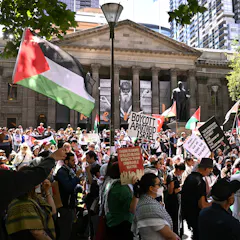
Writers festivals navigate the fraught frontier between social media’s echo chambers of outrage and the civilised public debate of the public square. What’s the way forward in this heated atmosphere?
Top contributors
-

Deputy Director, Institute for Ethics, Governance & Law, Griffith University
-
Senior Research Fellow, Centre for Advancing Journalism, The University of Melbourne
-
Professor of Philosophy, University of Aberdeen
-
Professor of Twentieth-Century Literature, University of Birmingham
-
Professor of Sociology, Brandon University
-
Elia Scholar, PhD Student, York University, Canada
-
Professor, Department of Anthropology, University of British Columbia
-
Professor, University of New England
-
Associate Professor of Practical and Political Theologies, Starr King School for the Ministry
-
Professor, Film & Screen Studies, Monash University
-
Assistant Professor, Department of East Asian Studies, University of Toronto
-
Visiting professor at the Policy Institute, King's College London
-
Associate Professor and Archivist, Boise State University
-
Lecturer in Media and Cultural Studies, Newcastle University
-
PhD candidate, Media and Communication, University of Leeds