
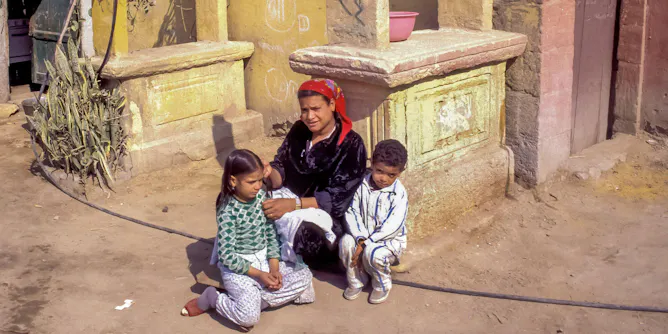
Over the centuries, buildings were constructed in and around the graves and monuments and then were transformed into homes.
Articles on Cairo
Displaying all articles

Africa’s new space agency has an important role to play in coordinating satellite data and boosting connectivity.

Since 1979, Egypt has been a central pillar of US policies in the Middle East.
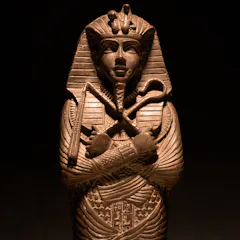
Welcome to ‘sensory heritage’, the study of how we engage with objects from the past besides what they look like.

The physical damage caused by their unusual working positions can be seen on the scribes’ skeletons.
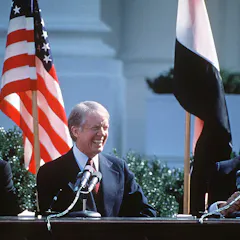
Undermining the delicate relations between Israel and Egypt could potentially grant Hamas a strategic political achievement.
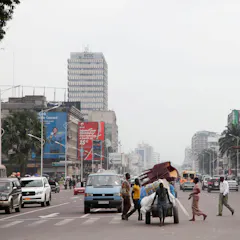
Charity advertising often reinforces historical stereotypes of underdevelopment that equate Africa with poverty.
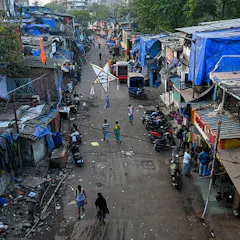
Cities are where solutions are found – but also where perils are amplified when we fail to act.
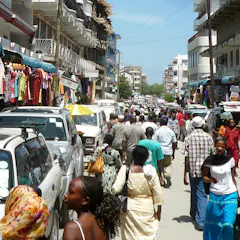
Informal workers are victims of the smart city drive in Africa.
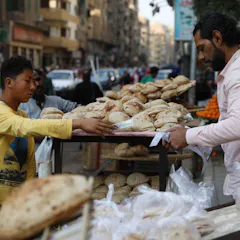
Egypt is already feeling the impact of the war, which has led to recent cancellation of tenders due to lack of offers, in particular from Ukraine and Russia.
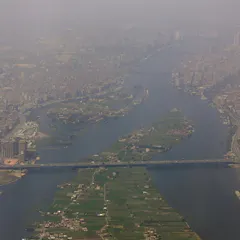
Africa’s urban challenges are increasingly well known and documented. But the amount of data produced on urban Africa still pales in comparison to other parts of the world.
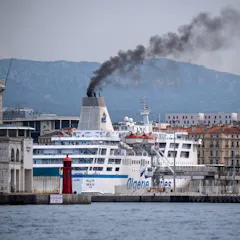
The Mediterranean region, with its biodiversity, climate, demographics, and economic activities such as tourism, agriculture and fisheries, is particularly vulnerable to environmental risks.
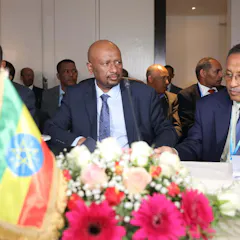
The Nile Treaties prevent upstream countries from using the waters of the Nile without the consent of those downstream. This results in an Egyptian bias.

Tobacco companies are enlisting the help of social media influencers to promote traditional cigarettes and their brands to young people.
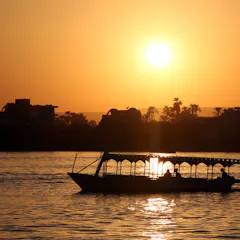
The threat to use force to defend Egypt’s right to water from the Nile has been a common theme through successive governments.
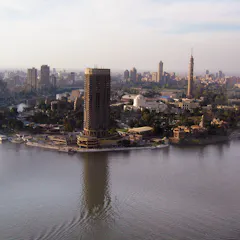
The urgency of an agreement to reasonably and equitably share benefits on the Nile Basin can’t be overstated. It would create a a transparent atmosphere in the countries that depend on the Nile.
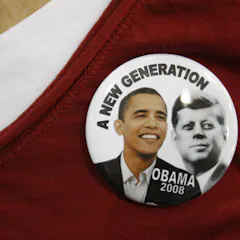
The time has come for developed nations to eliminate the large pockets of ignorance which exist in their societies about Africa and other peoples. Globalisation demands that people think differently.
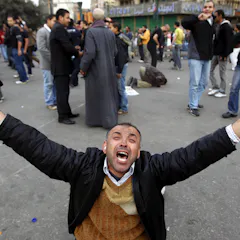
The demands of the Tahrir Square protests could scarcely have been clearer – and the crackdown since 2011 could hardly have been more galling.

The world is generally not safe for women. But some projects in North Africa provide a glimpse of hope as the world marks the UN’s International Day for the Elimination of Violence against Women.
Top contributors
-
ESRC PhD candidate, Lancaster University
-

Professor of History, University of Dayton
-
Head of Political Science Department, College of Law and Politics, University of Human Development, Iraq
-
PhD Researcher in Environmental Peacebuilding, King's College London
-
Director, International Waters Governance Initiative IAR, University of British Columbia
-
Senior research fellow, University of the Witwatersrand
-
Senior Lecturer, Department of Planning, Kwame Nkrumah University of Science and Technology (KNUST)
-
anthropologist / curator, National Museum (Národní muzeum) Prague
-
Professor of Journalism, USC Annenberg School for Communication and Journalism
-
Senior Research Fellow, International Food Policy Research Institute (IFPRI)
-
Associate Professor and Director of Research Communication in the School of Global Development, University of East Anglia
-
Research Fellow, International Food Policy Research Institute (IFPRI)
-
Senior Research Fellow, International Food Policy Research Institute (IFPRI)
-
Senior Manager, Bertha Centre for Social Innovation and Entrepreneurship, University of Cape Town
-
PhD candidate, University of the Pacific