
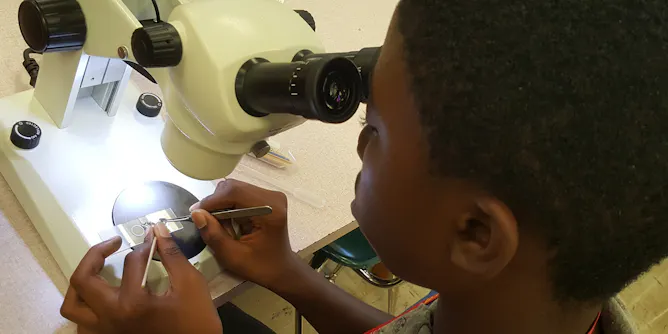
A hands-on approach to learning about bugs can help students from urban communities take an interest in science.
Articles on Bugs
Displaying 21 - 40 of 41 articles
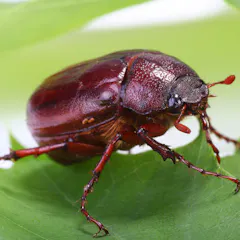
There is much more to these chunky beetles of early summer than what first meets the eye.
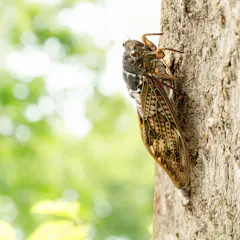
Learn how cicadas, the world’s loudest insects, create their cacophony, and why people in ancient Greece and ancient China admired them.
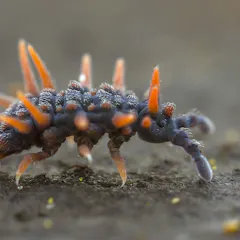
Australia’s invertebrates have an ancient lineage and a fascinating evolution. Get up close with macrophotography to discover tiny, unique animals you’ve probably never seen before.
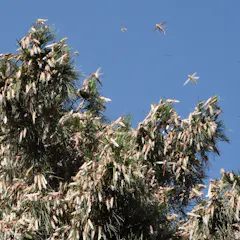
Gene drive guarantees that a trait will be passed to the next generation. But should society use this tool to control insect populations?
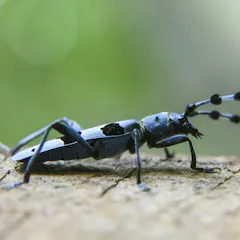
The largest study of insect declines to date gives us the best indication of how species all over the world are faring.
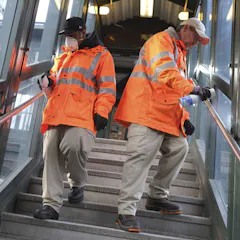
The coronavirus, like many infectious diseases, can live and spread on inanimate objects in the world around us. An epidemiologist explains how and gives some advice on how to minimize the risk.

Insect populations are falling as what they eat becomes more like iceberg lettuce and less like kale.
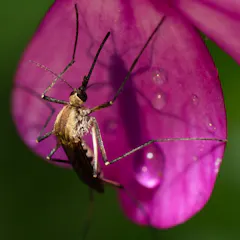
Mosquitoes have intricate and essential relationships with plants. Understanding their important work as pollinators would help to understand their role in different ecosystems.
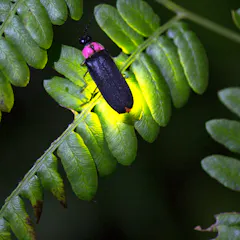
For many people, the gentle blinks of fireflies flashing are a favorite part of summer evenings. An entomologist explains some lightning bug basics.
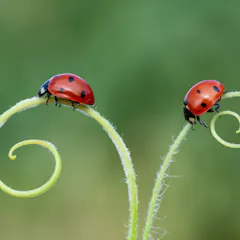
Ladybirds do not have tails because they have no backbones.

Tickling is an important sign that someone – or something – is touching you. An expert explains how it works.
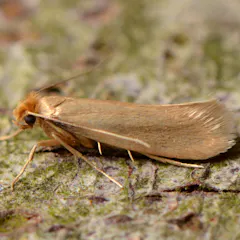
If you see moths and their larvae near your clothes, it’s a sign that it’s time to wash all your clothes and air them out in the sun.

According to experts, ladybirds are no more dangerous than they were before.
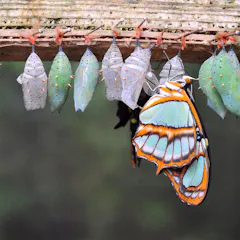
Scientists were not sure if an adult butterfly could remember things it learned as a caterpillar. Then a study by a team of US scientists found something very interesting.
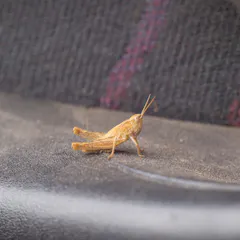
If the insect wants to stay right in front of your nose, it must fly forwards just a little bit when the car is speeding up. But when the car is at constant speed, it only needs to hover.
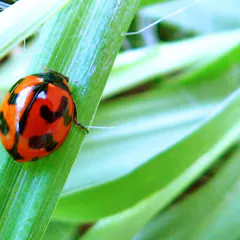
If warmer weather is your sign to reach for the pesticide, think again. From better soil to your own army of beneficial bugs, here are five reasons to put down the insect spray.

The first fully industrialised war prompted many to draw parallels between human society and the insect world.

If a huge huntsman spider is sucked into a vacuum cleaner, can it crawl out later? Lucy, age eight, really, really needs to know.
This is what really works to beat the bite of summer mosquitoes!
Top contributors
-

Associate Professor in Entomology, University of Sydney
-
Emeritus Professor of Biology, University of Bath
-
Clinical Associate Professor, School of Medical Science & Sydney Infectious Diseases Institute; Principal Hospital Scientist, University of Sydney
-
PhD Researcher in Ecology, Anglia Ruskin University
-
Director, Glowpear, Board member, ISDRS, Vice President, AHA and Senior Lecturer in Industrial Design, RMIT University
-
Vice Chancellor's Research Fellow in Ecology and Entomology, Edith Cowan University
-
Senior Lecturer, School of Engineering and IT, UNSW Canberra (@adfa), UNSW
-
Molecular Systematist, CSIRO
-
Research Scientist, The University of Queensland
-
Senior Lecturer in Zoology, University of Hull
-
Professor of Biological Sciences, Florida International University
-
Senior Lecturer in Environmental Earth Science, Deakin University
-
Professor, Integrative Biology, University of Guelph
-
Associate Professor of Mechanical, Aerospace and Biomedical Engineering, University of Tennessee
-
Associate Professor, Australian National University