
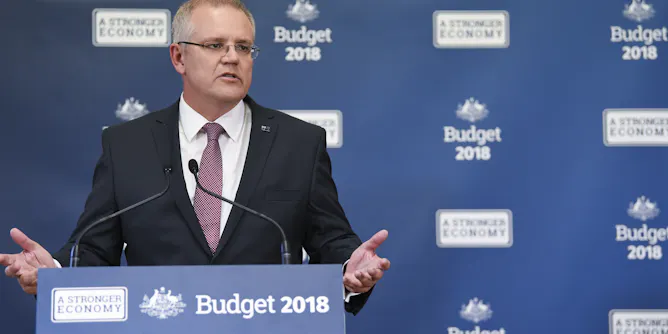
Even though this year’s budget is pretty good politics and reasonable economics, on almost every front, it is a missed opportunity to be bold.
Articles on Budget cuts
Displaying 21 - 40 of 41 articles
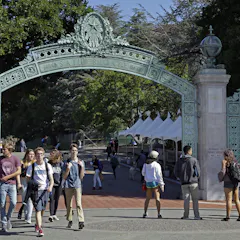
Post-World War II California built an unrivalled system of higher education combining access, affordability and choice. Then a contraction of the vision came in the 1980s.

With some tinkering, a federal tax credit that encourages developers to create new units that low-income Americans can afford to rent might yield other benefits.

Trump’s rationale for cutting the Temporary Assistance to Needy Families program rests on a myth at odds with contemporary data.

Research dollars don’t stay locked up in academia and government labs. R&D collaborations with the private sector are common – and grow the innovation economy.

Misleading stereotypes help explain why the share of families living in poverty who benefit from a core assistance program has plummeted – and why Trump wants new cuts.

Cutting the program formerly known as food stamps would hurt low-income Americans and the whole economy. As research indicates that it’s working well, this drive to defund is baffling experts.

The best way to assess a program’s effectiveness is see how well it meets the goals for which it was created. Maybe someone could tell the Trump administration.

What are research dollars actually spent on? Rather than looking at artifacts like publications and patents, a new initiative directly tracks the people and businesses that receive research funding.

Trump’s first budget proposal would boost defense spending by US$52 billion, but his desired military buildup is premised on misleading claims and lacks a strategic vision.

The Australian Renewable Energy Agency has survived, amid a groundswell of domestic and overseas support. Its budget has been chopped, but here’s how it can still drive the renewable energy revolution.

An open letter from 190 solar energy researchers in defence of the Australian Renewable Energy Agency, which has funded world-leading research.

Cities don’t have much control over national policies – but that doesn’t mean there’s nothing they can do.
State support for public research universities declined by 28 percent between 2003 and 2013. So, why does it matter?
We often get the facts wrong, but how we feel about austerity has serious consequences for the political class.

The government’s austerity programme hasn’t just put the poor under terrible pressure – it’s actually breached Britain’s international legal obligations.
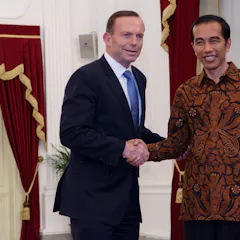
Australia has cut aid to Indonesia by 40%. That may cause diplomatic displeasure, but the country has restructured its development programs in recent years to be less dependent on foreign money.

In just a year, the Abbott government has gone from a radical nation-changing budget to promising a ‘dull’ one. Are we to believe the ideological zeal is gone, or has the survival instinct kicked in?

One way to protect researchers from funding cuts in May’s budget is to make sure they explain the importance of their work to a wider audience.
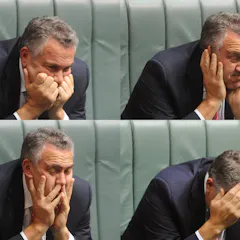
The Conversation has undertaken a stocktake of the major budget savings measures opposed, at risk, or yet to be legislated. According to our analysis, which has been verified by Grattan Institute chief…
Top contributors
-

Professor of Economics, University of Michigan
-
Professor of Engineering, Australian National University
-
Professorial Fellow, University of Canberra
-
Solar-photovoltaic researcher, UNSW
-
University Research Professor, University of Kentucky
-
Professor of Economics, The Ohio State University
-
Associate Dean of the College of Community and Public Affairs, and Professor of Public Administration, Binghamton University, State University of New York
-
Scientia Professor of Economics, UNSW
-
Professor of Social Policy and Social Gerontology, University of Sheffield
-
Washington State University
-
Lecturer in International Relations, Binus University
-
Professor of Public Administration, Binghamton University, State University of New York
-
Vice-Chancellor's professorial fellow, Monash University
-
Professor of Public Policy and Director of the Policy Institute, King's College London
-
Professor of Higher, Adult, and Lifelong Education, Michigan State University