

Far-right lead in the presdential race and landslide victories in legislative and local elections have affective, value-based, and political-ideological explanations.
Articles on Brazil election 2026
Displaying all articles

Political project born in the mid-1980s from the debris of a 21-year military dictatorship in Brazil is over, and the question now is what will replace it.

Once the 2026 election is over, Brazil must ensure the strength of its institutions far beyond simply guaranteeing fair elections.

With the upcoming Oct. 5 elections, the country has a new opportunity to strengthen scientific research as a foundation for addressing today’s challenges and bolstering its sovereignty.

In Brazil, religion is the dominant cultural grammar. More than a simple expression of individual faith, religion functions in politics as a sociolinguistic marker of order and authority.

Research shows that electoral threats do not only affect the ballot box, but also hijack public debate, using polarization to erode trust in democratic institutions.
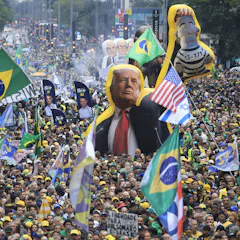
With the two presidential candidates running neck-and-neck, this election has stakes beyond Brazil. The growing power of US big tech is also in the spotlight.
Top contributors
-

Senior Lecturer in Politics and International Relations, University of the Sunshine Coast
-
Sessional Academic in International Relations, Political Science and Legal Studies, University of the Sunshine Coast
-
Pesquisadora de Doutorado, Universidade Federal de São Paulo (UNIFESP)
-
Mestre em Comunicação Social, PUC-Rio
-
Presidente, Academia Brasileira de Ciências (ABC); Universidade Federal de São Paulo (UNIFESP)
-
Professor Associado de Comunicação Política, PUC-Rio; University of Arizona
-
Associate Professor of Brazilian Studies, Florida International University
-
Professora, Instituto Brasileiro de Ensino, Desenvolvimento e Pesquisa (IDP) ; Fundação Getulio Vargas (FGV); Associação Brasileira de Ciência Política (ABCP)