
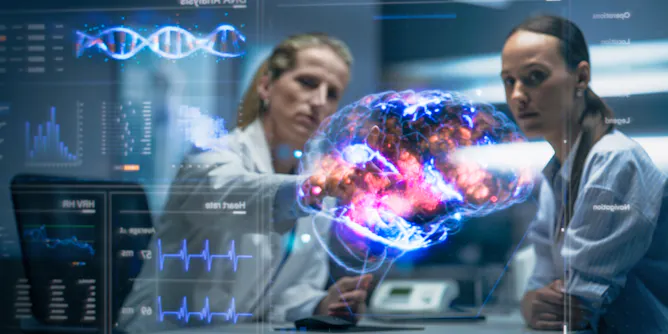
Existing digital models of the human brain risk missing out on what makes you ‘you’.
Articles on Brain mapping
Displaying all articles

Armed with new tools that reveal patterns of connection between brain areas, researchers are gaining clearer insights into how the brain regulates behavior.

It was once believed that mice had relatively poor vision. Turns out mice are far from blind – and studying how their vision is shaped by their environment and behavior can clarify the same in people.
Science has done many things that seem miraculous. Why not transfer your consciousness to a machine?

With implants now capable of translating thoughts into words in just three seconds, the future is going to get very weird indeed.

Visualization is an essential part of the scientific process. Advances in imaging have enabled eye-opening discoveries, not only for scientists and researchers but also for the general public.

From figuring out where memories are stored to how sensory information translates to behavior, new technologies are helping neuroscientists better understand how the brain works.

Many people with epilepsy are unable to remember what happened immediately before they have a seizure. This may be because seizures and memory use the same pathways of the brain.
Understanding where and how memories are formed could lead to more ways to treat conditions like PTSD and addiction.
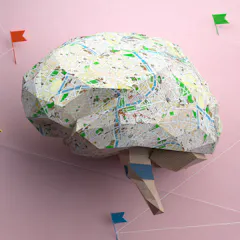
Scientists have been mapping the brain for centuries. New visualization tools bring them one step closer to understanding where thoughts come from and new ways to treat neurological disorders.
Top contributors
-

Associate Professor of Neural and Behavioral Sciences, Penn State
-
Professor of Neuroscience and Neurology, University of Virginia
-
Professor of Biological Sciences and Biomedical Engineering, USC Dornsife College of Letters, Arts and Sciences
-
Postdoctoral Fellow in Neurology, University of Virginia
-
Assistant Professor of Neuroscience, California Institute of Technology
-
Assistant Professor of Computer Science, Binghamton University, State University of New York
-
Trustees of ASU Professor, Arizona State University
-
Professor and Director Neuroscience Program, Northern Kentucky University
-
Professor of Computational and Systems Biology, Associate Senior Vice Chancellor for Science Strategy and Planning, University of Pittsburgh
-
Professor of Civil, Environmental and Architectural Engineering, University of Colorado Boulder
-
Scientific Program Leader at Gladstone Institutes, University of California, San Francisco
-
Professor Emerita of Philosophy, University of California, San Diego
-
Assistant Professor of Neurology, Harvard University
-
Professor Emeritus of Neurology, University of Colorado Anschutz
-
Professor of Intelligent Engineering Systems, Nottingham Trent University