

Kids often crave processed sugary foods. But research shows that consuming too many treats during childhood and adolescence may lead to behavioral and emotional problems.
Articles on Brain development
Displaying 21 - 40 of 79 articles

It will cost tens of billions of dollars to find and remove all the lead service lines that deliver water to US homes and schools. A public health expert explains why he sees it as money well spent.

Understanding how brain folding works could help researchers better diagnose and treat neurodevelopmental disorders.
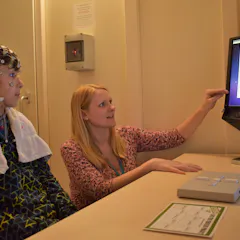
Children with dyslexia seem to find it more difficult to judge the direction of moving dots - this could explain why reading is also more challenging.

A new study shows that the pesticide pyriproxyfen – widely used in Brazil during the Zika outbreak of 2015 – could disrupt thyroid hormones and thus affect brain development in children.

Tilly Edinger was the first person to apply a deep-time perspective into different species’ brain evolution. She did this by focusing on the hollow space within a dead animal’s skull.

The early childhood years, particularly ages 0-3, are the building blocks of life.

Social disadvantage can cause stress that leads to changes in ‘connectivity’ between brain regions, potentially harming adolescents’ ability to plan, set goals, and self-reflect.

Research on the brain’s development could help explain why mental health problems often arise first during adolescence.

The babies born since March 11 2020 have faced a unique set of challenges.

The adolescent brain is particularly vulnerable to experience. Puberty is is the time brain networks are hardwired around milestone events. We should help teenagers make meaning of the pandemic.

Our study joins a growing body of evidence that suggests caesarean sections may have more consequences than previously thought.

Teaching deaf babies sign language improves the success of cochlear implants – and also safeguards their long-term physical and mental health.

With caregivers’ faces covered, infants and young children will miss out on all the visual cues they’d normally get during stages of rapid developmental growth.
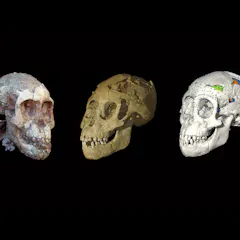
Our findings reveal the slowing down of brain development in our ape-like ancestors began more than three million years ago.
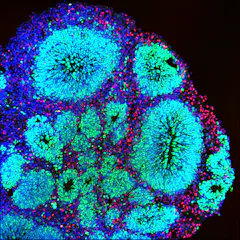
Brain organoids are tiny models that neuroscientists use to learn more about how the brain grows and works. But new research finds important differences between the model and the real thing.

Excessively eating junk foods during adolescence could alter brain development, leading to lasting poor diet habits. But, like a muscle, the brain can be exercised to improve willpower.

Community water fluoridation is a cost-effective public health measure that can reduce cavities by approximately 25 per cent. Yet some communities are worried about it.
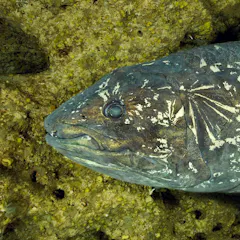
The discovery of a living coelacanth fish rocked the world in 1939, as scientists thought they had died out with the dinosaurs. A new study illuminates how its skull and tiny brain develop.

Teens get a bad rap as selfish, dangerous risk-takers. But neuroscience and psychology research is revising that image: Adolescents are primed to help those around them, with positive benefits for all.
Top contributors
-

Assistant Professor of Mechanical Engineering, Binghamton University, State University of New York
-
Professor in Psychology, University of Florida
-
Professor of Psychiatry, The University of Melbourne
-
Assistant Professor of Computer Science, Binghamton University, State University of New York
-
Professor Physiology, Endocrinology, Muséum national d’histoire naturelle (MNHN)
-
Honorary Professor, School of Natural Sciences, Macquarie University
-
Founder, Everyday Neuro and formerly a Research Fellow at, Murdoch Children's Research Institute
-
Atkinson Chair of Early Child Development and Education and Director of the Atkinson Centre, University of Toronto
-
Lecturer in Psychology and Criminology, Edith Cowan University
-
Curtin Senior Fellow, Professor & Clinical Neuropsychologist, Curtin University
-
Professor, La Trobe University
-
Independent Researcher, University of Michigan
-
Postdoctoral research fellow, Macquarie University
-
Lecturer, University of Sheffield
-
Emeritus Professor at the MRC Centre for Regenerative Medicine, University of Edinburgh