

A little boredom can be good for you.
Articles on Boredom
Displaying 1 - 20 of 29 articles

Boredom is a healthy part of life. Experiencing it can help children learn to set goals and make plans.
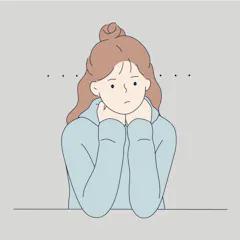
Avoiding boredom means we are denying ourselves access to our whole selves.

‘Attention restoration theory’ posits that allowing the mind to wander is important for restoring focus and attention.

We live in a fast-paced society that subjects us to information overload and high stress. It might be time to embrace the pause.
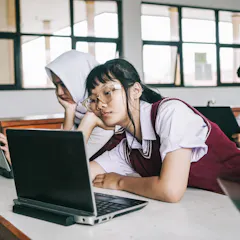
Young people are growing up in an era where – thanks to technology – boredom is rare. This can be challenging for classroom teachers, who want to encourage their students to reflect and contemplate.

New research suggests alternating boring and meaningful tasks can keep workers more engaged and productive.
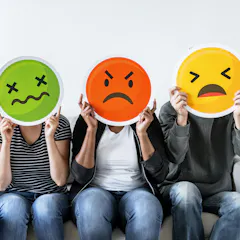
Lots of people will do a lot to avoid feeling negative emotions. But researchers are figuring out how these unpleasant feelings actually have benefits.
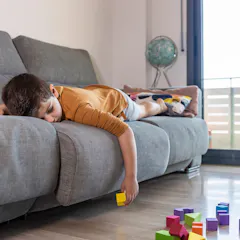
It is OK for kids to feel bored. In fact, boredom can help children to develop a number of important skills.

Occasional boredom at work is normal and healthy, but if you’re stuck in it long term it can damage your wellbeing.
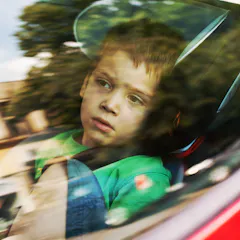
Car journeys combine many of the factors that make time pass so agonisingly slowly for children.

The ‘Spiritual But Not Religious’ are embracing different forms of spirituality – skateboarding may be one of them.

Let your children embrace boredom, don’t try too hard to create the perfect lockdown holiday and warn your employer your attention might be even more divided than usual over the next few weeks.
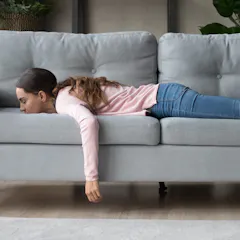
Boredom can make you angry, impulsive or find meaning in life.

As the COVID-19 pandemic, restrictions and quarantines continues into their second year, more people are experiencing an acute form of COVID-boredom.

Drinking, swearing and social transgressions can lead to good things.

Over two centuries. the notion of boredom has shifted from an upper-class malady, through existential peril, to a functional emotion.

People hate boredom. Some would rather get a painful shock than sit in a room with nothing to do for 15 minutes. But boredom spurs us on to create and can help focus our attention.

Online pornography is one business that’s booming during the coronavirus pandemic. A psychology researcher explains its pull and whether there are likely to be longer-term effects of this surge in use.

We live in the time of the ‘quantified self’. This means we’re constantly under pressure to use technology to ‘optimise’ ourselves, and may be why many people view gaming as a ‘waste of time’.
Top contributors
-

Lecturer, Department of Psychology, University of Essex
-
Emeritus Professor of Sociology, University of Nevada, Las Vegas
-
Professor of Psychological and Brain Sciences, Texas A&M University
-
Professor of Sociology, Eckerd College
-
Associate Professor, Mathematics Education, Western Sydney University
-
Professor of the Psychology of Time, Liverpool John Moores University
-
Visiting Fellow at the School of Education & Lifelong Learning, University of East Anglia
-
Associate Professor of Clinical Psychology, Curtin University
-
Associate Teaching Professor in Religious Studies, Arizona State University
-
Associate Professor of Public Communication and Culture Studies, University of Michigan-Dearborn
-
Assistant Professor of Management and Organization, University of Notre Dame
-
Dean, School of Psychology and Public Health, Swinburne University of Technology
-
Associate Professor of Psychology, Bowling Green State University
-
Assistant Professor of Art History, OCAD University
-
Senior Industry Fellow, RMIT University