

There is no definitive answer in Chameleon, only the conflicts and inconsistencies in which Dessaix invites us to revel.
Articles on Book reviews
Displaying 281 - 300 of 953 articles

Twist is a richly allusive novel, with echoes of Herman Melville, Joseph Conrad and Philip Roth.

What is the gut-level appeal that saw Trump win two elections? One progressive researcher spent six years in America’s whitest, second-poorest district to find out.

Supernatural thriller or character-driven thought experiment? Chris Flynn’s Orpheus Nine imagines the personal toll of a tipping point for our destabilised world.

Rawson, in burrowing from question to question, draws on a vibrant array of thinkers and essayists in environmental philosophy.

A new book argues that South Africa should ‘start again’, but the reviewer says it doesn’t make a strong case.
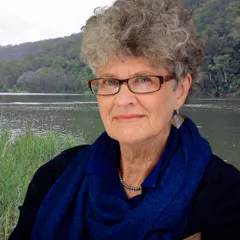
Kate Grenville’s book successfully intertwines national and personal history to evoke Australia’s past – but multiculturalism challenges her idea of collective memory.

Yumna Kassab’s vignettes and fragments present a kaleidoscopic view of contemporary society.

Author Margaret Hefferman argues that applying an artist’s mindset of curiosity and flexibility is essential to flourish in general.

Meta has obtained a court order to stop former senior employee Sarah Wynn-Williams from discussing her memoir – despite its new commitment to ‘free expression’.

A staggering rise in the prevalence of many medical conditions and the cultural attention we pay them is the subject of a new book, The Age of Diagnosis.
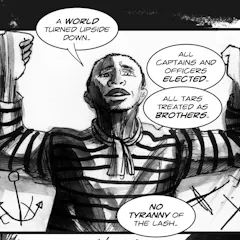
Graphic novels are well-placed to bring forgotten history to life.
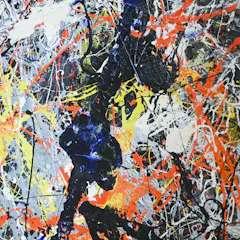
The historical controversy over Jackson Pollock’s ‘masterpiece’ revealed much about Australia’s attitude towards the arts.

Dream Count is another bold, honest endeavour from Adichie to cut through hackneyed schema and really see people.

The Nickel Boys dramatises the real-life history of a segregated reform school in the segregated Jim Crow South: a front for coerced labour and scene of abuse.

Signs of Damage is ostensibly a realist novel, it stretches the limits of the genre, introducing psychological and mystical elements.
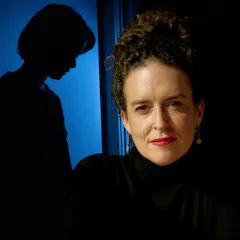
In her new Quarterly Essay, anti-violence campaigner Jess Hill asks whether the government’s response to gender-based violence is fit for purpose.

Ulrike Herrmann argues we no longer have the time to wait for technological breakthroughs that might solve the climate crisis.

Mandy Beaumont’s new novel, The Thrill of It, takes us inside a killer’s mind.

Céline portrays the vertigo of the human condition with an intensity that still has no equal, eighty years on. But this English version is not quite Céline.
Top contributors
-

Distinguished Professor Emerita of Creative Practice, Faculty of Arts and Design, University of Canberra
-
Dennis Altman is a Friend of The Conversation.
Vice Chancellor's Fellow and Professorial Fellow, Institute for Human Security and Social Change, La Trobe University
-
Adjunct Researcher, English and Writing, University of Tasmania
-
Professor in Politics and Journalism, University of Notre Dame Australia
-
Adjunct Professor, Australia-China Relations Institute, University of Technology Sydney
-
Senior Lecturer, Writing, Department of Media and Communication, Swinburne University of Technology
-
Emeritus Professor of Creative Writing, The University of Melbourne
-
Professor, Chair of Australian Literature, The University of Western Australia
-
Senior Lecturer, Discipline of English and Writing, University of Sydney
-
Professor of Communication, Deakin University
-
Professor of Psychology, The University of Melbourne
-
Professor of English Literature, University of Southern Queensland
-
Senior Lecturer in Humanities, University of Southern Queensland
-
Senior lecturer, Canberra School of Government, University of Canberra
-
Deputy Director, Institute for Ethics, Governance & Law, Griffith University