
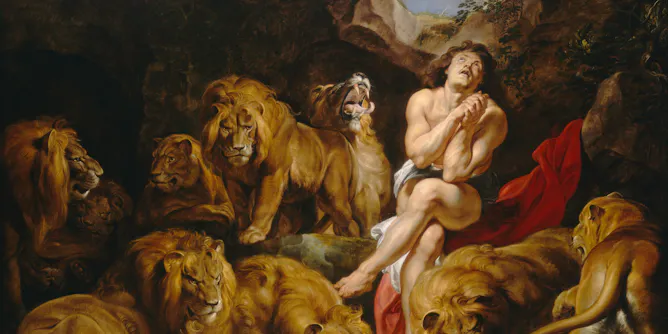
In Greg Sheridan’s latest book, “pagan” Rome is a straw man, against which he posits early Christianity as the loving and brave hero.
Articles on Book reviews
Displaying 181 - 200 of 952 articles

Alexis Wright’s work expresses a sovereign Aboriginal worldview, but owes a debt to a pantheon of authors from around the globe.

In Elizabeth Gilbert’s shocking new confessional memoir, she falls in love with her dying best friend, enables her addiction – and once again blows up her own life.
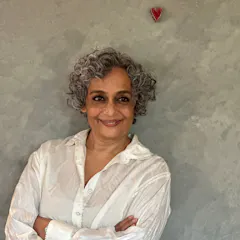
Roy’s portrait of her terrifying yet courageous mother is at the centre of this memoir, which charts her own embrace of danger as an activist-writer.

Mariam Rahmani’s witty debut novel, Liquid, set between the US and Tehran, is a rom com for the age of precarity.

Why are so many Americans unwilling to identify as liberals, white or otherwise, even while supporting traditionally ‘liberal’ government programs?
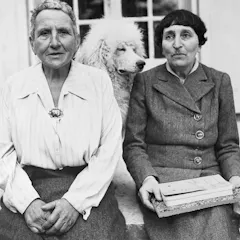
A new biography shows how Gertrude Stein has been celebrated, sidelined and criticised over the decades – as a revolutionary genius, charlatan and Nazi collaborator.
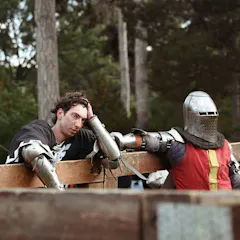
Patrick Marlborough’s debut novel Nock Loose combines satire with a rather gnarly plot.
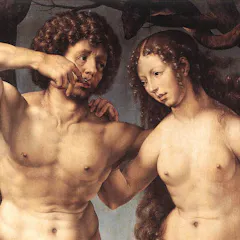
Shame is a feeling we struggle to know what to do with, precisely because we always seem to have too much or too little.

In Homework, renowned writer Geoff Dyer meditates on the whole, small world of childhood – and how class influences who we become.
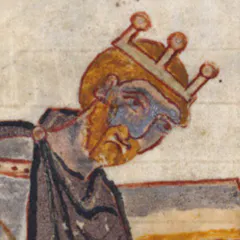
A well-rounded view of the king, his government, religion and more.

The genre of migrant autofiction, especially coming-of-age work, is blooming, but Raaza Jamshed’s book stands out.
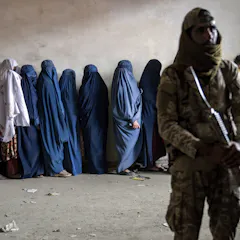
A new book rewrites judgments in cases decided by the ICC from a feminist perspective.
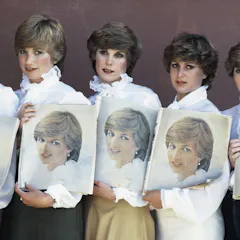
A new cultural history is as much about the princess’s people as the ‘People’s Princess’.

In his thoughtful new novel about people turning into trees, Rhett Davis puts postmodernism and myth through the figurative woodchipper.

In her book The Ferryman, Katia Ariel reveals the story of Ephraim Finch, ‘community ferryman’ of Jewish souls.

In Desolation, inexplicable elements, often in the form of coincidence, disrupt and distort causal chains. Dreams and imagination have a subversive role.
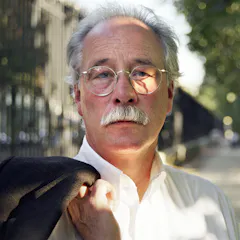
West Germany’s inability to mourn was deemed a ‘silent catastrophe’ by the late, great W.G. Sebald. His early critical writings appear in a book of the same name.

Toni Jordan’s novel Tenderfoot, a bracing, beautiful meditation on childhood, shares crossovers with her own life.

A journalist’s deep dive into the manosphere asks big, important questions about why men are susceptible and what we can do. But it struggles to provide answers.
Top contributors
-

Distinguished Professor Emerita of Creative Practice, Faculty of Arts and Design, University of Canberra
-
Dennis Altman is a Friend of The Conversation.
Vice Chancellor's Fellow and Professorial Fellow, Institute for Human Security and Social Change, La Trobe University
-
Adjunct Researcher, English and Writing, University of Tasmania
-
Professor in Politics and Journalism, University of Notre Dame Australia
-
Adjunct Professor, Australia-China Relations Institute, University of Technology Sydney
-
Senior Lecturer, Writing, Department of Media and Communication, Swinburne University of Technology
-
Emeritus Professor of Creative Writing, The University of Melbourne
-
Professor, Chair of Australian Literature, The University of Western Australia
-
Senior Lecturer, Discipline of English and Writing, University of Sydney
-
Professor of Communication, Deakin University
-
Professor of Psychology, The University of Melbourne
-
Professor of English Literature, University of Southern Queensland
-
Senior Lecturer in Humanities, University of Southern Queensland
-
Senior lecturer, Canberra School of Government, University of Canberra
-
Deputy Director, Institute for Ethics, Governance & Law, Griffith University