
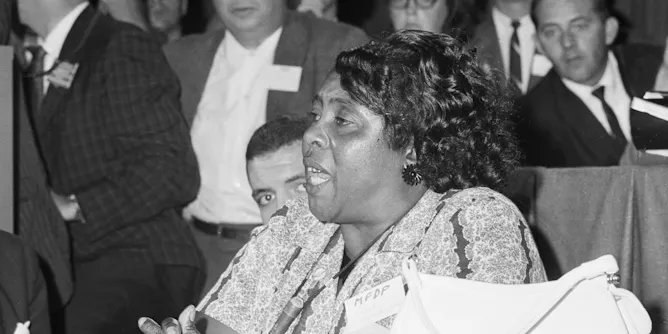
Fannie Lou Hamer became one of the most respected civil rights leaders during the 1960s in part because of her resistance to racist voting laws in Mississippi.
Articles on Black history
Displaying 21 - 40 of 103 articles
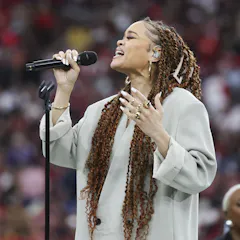
Unlike some GOP politicians, a college professor who teaches Black history to mostly white students was excited that the Black national anthem was being played at the Super Bowl.
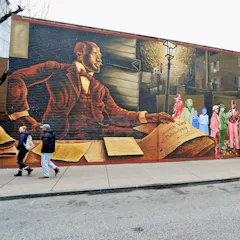
Over a century ago, white Philadelphia elites believed the city was going to the dogs – and they blamed poor Black inner-city residents instead of the racism that kept this group disenfranchised.
The Black Londoners Project approaches Black history geographically by supplementing narratives of 16 Black individuals with archival evidence about their lives.
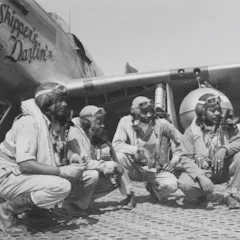
The unpleasant wartime reality for the Tuskegee Airmen was that, in addition to a determined enemy, they had to fight their own side for the right to serve.

With control over the Virginia Legislature at stake in the Nov. 7 election, the historic battle over what is taught in public schools remains a priority for both Democrats and Republicans.

The portraits hold up a mirror to a society that has underappreciated the Windrush generation for far too long.
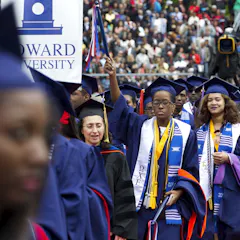
While it’s widely believed that Howard University came to be known as “The Mecca” in the 1960s, new evidence shows the nickname is more than half a century older than that.
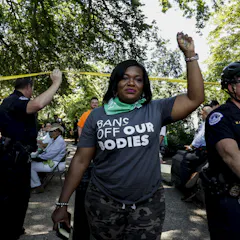
In the US, white men have long had the power to make decisions about women’s reproductive health care. Those decisions have often been especially harmful to Black women.
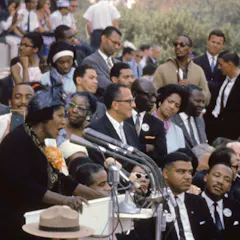
As the “Queen” of gospel music, Mahalia Jackson sang two songs during the historic March on Washington. But her most famous line may have been a suggestion to Rev. Martin Luther King Jr.
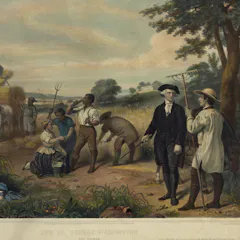
Florida’s new standards for teaching social studies include throwbacks to an interpretation of slavery as benign or inconsequential.
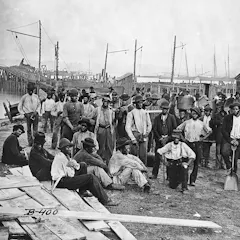
While a Florida curriculum implies that enslaved Africans ‘benefited’ from skills acquired through slavery, history shows they brought knowledge and skills to the US that predate their captivity.
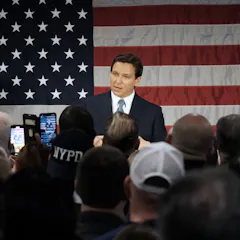
Tactics used to censor the teaching of American history in Florida schools bear much in common with those seen in the illiberal democracies of Israel, Turkey, Russia and Poland.
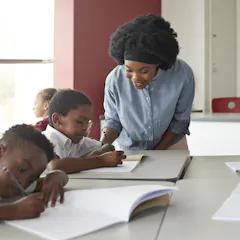
Many students say they aren’t learning much about slavery beyond its harsh conditions. A historian explores how Juneteenth offers opportunities to change that reality.
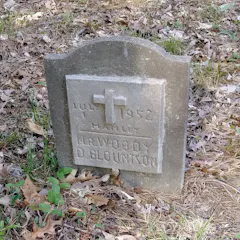
Tombstones that used the honorifics ‘Mr.’ and ‘Mrs.’ restored a sense of dignity to people who had been denied it in life.
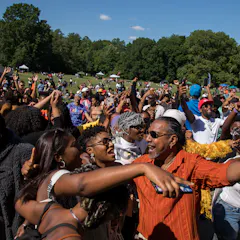
Juneteenth is part of a rich heritage of African American emancipation and freedom celebrations.

The lack of visibility by Black researchers and physicians in scientific literature perpetuates systemic racism in medicine.

Kittrell’s legacy shows that home economics was always about more than cooking and sewing. It’s also a reminder that issues that affect families are simultaneously local and global.
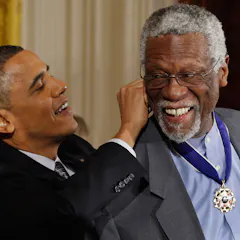
America’s complicated history with race can be told through the lives and times of Black Americans, a view that some GOP-controlled state legislatures want to restrict, if not outright ban.
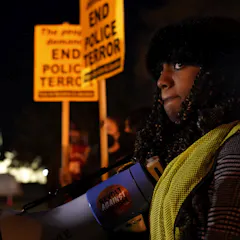
In the face of violent crime, both real and imagined, too many U.S. police forces adhere to racist philosophies about rooting out ‘internal enemies’ as they did hundreds of years ago.
Top contributors
-

Assistant Professor, RTA School of Media, Faculty of Communication and Design Forum, Toronto Metropolitan University
-
Canada Research Chair, Professor in Performance, Toronto Metropolitan University
-
Assistant Professor of Justice Studies and Sociology, Norwich University
-
Associate Professor of Business Administration, University of Virginia
-
Reader in Postcolonial Literature, Leeds Beckett University
-
Professor of History, Sam Houston State University
-
Derek H. Alderman is a Friend of The Conversation.
Chancellor's Professor of Geography, University of Tennessee
-
Professor of Critical Race and Ethnic Studies, Miami University
-
Professor of History, Lawrence University
-
Professor of Higher Education and Director, Museum of Education, University of South Carolina
-
Associate Professor of English, affiliate with Africana Studies and Women's & Gender Studies, Clark University
-
Associate Dean of Students, Vanderbilt University
-
Associate Professor, African History, University of Guelph
-
Curator of Canadian and African Art, Agnes Etherington Art Centre, Queen's University, Ontario
-
Associate Professor of History, University of Pittsburgh