

These three examples of statistical mistakes have had major consequences for our health and shopping habits.
Articles on Biostatistics
Displaying all articles

Fewer graduates means fewer data analysis experts to aid in knowledge creation and innovation.
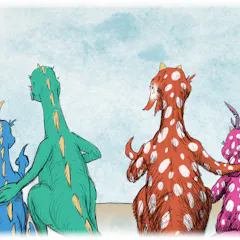
People don’t randomly select who they have children with. And that means an underlying assumption in research that tries to link particular genes to certain diseases or traits is wrong.
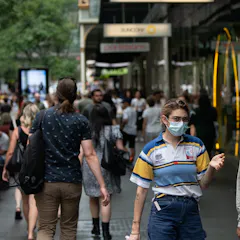
Just because a variant spreads faster, it doesn’t necessarily mean it has a higher R0.
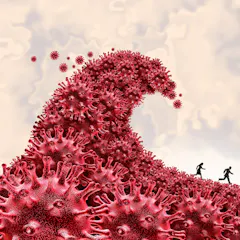
We’d all like some answers. But uncertainty over how we count COVID cases is complicating the picture. Here’s what to expect in the days and weeks ahead.

Asking these four questions can help us identify good news when we see it, be more critical of news reports, or delay our judgement until we have more information.

The pandemic has exposed many of us to new statistical concepts, on the news, in everyday conversations and on social media. But how many are you getting wrong?

The COVID-19 death toll in the US is now over 130,000. What do 130,000 fatalities look like? A biostatistician provides some perspective.

An easy question, but a difficult answer.
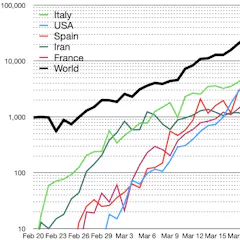
We need to update models on death rates or introduce truly random testing to understand the true impact of the coronavirus.

A new tool that combines mortality risk factors across a big sample of the UK population can work out how middle-aged people compare.
Top contributors
-

Professor of Biostatistics and Epidemiology, Adelaide University
-
Research Fellow, Harvard University
-
Vice Provost for Faculty Affairs and Professor of Statistics, Virginia Tech
-
Senior Research Fellow, Biostatistics, University of Sydney
-
Senior Lecturer, University of Pretoria
-
Academic - statistician, University of Pretoria
-
Postdoctoral Researcher in Statistical Genetics, University of California, Los Angeles
-
Professor of Neurology and Human Genetics, University of California, Los Angeles
-
Chair in Epidemiology, Deakin University
-
Associate Professor, Mathematical Statistics and Actuarial Science, University of the Free State
-
Associate Professor, University of the Free State
-
Professor of Molecular Epidemiology, Uppsala University
-
Honorary Research Fellow, Telethon Kids Institute, and Professor, Curtin School of Population Health, Curtin University
-
Professor in Mathematical Biology, The University of Melbourne
-
Senior Lecturer, University of KwaZulu-Natal