
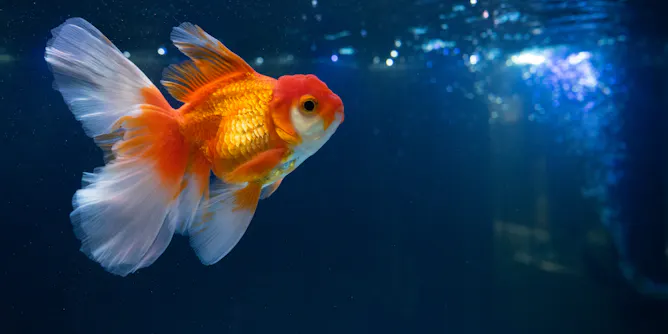
Why do researchers care if a bee can learn to recognise a human face? When we push animals outside familiar territory, we can learn a lot about intelligence.
Articles on Biomimetics
Displaying all articles

Just 2 layers of materials commonly used in biomedical labs can mimic the electrical properties of human skin.
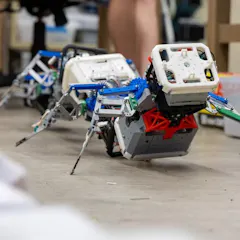
A study found that adding legs does more for you than having a good sense of the ground around you − if you’re a mobile robot.
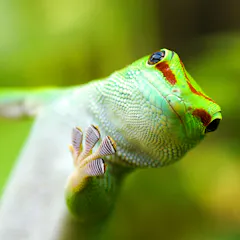
Understanding geckos’ movements could lead to better robots.
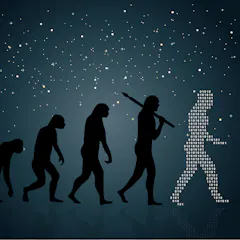
Artificial intelligence research owes a lot to biology and chemistry.
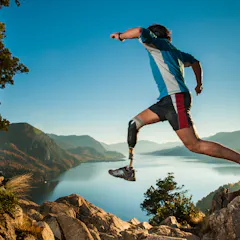
The best prosthetics feel more like the real thing.
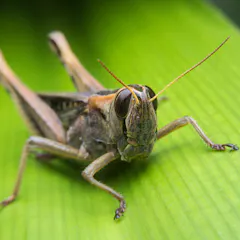
Studying the way insects hear and make their own sounds is inspiring new hearing technology.

To do the jobs “nuts-and-bolts” robots aren’t good at, engineers are creating soft living machines powered by muscle cells.
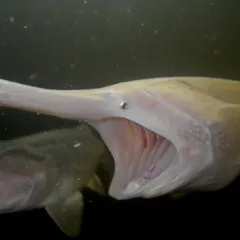
Even the best engineered filters get clogged eventually. Fish mouths have evolved structures that create unique fluid dynamics patterns that solve that problem.
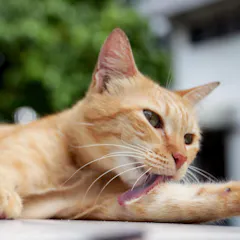
Cleanliness is next to godliness. Did you know hairiness is a part of the equation as well?
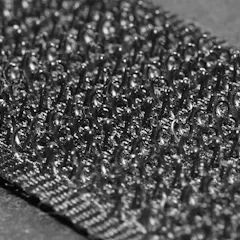
Last week, David Taylor of Trinity College Dublin argued that simply copying nature is no way to succeed at inventing. His main point is valid – there are indeed not many chances for engineers to make…

Where do inventions come from? There’s no magic formula, but there are ways to improve your creativity. One method is to look at nature. Some call this activity bionics, others call it biomimetics. Whatever…
Teaching a robot to walk – even poorly – requires huge investment into computational resources. How is it that even the simplest animals are able to achieve far more sophisticated feats of manoeuvrability…
Top contributors
-

Professor of Mechanical Engineering and Biology, Adjunct Professor of Physics, Georgia Institute of Technology
-
Reader in Bioengineering, University of Cambridge
-
The University of Melbourne
-
Professor, Trinity College Dublin
-
Assistant Professor of Integrative Biology & Computer Science and Engineering, Michigan State University
-
Assistant Lecturer, University of Lancashire
-
Senior Research Associate, University of Bristol
-
Professor of Biology, William & Mary
-
Assistant Professor in the Experimental Zoology, Wageningen University
-
Postdoctoral fellow, Case Western Reserve University
-
Post-Doctoral Research Fellow in Biophysics, University of Oxford
-
Postdoctoral Fellow, Complex Rheology And Biomechanics Lab, Georgia Institute of Technology
-
Assistant Professor of Manufacturing and Mechanical Engineering Technology, Rochester Institute of Technology
-
Research Fellow, School of Biological Sciences, Monash University