
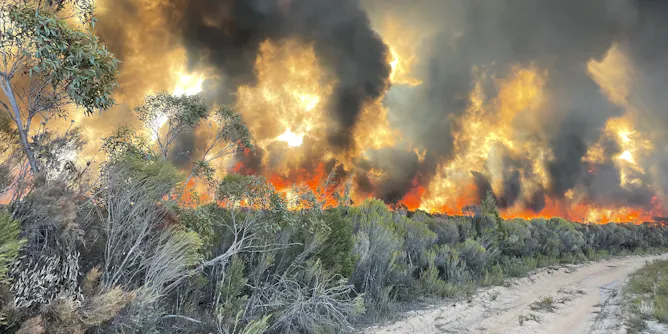
New research reveals only 44% of biodiversity offset policies and 27% of voluntary conservation programs consider climate risk. These 3 practical steps can help.
Articles on Biodiversity offsets
Displaying 1 - 20 of 28 articles

Bringing the natural world back from the brink is more urgent than ever. Nature-positive policies offers a way to do so – if done properly.
Koalas in trouble, land clearing at speed – nature in New South Wales is not well. Now the government is proposing significant changes to its ineffective biodiversity laws.

Nature, everyone agrees, is in trouble. But can Australia’s new market-based mechanism help?
Developers can make up for natural habitat loss themselves or pay a restoration fee to the government.
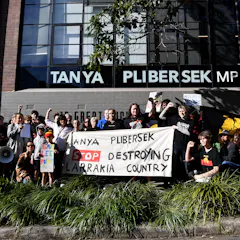
The Darwin woodland is home to endangered species and important for the Larrakia people. The development approval requires habitat offsets – yet the minister herself has publicly doubted offsets work.
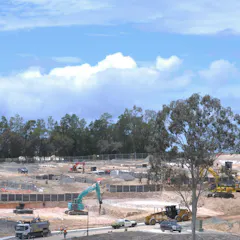
Offsets are meant to restore land elsewhere to make up for lost habitat. Developers can make payments to the state to cover the costs of this work, but a new study finds there’s usually a shortfall.
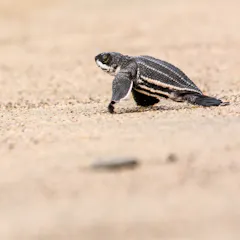
If environmental harm wrought by the port cannot be addressed, the project should not be allowed to proceed.
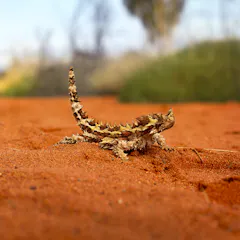
Getting that detail right could mean the difference between a species surviving, or disappearing forever.
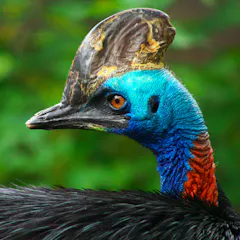
The nature repair market is sold as a good news story: willing land managers benefiting nature with support from the private sector. But if offsets are part of it, the reality could be very different.
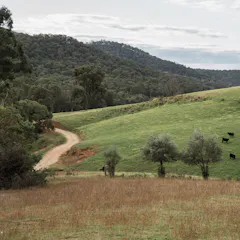
Biodiversity market schemes can help – but they are not a silver bullet, and can be gamed if poorly designed.
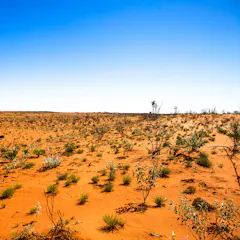
This fictitious project approval helps us better understand how environmental governance in Australia has gone badly wrong.
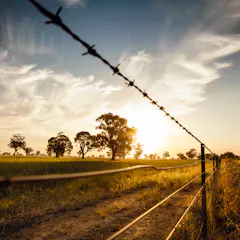
A scheme devised by the Morrison government to protect biodiversity and create new income for farmers may fail in its aims.
‘Net gain’ in name, but not for nature?
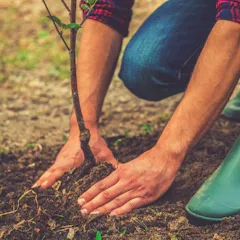
For biodiversity offsets to work, landholders need to be on board, but their diverse perspectives remain poorly understood.

The deteriorating Western Grassland Reserve in Victoria represents a failure of imagination. When the grasslands are steeped with history and culture, imagine its potential.

‘Biodiversity offsetting’ is a globally-significant conservation practice, but new research reveals offsets have mixed results.
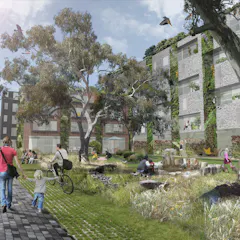
Australian cities are home to many threatened species but are also where biodiversity is being destroyed by development. But what if planning and design processes built nature into the urban fabric?
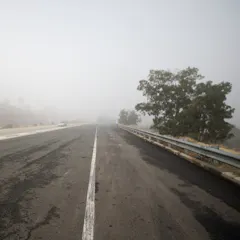
When the Hume Highway was widened, hundreds of nest boxes were installed to replace habitat for three threatened species. Four years of monitoring has concluded the program is entirely unsuccessful.

NSW has nearly 300 threatened animal species, including koalas and pygmy-possums. Yet we still don’t know the government’s plans in one area that could pose a serious threat to NSW’s wildlife.
Top contributors
-

Professor of Environmental Management, The University of Queensland
-
Postdoctoral Researcher, Nature Finance, University of Oxford
-
Associate Professor in Climate Change Biology, University of Oxford
-
Senior Lecturer, Public Sector Management, School of Business, UNSW
-
PhD Candidate in Environmental Policy, The University of Queensland
-
Professor, Urban Ecology and Biodiversity, The University of Melbourne; RMIT University
-
Professor & Director, QUT Centre for Environment and Society, Queensland University of Technology
-
Tasso Leventis Professor of Biodiversity, University of Oxford
-
Professor of Environmental Science, Australian National University
-
Distinguished Professor of Ecology, Fenner School of Environment and Society, Australian National University
-
Senior research fellow, RMIT University
-
Professor of Trade Law and Taxation, Queensland University of Technology
-
Professor, Conservation Biology, The University of Queensland
-
Senior Lecturer, School of Agriculture, Food and Ecosystem Sciences, The University of Melbourne
-
Associate Professor in Urban Ecology and Urban Horticulture, The University of Melbourne