

They’re flying off the shelves but here’s what you need to know about whether fitness tracking devices work.
Articles on Big data
Displaying 241 - 260 of 313 articles

We increasingly depend on algorithms applied to big data, but even algorithms make mistakes that could label us in worrying ways

An unedifying row over “stolen” data has the Democrats’ political staffers at loggerheads.
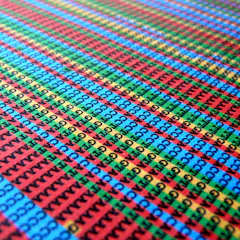
Modern biological research relies on big data analytics. Vast reservoirs of memory and powerful computing ability mean machines find patterns and make meta-analyses and even predictions for scientists.

The first digits of numbers in a data set aren’t distributed equally. And now you know more than a lot of fraudsters do – and should – when they’re making up their phony numbers.

The end-of-year shopping whirlwind is underway. How does your credit card issuer watch out for fraudulent purchases on your account amid all those transactions?
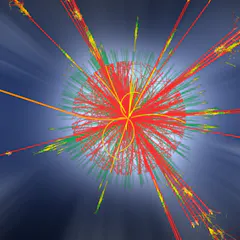
Big data is about processing large amounts of data. It is often associated with multiplicities of data. But the ability to generate data outpaces the ability to store it.

Preventing crime before it happens, while saving resources, sounds like a great use of big data. But these calculated probabilities raise big questions about civil liberties.

The availability of data is just the starting point – we then need to make sense of the data.

The Investigatory Powers Bill would require ISPs to store 12 months of our web browsing history – a year-long snapshot of our thoughts, fears, interests and behaviour.

By simulating cities from the “bottom-up”, scientists can help us plan for the future.

Could the key to countering a culture of bribery and greed be in the hands of the people?
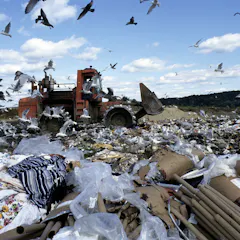
Using more accurate data, researchers find that waste disposal at methane-emitting landfills is two times greater than previous EPA estimates.

Sophisticated models and supercomputers allow researchers to create a high-fidelity map of the Earth’s trees – and show that we’re losing billions of trees a year.
Math isn’t prejudiced, goes the argument. But these arithmetic programs can learn bias from the data fed into them by human beings, leading to unfair treatment and discrimination.
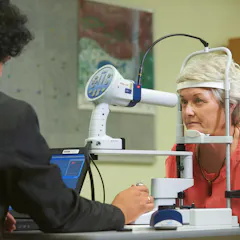
The health sector is good at using technology to help treat patients, but it’s not so good with technology in the business of health care.
Analyzing big data sets holds the promise of big insights. But the axiom “garbage in, garbage out” is particularly apt, since conclusions can be only as good as the raw data itself.
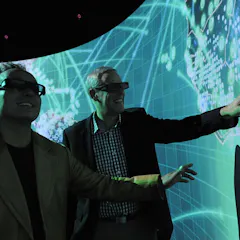
Today’s world is drenched in data, and we need the best tools to help us understand and use it.

We think that more information means better decisions, but really it means we struggle to make decisions at all.
Online infrastructure and business are becoming increasingly important, as is our need to focus research efforts on securing them from cyber-attack.
Top contributors
-

Professor, Director of Big data and smart analytics lab - IIIS, Griffith University
-
Vice Chancellor’s Senior Research Fellow, School of Global, Urban and Social Studies, RMIT University
-
Adjunct Senior Lecturer, Applied Ethics and CyberSecurity, Griffith University
-
Adjunct professor, UNSW ; University of Technology Sydney
-
Professor of Information Sciences and Technology at Altoona campus, Penn State
-
Lecturer and Teacher, Department of Politics and International Relations, Cardiff University
-
Assistant researcher, University of Sydney
-
Honorary Fellow, Space and Astronomy, CSIRO; Western Sydney University
-
Fellow of the Faculty of Engineering and Information Technology, University of Technology Sydney
-
Associate Professor, School of Law, University of Canberra
-
Professor of Cybersecurity, Head of School of Computer Science and Informatics, De Montfort University
-
Bernard A. Galler Collegiate Professor of Electrical Engineering and Computer Science, University of Michigan
-
Senior Lecturer, The University of Queensland
-
Assistant Professor of Philosophy, UMass Lowell
-
Senior lecturer, University of Twente