
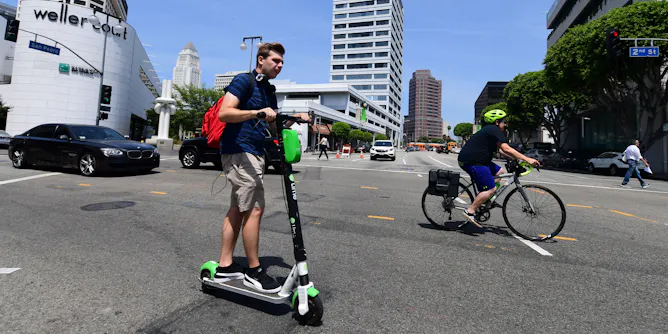
Electric scooter rides soared from zero to 88 million a year between 2017 and 2019. But launching e-scooters in cities without safe infrastructure or clear rules of the road can be deadly.
Articles on Bicycle safety
Displaying 21 - 40 of 68 articles
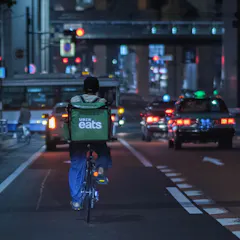
Delivery riders are paying the ultimate price for the fact that our cities, their infrastructure and the rules governing them make cycling much more dangerous than it should be.
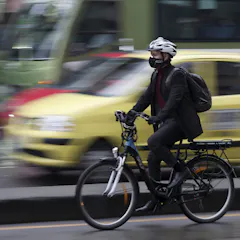
Bike shops have seen record sales during the pandemic as people try to avoid crowded transportation. But governments must do more to keep new cyclists in the saddle.
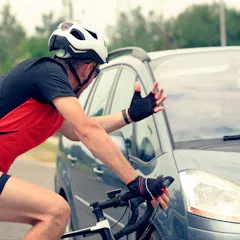
Drivers and cyclists develop distinct identities of themselves and others in ways that mirror the formation of ethnic identities. And on-road segregation runs the risk of reinforcing this process.
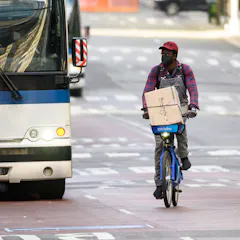
Low-income and minority groups are often reliant on cheaper modes of transport, but many find cycling to work problematic.
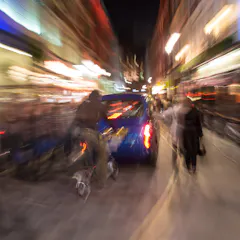
Our research calculates how dangerous different vehicles are to other people.
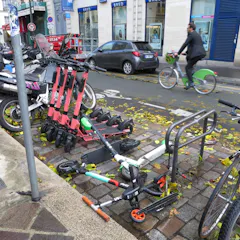
In major cities around the world, dockless scooters and bikes are everywhere, yet the companies themselves are often breathtakingly short-lived. Basic economic concepts give us clues why.

Bike helmet laws are meant to be about safety. But the hefty penalties and huge number of fines are causing resentment – made worse by some police abusing the law to stop, question and search riders.
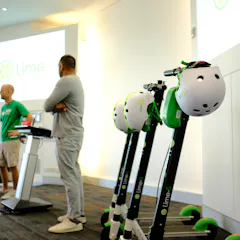
Every day, e-scooters and helmets are put out together, but some people ride without helmets and at the end of each day helmets are missing. So what can be done to ensure safe riding behaviour?
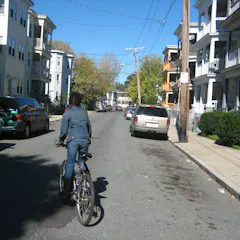
Minorities are driving the bicycling boom, but bike infrastructure investments often neglect their needs. A new study explores what riders in low-income and minority neighborhoods want.
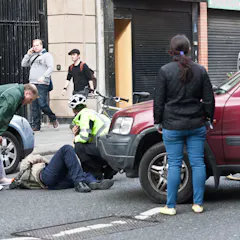
Australia has had an 80% increase in cyclist deaths in 2017-18. With drivers at fault in most collisions, their attitude and behaviour should be the main targets for change.
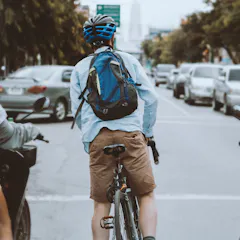
What’s your risk of dying if you cycle to work, versus the health benefits? What about walking, or driving, or catching a train? Here are the risks and benefits.
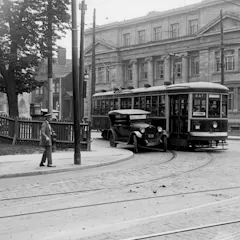
Torontonians have been experiencing pedestrian and bicyclist fatalities since the advent of the automobile. The one way to stop the deaths is to ban cars but since that won’t happen, what can be done?
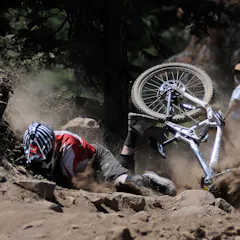
The warm summer months encourage more of us to get outside and exercise, whether by shooting hoops or riding a bike. But there’s a downside: higher risk of injury.

Electric rideables are making life less comfortable and more dangerous for pedestrians. Here’s how makers of rideables could help make cities safer for everybody.

Collisions at intersections between motor vehicles, cyclists and pedestrians cause many deaths and injuries. Design that considers how each group approaches intersections improves everyone’s safety.

How a curious case of wanton and furious driving is leading to a much-needed overhaul.

More cyclists are suffering from serious injuries than ever before. Here’s what we can do to provide a safer environment.
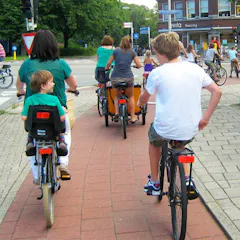
The evidence suggests a small investment in cycling infrastructure, combined with less punitive policing, would enable more Australians to escape daily traffic congestion.
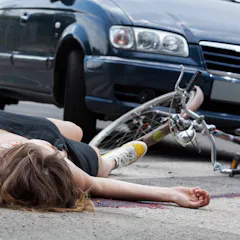
The primacy given to the car has shaped our cities, the roads that serve them and our very thinking about the place of driving in our lives. And it’s a mindset that leaves cyclists highly vulnerable.
Top contributors
-
 Chris Rissel is a Friend of The Conversation.
Senior Research Fellow, College of Medicine and Public Health, Flinders University
-
Associate Professor and Head of Sustainable Mobility and Safety Research, Monash University
-
Postdoctoral Research Fellow, Monash University
-
Senior Research Fellow, Road Safety and Injury Prevention, UNSW
-
Senior Researcher, Institute of Transport Studies, Monash University
-
Professor, School of Mathematics and Statistics, UNSW
-
Professor of Transport, University of Westminster
-
Senior Research Associate, University of Oxford
-
Adjunct Associate Professor of Public Health, Victoria University
-
Lecturer in Law, The Open University
-
Associate Professor in Marketing, Keele University
-
Deputy vice-chancellor (Research), Edith Cowan University
-
Lecturer, La Trobe Law School, La Trobe University
-
Professor of Human Factors, University of the Sunshine Coast
-
Post Doctoral Fellow, Faculty of Engineering, McMaster University