

It might appear to many that atheism is a modern idea. However, in parts of Asia, particularly in India, atheism has been part of beliefs for thousands of years.
Articles on Beliefs
Displaying 41 - 60 of 60 articles

Research suggests people intuitively draw a distinction between what is known and what is believed. Recognizing the difference can help in ideological disagreements.

If you believe that physiotherapy will help your shoulder pain, it probably will.

When your kids stop believing, it’s probably harder on you than on them.

If you disagree with the political slant of the network, it might color your views of others in the room – and change your behavior.

Throughout Catholic history, miracles have been attributed to Virgin Mary’s power. She is understood to cry not only over the sins of the world, but over the pain she experienced in her earthly life.

This is the real reason you believe in superstitions.
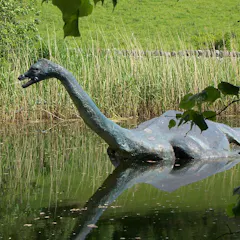
If you’re committed to a belief, it’s hard to let go. Psychology and philosophy provide different ways to think about how skeptics respond to counterevidence.

Seeing is not just believing. Seeing changes what we believe, about ourselves and about other people.
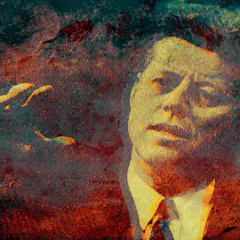
In the minds of many, the assassination remains a tragedy cloaked in mystery. How does this lack of closure – and the general distrust it fomented – resonate in American culture and politics today?

The Antill 7: On belief
The Conversation, CC BY-ND46.9 MB (download)
Four stories on belief: from the allure of cults and conspiracy theories, to the effect of trauma on faith, to the way dogma has influenced science – and if technology can actually shift our beliefs.

Social scientists investigate when and why liberals and conservatives mistrust science. The apparent split may be more about cultural and personal beliefs than feelings about science itself.
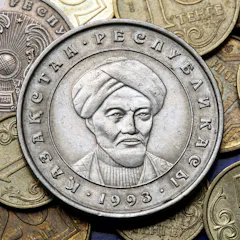
Abu Nasr al-Farabi can teach us about the thinking behind radicalisation, and offers a warning to terrorists guilty of ‘over-belief’.

People with different views on guns don’t just see guns differently, they see the world differently.

The very goal of science, to discover the new and unknown, is hampered by any outdated personal beliefs scientists hold.

While children from religious households may seem less generous according to one piece of research, seen in another light these traits may be a good thing.

People rate the risks of global threats to humanity surprisingly high. We need to understand the impacts of a loss of faith in notions of material progress and scientific and technological fixes.
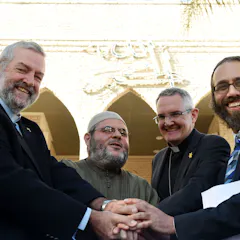
There are religious and non-religious extremists and we should not confuse violent believers with religion itself, which has a long history of peacemaking.

Naive theories of all kinds persist in the face of contradictory arguments and even in those who know them to be false.

All sorts of claims about religious decline are flying around at the moment, from George Carey’s comment that the Church of England is “one generation away from extinction” to Richard Dawkins’ comments…
Top contributors
-

Senior Lecturer and Researcher in Cognitive and Parapsychology, Manchester Metropolitan University
-
Professor in Applied Cognitive Psychology, Manchester Metropolitan University
-
Professor of Psychology, Hope College
-
Professor of Religious Studies, College of the Holy Cross
-
Director, Center for Public Interest Communications, University of Florida
-
Research Scientist, UCLA Center for Behavior, Evolution, & Culture, University of California, Los Angeles
-
Professor of Philosophy of Science, King's College London
-
Research Fellow, Coventry University
-
Professor Emeritus of Cognitive NeuroImaging, Aston University
-
Senior Lecturer in Philosophy , University of Sussex
-
Assistant Professor of Psychology (Perception and Cognition), Indiana University
-
Senior Lecturer in Bioethics, Australian National University
-
Psychologist and Programme Leader, University of Salford
-
Psychologist and Programme Leader, University of Salford
-
Director of External Research for frank, College of Journalism and Communications, University of Florida