
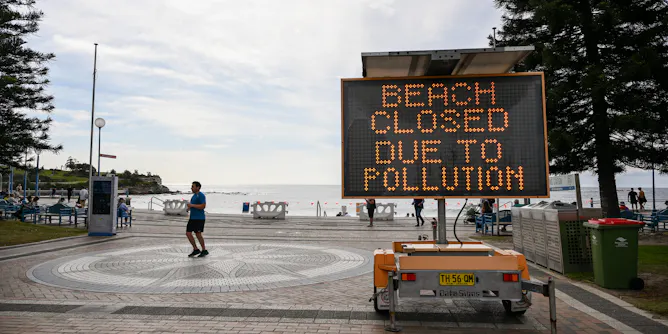
There’s a good chance the objects on Coogee beach are not, as some have suggested, tar balls. But in any case, they pose a potential risk and authorities are right to close the beach.
Articles on Beaches
Displaying 21 - 40 of 95 articles

It was Coco Channel who first made tanning fashionable. But South Californian and Polynesian surfers and American artists on the Côte d'Azur gave it its ‘raison d'être’.

Kids love digging and may not realize the dangers a hole in the sand can pose.
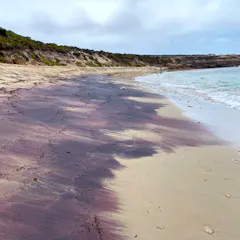
The hunt for the origin of garnet crystals found on South Australian beaches took researchers thousands of kilometres and half a billion years back in time to a hidden Antarctic mountain range.
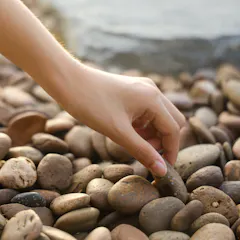
People taking pebbles from some beaches in Cumbria, England, will now face fines of up to £1,000.

Visitor numbers to national parks are increasing. It means masses of people are being funnelled into potentially dangerous locations for which they may be unprepared.

With smartphones as commonplace as towels and sunscreen in the beach bag, why not add coastal data collection to your list of holiday activities this summer? Look for the CoastSnap camera cradles.
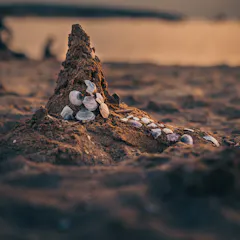
Building a sandcastle is a response to the full beach environment as a collaborator.
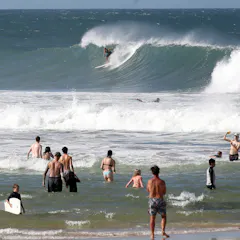
All 54 drownings on the Australian coast last summer occurred in locations not patrolled by professional lifeguards or volunteer surf lifesavers. That is a stark statistic.

People love natural swimming spots, but it’s important to manage them well to protect both swimmers and the environment.

Storms are the greatest threat to beach erosion, not sea level rise, research reveals. This is the longest continuous beach monitoring survey in the Southern Hemisphere.

Environmental degradation of Nigeria’s Niger Delta region is causing poverty as well as food insecurity, increased crime and conflict.
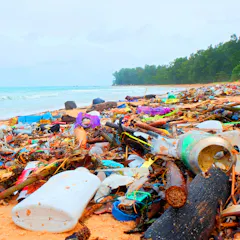
Volunteers have been collecting and sorting washed-up rubbish on the beach for years. Thanks to their efforts, we have data on whether container deposit schemes help the issue.
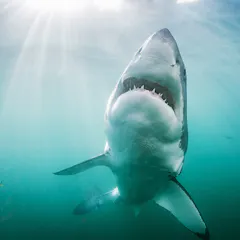
South Africa’s white shark population is not in decline but migrating to survive.
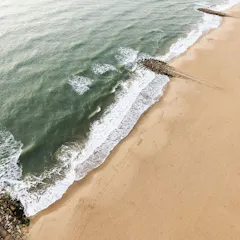
Coastlines need to be recognised as dynamic, shifting environments rather than as environments that need to be controlled and managed.
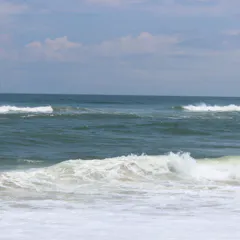
Rip currents are a leading cause of near-shore drownings, but there are effective ways to survive one. And these phenomena also play important ecological roles that are an emerging research area.
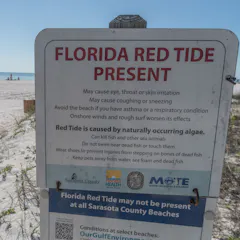
The tiny organisms that cause harmful blooms of algae can have a big impact on your trip to the shore. A toxicologist explains what causes these events and how to keep people and pets safe.
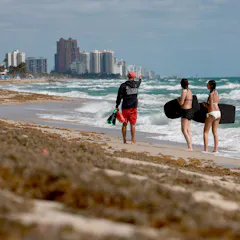
Scientists are predicting a record sargassum bloom in 2023. It’s already starting to wash up on beaches in Florida and the Caribbean and cause a stink.
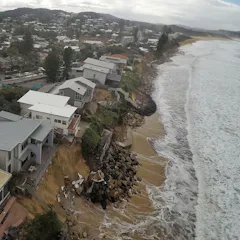
We can now monitor coastal changes across thousands of beaches over the last 40 years, from Australia, New Zealand and Japan, to Chile, Peru, Mexico and California. Here’s what our new tool uncovered.
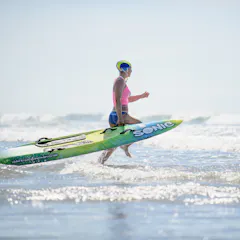
For a long time, surf lifesaving was a bastion of masculine ego and pride – until some tenacious and talented women turned the tide.
Top contributors
-

Research Fellow in Public Health, The University of Queensland
-
Professor of Coastal Science, Florida International University
-
Scientia Senior Lecturer, UNSW
-
Associate Professor in Environmental Science, Western Sydney University
-
Associate Professor in Coastal and Marine Science, University of Newcastle
-
Professor in Department of Earth and Environmental Science, and Dean of Science, University of Waterloo
-
Senior Lecturer, School of Business, Western Sydney University
-
Adjunct Professor, Southern Cross University
-
Associate Research Professor and Director, Texas Sea Grant, Texas A&M University
-
Marine Biologist, South African National Parks (SANParks); Honorary Research Associate, South African Institute for Aquatic Biodiversity (SAIAB), South African Institute for Aquatic Biodiversity
-
Director, Ocean and Coastal Policy Center, Marine Science Institute, University of California, Santa Barbara
-
Senior Lecturer in Ocean and Earth Science, University of Southampton
-
Associate Professor in Physical Geography, University of the Sunshine Coast
-
Senior Principal Research Scientist, Environment, CSIRO
-
Professor, College of Science and Engineering, Flinders University