
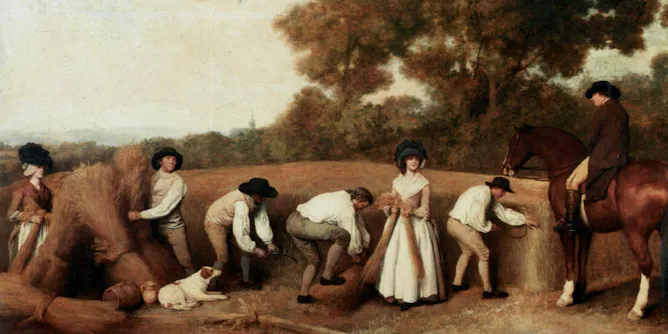
Today’s basic income proponents say cash payments would be good for everyone. In the 1790s, the idea’s inventor argued something else: It was owed to everyone.
Articles on Basic income grant
Displaying all articles
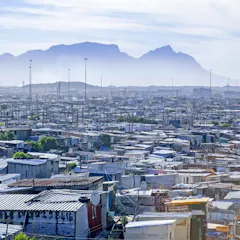
Economic modelling suggests that a basic income grant for all individuals aged between 18 and 59 could significantly reduce poverty and inequality in South Africa.
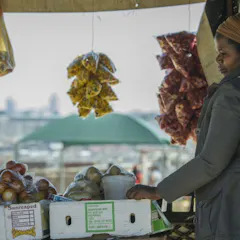
An unfunded expansion of the social transfer system could lead to even worse economic outcomes — the medicine should not be worse than the disease.
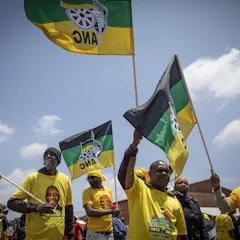
The deliberations were characterised by disingenuous, counter-factual policy pronouncements, and de facto denials of the ANC’s culpability in causing many of the current problems facing the country.

The sums aren’t adding for South Africa on either the spending or revenue side. It’s a problem that’s developed over time with no action being taken.

Can the structural barriers to low-skilled employment growth be overcome?
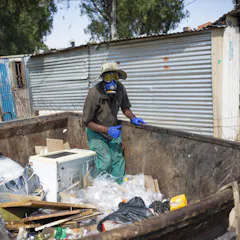
Basic income must be embedded within a broader strategy of economic reform, aimed at increasing the social wage and improving working conditions.
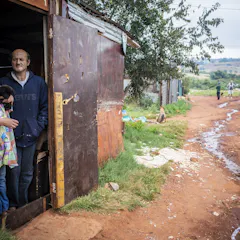
There is no substance to the view that poor people are lazy and prefer to live on handouts from the state rather than seek work.
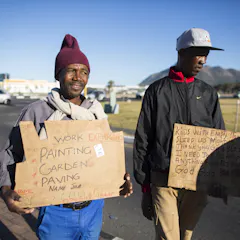
The COVID-19 pandemic has worsened unemployment and poverty, showing the need for the government to permanently expand income support to working-age adults.
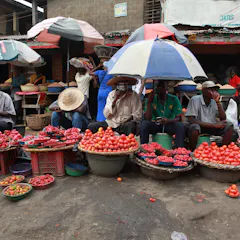
The continued entrapment of African countries in the global circuit of capital and its proclivity to large scale accumulation imperils the ability of many to cope with the pandemic.

The relative success of the CERB during the pandemic shows the time is finally right for a permanent basic annual income program.
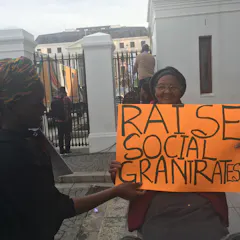
To begin to deal with South Africa’s persistent poverty, high unemployment, and the economic aftermath of the pandemic, grant increases must remain in place after the six month period.
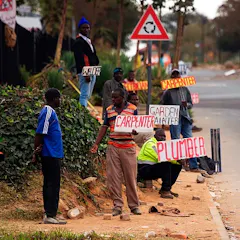
Economic distress was the norm for many before the coronavirus outbreak. The pandemic is an opportunity to provide an economically secure future for all.
Top contributors
-

Associate professor, University of Johannesburg
-
Assistant Professor-Institute of African Studies, Carleton University, Carleton University
-
Visiting Professor and Professor Emeritus, University of the Witwatersrand
-
Lecturer, Department of Sociology, University of Cape Town
-
Associate Professor of Economics, University of Manitoba
-
Professor, Economics, University of the Western Cape
-
Lecturer, University of the Western Cape
-
Research Fellow, Institute of Development Studies
-
Lecturer (Assistant Professor), King's College London
-
Research Associate, Stellenbosch University
-
Research Associate, Stellenbosch University
-
Senior Lecturer, Stellenbosch University
-
Senior lecturer, University of the Witwatersrand
-
Instructor, Department of Geography and Environmental Studies, Carleton University
-
Visiting Professor at the Business School, University of the Witwatersrand