

Detecting impaired motor function in infants using AI-driven motion capture is producing promising results. A French research team introduces the new screening tool for spinal muscular atrophy (SMA).
Articles on Axa Research Fund (English)
Displaying 1 - 20 of 129 articles
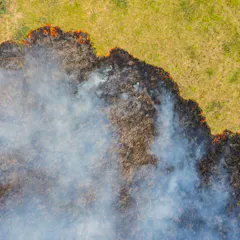
Studying the scale and intensity of previous fires can help us to detect thermal hotspots earlier and support faster, smarter crisis response and post-fire restoration.
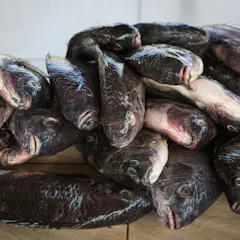
Navigating the benefits and risks of eating fish is a daily concern for consumers in Kenya due to persistent environmental pollution. How much are they influenced by nutritional labelling and guidelines?

Extreme storm surges can be predicted much faster with high accuracy thanks to a new AI model that helps researchers and practitioners improve coastal flood risk assessment and adaptation planning.

Heart disease isn’t just a “man’s problem”. Men and women’s bodies handle fats differently in midlife. What are the cardiovascular risk factors and is hormone therapy good for heart health?
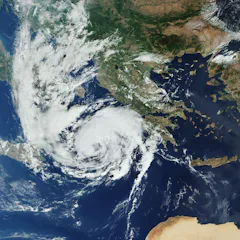
Freak tropical-like storms are highly sensitive to climate change and as a result, could be coming soon to the Mediterranean.
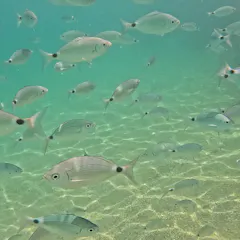
The Mediterranean is one of the world’s most vulnerable ecosystems. A scientific study on shifting distribution dynamics examines how its fish species contend with sea warming.
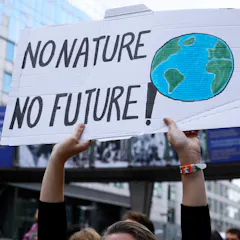
New research questions the “eco-anxiety” label and whether it really encompasses the complexity of the emotional, mental or physical distress young people feel over the planet’s woes.
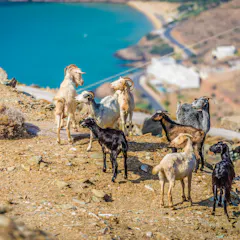
Invasive alien species don’t only drive out other native species, they also dramatically transform soils, water and ecosystems. A new assessment tool aims to pinpoint the negative environmental impacts.
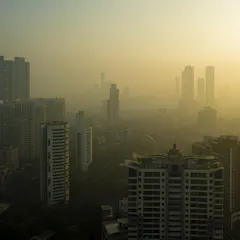
New research reveals that the adverse environmental and health impacts of atmospheric dust in the world’s rapidly growing megacities deserve far more attention.

The choices made in Brazil, where the COP30 UN climate conference takes place this month, have consequences for the entire planet.
A recent survey suggests that young women in France, who are held back by gender stereotypes, may also be eschewing scientific fields because they prioritise subject passion more often than men.

Individuals, organisations, countries and AI developers all have a role to play.

Is it possible to interpret babies’ cries in order to understand their needs accurately?

We are exposed to countless chemicals every day, some of which can harm our health. Measuring the effects of this pollution is a major challenge.
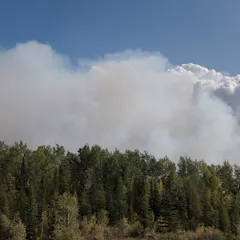
As global temperatures rise, wildfires are advancing further north. Many of them burn through peat, which contains massive amounts of carbon.
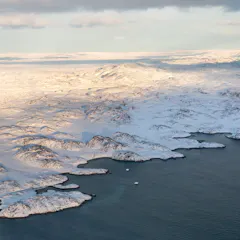
Planners need more reliable projections of future sea-level rise to protect communities and ecosystems. A new method helps produce them.

Storing data in the cloud still comes with security risks. Researchers are developing new methods to address them.

AI systems can appear to be black boxes – often, even experts don’t know how systems reach their conclusions. The nascent field of “explainable AI” aims to address this problem.

The equivalent of four more years of global CO₂ emissions could soon be released into the atmosphere, exacerbating climate change.
Top contributors
-

Director of African Climate and Development Initiative, Professor in Environmental and Geographical Science, University of Cape Town
-
Anthropologie, EHESS, CNRS, Laboratoire d'anthropologie sociale, Collège de France, Auteurs historiques The Conversation France
-
Directeur de recherche CNRS, Expert for Conservation Biology, Axa Chair for Functional Mountain Ecology at the École Nationale Supérieure Agronomique de Toulouse, Centre national de la recherche scientifique (CNRS)
-
Professeur, philosophe et politologue, École normale supérieure (ENS) – PSL
-
Associate professor, London School of Hygiene & Tropical Medicine
-
Digital Sociologist, Sciences Po Paris, Sciences Po
-
Dean for Diversity Inclusion and Sustainability, Professor of Public Economics, Director of Axa Research Lab on Gender Equality, Bocconi University
-
Lecturer in Mathematics, University of Dundee
-
Assistant Professor, Goethe University Frankfurt am Main
-
PhD student in nutrition and health economics, Paris School of Economics – École d'économie de Paris
-
Associate Professor, Università di Foggia
-
AXA Research Fellow, Università di Foggia
-
Hydrologue, directeur de l’unité de recherche HYCAR, ingénieur général des ponts, eaux & forêts, Inrae
-
Postdoctoral Fellow, Institute for Environment and Human Security (UNU-EHS), United Nations University
-
Professor of Landscape Ecology, Humboldt Universität zu Berlin, Helmholtz Centre for Environmental Research-UFZ