
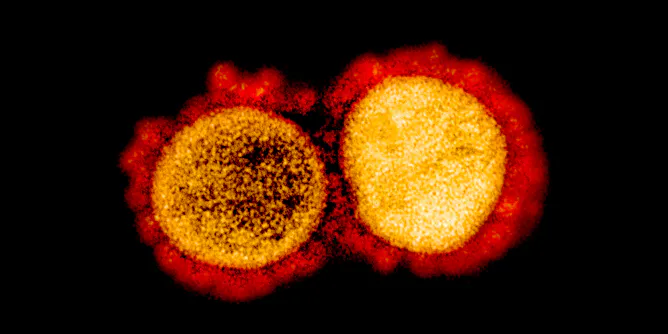
The SARS-CoV-2 virus at the origin of the Covid-19 pandemic is one ten-thousandth of a millimeter in diameter. How can such a microscopic organism have such an immense impact on global health?
Articles on Axa Research Fund (English)
Displaying 61 - 80 of 129 articles

A new study explores the challenges that pregnant women in megacities such as Lagos face in emergency situations and how the options vary depending on their socioeconomic status.
Understanding fire history is crucial to designing effective fire management in order to maintain biodiversity and support the livelihoods of people.
All animals plays a role in nature, and in times of biodiversity loss and climate change, hunting “common” species such as foxes and badgers is irresponsible .
After the Covid-19 pandemic, we must seize the opportunity to make urban centers more livable places by investing in affordable housing, basic services, clean energy and active transport.

An external shock such as coronavirus merely presses pause on conflicts and offers little hope for solutions.

An expert in domestic violence and abuse explains how you can help those you are worried about.

A study of Ghanaians living in northern England provides insight into how eating habits change through the generations.
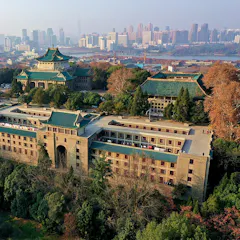
The strong crisis management in Wuhan will probe the capacity of the Chinese government to prepare adequately for pandemic and may test Xi’s rule.
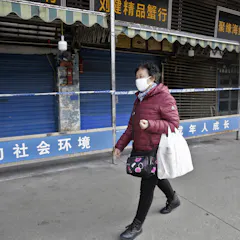
Exotic and sensational depictions of Chinese “wet markets” may prevent a proper and efficient understanding of how viral diseases emerge.
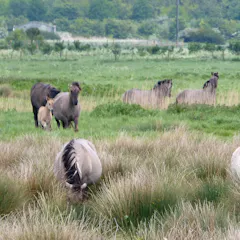
The Toolkit for Ecosystem Service Site-based Assessment (TESSA) allows NGOs to quantify the economic advantages of maintaining ecosystems, helping preserve biodiversity by putting a value on it.

Companies can make a significant contribution to the resilience of communities, and they need not do so only for philanthropic or regulatory reasons. At times, it makes good business sense.

Recent experimental results suggest that distortions in the perception of wealth are linked to fast, inattentive thinking.
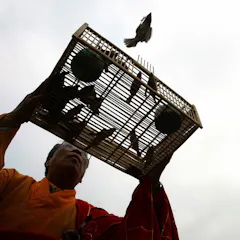
Hong Kong protesters deeply identify with nature, a reference to the current environmental crisis but also a fluid conception of collective action that is inscribed in ancient Chinese tradition.

In the Catalan Pyrenees, women shepherds and cattle ranchers try to valorise the ancestral agropastoral culture to save the mountains from climate change.
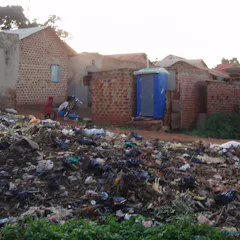
Residents have come up with solutions to make usable products out of organic waste materials.

Hardware could exploit the properties of scattered light so that computations happen at high speed and with low power consumption.

New research indicates that rising temperatures can push those who prefer sweets to drink more sugary beverages, not water. This has significant implications for public-health policy.

As climatic conditions change, plants’ odours are altered, with direct consequences for pollination, especially by bees.

Maps that divide the world into ‘no-go’ and ‘safe’ zones has created a new politics of danger.
Top contributors
-

Director of African Climate and Development Initiative, Professor in Environmental and Geographical Science, University of Cape Town
-
Anthropologie, EHESS, CNRS, Laboratoire d'anthropologie sociale, Collège de France, Auteurs historiques The Conversation France
-
Directeur de recherche CNRS, Expert for Conservation Biology, Axa Chair for Functional Mountain Ecology at the École Nationale Supérieure Agronomique de Toulouse, Centre national de la recherche scientifique (CNRS)
-
Professeur, philosophe et politologue, École normale supérieure (ENS) – PSL
-
Associate professor, London School of Hygiene & Tropical Medicine
-
Digital Sociologist, Sciences Po Paris, Sciences Po
-
Dean for Diversity Inclusion and Sustainability, Professor of Public Economics, Director of Axa Research Lab on Gender Equality, Bocconi University
-
Lecturer in Mathematics, University of Dundee
-
Assistant Professor, Goethe University Frankfurt am Main
-
PhD student in nutrition and health economics, Paris School of Economics – École d'économie de Paris
-
Associate Professor, Università di Foggia
-
AXA Research Fellow, Università di Foggia
-
Hydrologue, directeur de l’unité de recherche HYCAR, ingénieur général des ponts, eaux & forêts, Inrae
-
Postdoctoral Fellow, Institute for Environment and Human Security (UNU-EHS), United Nations University
-
Professor of Landscape Ecology, Humboldt Universität zu Berlin, Helmholtz Centre for Environmental Research-UFZ