
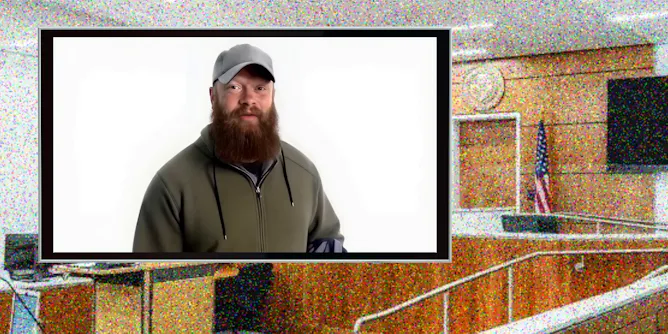
An Arizona court allowed a deceased victim to ‘speak’ as an AI avatar during a sentencing hearing. Could Australian courts do the same thing?
Articles on Avatars
Displaying all articles

AI avatars of dead people are teaching courses and testifying in court. Even with the best of intentions, the emerging practice of AI ‘reanimations’ is an ethical quagmire.
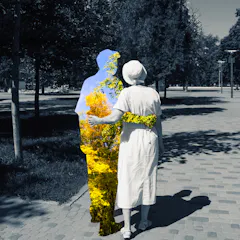
Ethical and legal issues around death in the digital age are thorny enough dealing with social media accounts. AI puts the notion of a digital afterlife into overdrive.
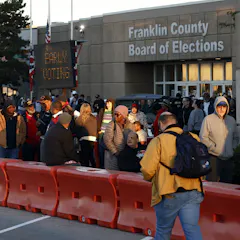
Like it or not, AI is now part and parcel of elections, from helping with mundane campaign functions to enabling politicians to speak to constituents in multiple languages at once.

Laughter is one of the most ubiquitous and pleasurable things humans do, which is why companies online want to know what we find funny.

Fans who flock to see ABBA Voyage, a digital avatar concert, chase the feeling of a live ABBA performance. They’re finding it, and they’re building meaningful connections, too.
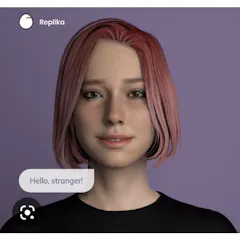
The sudden removal of ‘erotic’ features from the virtual friend app has left lovelorn users high and dry.

People form as strong attachments to gaming universes and can mourn their loss as keenly as physical places.

Young people have lost out from recent developments in the labour market. Could the shift to working in virtual reality be about to turn the tables?

Creating holographic ‘digital twins’ will significantly reduce the stress, cost and logistical issues of touring – and means artists can live forever onstage.

While the metaverse offers new virtual space for classrooms of the future, it is also rife with potential pitfalls, a scholar of philosophy writes.

We need to think about legislation and regulation when it comes to transactions, data protection and user interaction in the metaverse.

That impossibly beautiful model on Instagram might be just that. CGI influencers are already on social media, and Meta’s commercial interest means it shouldn’t be in charge of the ethical guidelines.
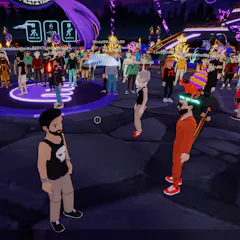
For the metaverse to work, people need to own their virtual bodies and possessions and be able to spend money. The same cryptographic technology behind bitcoin will make that possible.
People may think of the metaverse as virtual, but the harm terrorists and extremists could do is very real.

The metaverse is science fiction, but a lot of people in Silicon Valley are working to make this interconnected virtual reality a, well, reality.

Game design engages players through emotional identification and physical participation, and relies heavily on the role of human hands in knowing and navigating the world.
Top contributors
-

Associate Professor of Media and Information, Michigan State University
-
Professor of Philosophy and Director of Applied Ethics Center, UMass Boston
-
Assistant Professor of Political Science, University of Nebraska Omaha
-
Senior Lecturer in Digital Marketing, University of the West of Scotland
-
Assistant Professor of IT Innovation, University of Nebraska Omaha
-
Senior Lecturer and Programme Leader for Performance, University of the West of Scotland
-
Senior Lecturer in Comparative Culture, Literature and Translation, University of Sydney
-
Senior Lecturer (Associate Professor) in Bio-Law, Brunel University of London
-
Professor of Organizational Psychology, University of Nebraska Omaha
-
Scientia Professor of Evolution, UNSW
-
Associate Professor in Psychology, University of East Anglia
-
Doctoral student in Media and Information, Michigan State University
-
Instructor, Department of English, University of Winnipeg
-
Senior Lecturer in Cultural Studies and Media, Macquarie University
-
Assistant Professor of Music, Ambrose University