

Pausing COVID-19 vaccine rollouts can backfire. There are better ways to manage safety issues while they’re being investigated.
Articles on Autonomy
Displaying 21 - 39 of 39 articles

Lockdown requires that we all act as if we know nothing, even if we are world experts on disease transmission.

Research reveals a complicated relationship between surveillance and freedom, as surveillance activities allow for greater autonomy for women hoping to work in Jordan.
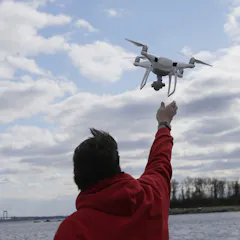
Modified commercial drones are getting more powerful and can easily be turned into weapons. A researcher argues for ways to prevent their development.

At first glance, it would seem like nothing has changed since 1991. Yet, things have been slowly and discreetly evolving in recent years at Morocco’s behest.

England is moving to an opt-out organ donation scheme. Here’s how it could be a success.
Disability, autonomy and euthanasia – an uncomfortable debate.

The loud noise might be a warning that there is something falling nearby, or flying towards you. Our brain tells our eyes to quickly shut, to help protect them from any damage.

Archbishop Bishop Desmond Tutu is well known for having invoked an ubuntu ethic to evaluate South African society, and he can take substantial credit for having made the term familiar.

Older people in nursing homes or aged care facilities are often locked up “for their own safety”, which new research says isn’t usually needed.

Together, three recent events mark a crucial turning point in the development of autonomous cars: They are both safer and more advanced than ever before.

The ethics and psychology of trust suggest ways we might learn to understand self-driving cars, but also show why doing so might be more challenging than we expect.

Without a human operator on board, how can a drone steer clear of collisions? Technology from autonomous cars can help.

The law should allow greater communication between health professionals, families and carers even if this impacts on patients’ rights of confidentiality.

The politicisation of academia definitely contributes to a decline in academic standards. This is a situation South Africa must work hard to avoid. It can learn from others on the continent.

Flexible work is on the rise but research shows it often leads to people working longer hours than they would otherwise.
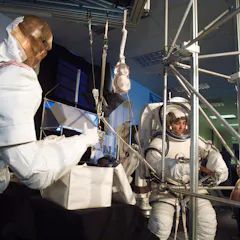
People and machines need to be able to interact and communicate effectively. Right now we – and they – can’t. But without that, we risk missing the potential benefits of collaboration.

There is something magical about seeing 1,000 robots move, when humans are not operating any of them. In a new study published in Science, researchers have achieved just that. This swarm of 1,000 robots…

The debate over the use of mandatory pre-commitment technology in poker machines is the latest front in an ongoing war that pits advocates of personal responsibility against people motivated by concerns…
Top contributors
-

Professor of Data Science, Philosophy, & Policy, University of California, San Diego
-
PhD Candidate and Research Fellow at the Monash Health [Health and Social Care Unit], Monash University
-
Professor of Philosophy, University of Pretoria
-
Professor, Aged Care Medical Research Australian Centre for Evidence Based Aged Care, La Trobe University
-
Academic, The University of Melbourne
-
Professor of Electrical Engineering, Ohio University
-
Senior Research Fellow, Uehiro Centre for Practical Ethics, University of Oxford
-
Director of the King's Global Institute for Women's Leadership, Professor of Work and Employment, King's College London
-
Adjunct professor of mechanical engineering, Tufts University
-
Teaching Assistant, Curtin Law School, Curtin University
-
Lecturer in Robotics, University of Bristol
-
Researcher, University of Washington
-
Senior Policy Fellow
-
Associate Professor, Social & Behavioural Health Sciences, Dalla Lana School of Public Health, University of Toronto
-
Associate Professor of Mechanical and Aerospace Engineering, University of Florida