
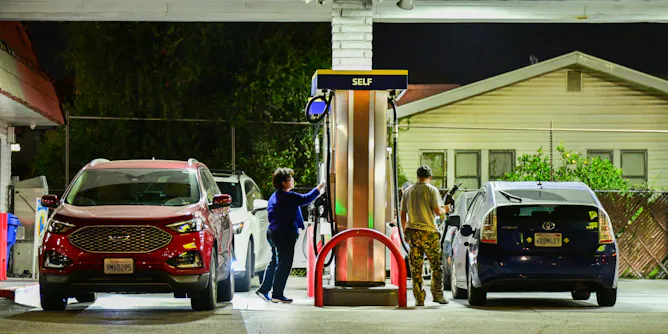
Oil prices affect the US economy differently than in past decades. Nowadays, the US is less reliant on oil imports and uses less oil to produce more economic output.
Articles on Auto industry
Displaying 1 - 20 of 46 articles
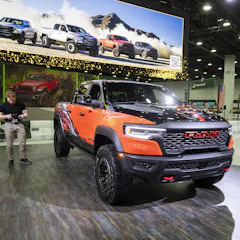
Electric vehicles are a fast-growing share of auto sales in many countries, and Chinese automakers are benefiting as the US industry pulls back.

In 1982, the brutal beating and death of Vincent Chin near a Detroit nightclub enraged the Asian American community and led to changes in the legal system.

Would-be buyers are still put off by a patchy national charging network.

Foreign investment thrives on stability. Trump’s tariffs − and the current climate of uncertainty − could drive capital away.
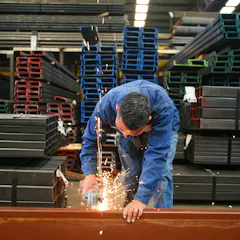
The shock will fall hardest on consumers, certain industries, and states that are sensitive to supply-chain disruptions.
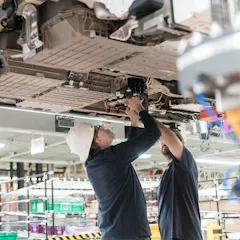
The future of these job-generating gigafactories, many of them in Republican states, could be at risk if the next president tries to wipe out the programs that made them possible.
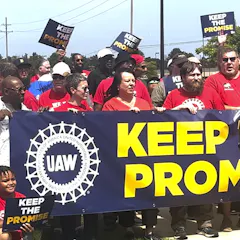
The union averted a small-scale strike at a Ford factory, but tensions with Stellantis have not eased.
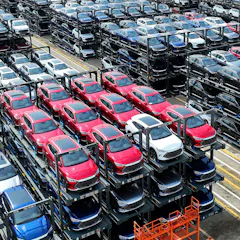
The early timing of Biden’s move, changing supply chains and national security fears suggest the tariffs might work this time, at least for a while.

Honda’s investments in Ontario is further evidence that Canada’s EV manufacturing sector is booming, and set to grow further.
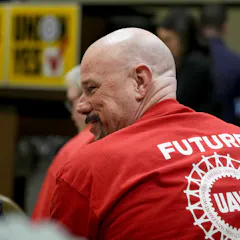
The Mercedes auto workers will vote on union membership in mid-May.

New charts and data show how corporate demand could boost clean energy investment in regions where renewable energy potential is strong but wind and solar power have lagged.
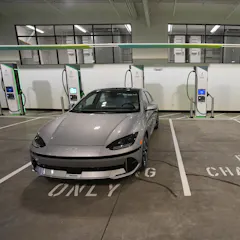
The new rule isn’t a mandate for electric vehicles, but it will sharply increase their market share over the coming decade.
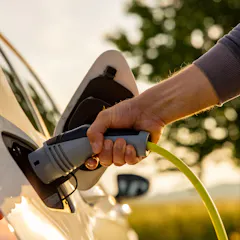
This seemingly cutting-edge technology isn’t entirely new to our century.
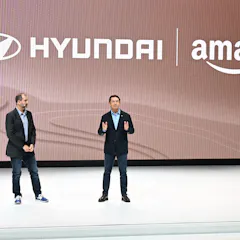
The ‘everything store’ doesn’t offer every type of car, at least not yet. But a pilot program could still be a step toward online auto sales.
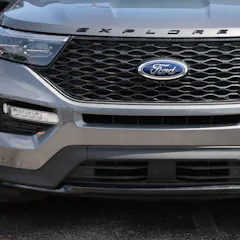
Rank-and-file union members employed by the automakers have to ratify the new contracts before they become official.

The companies are making more generous offers, and the union is commanding support from the general public and the president of the United States.

For the kind of money the federal and Ontario governments probably spent for a Volkswagen EV battery plant in southwestern Ontario, Canada might have been able to launch its own EV maker.
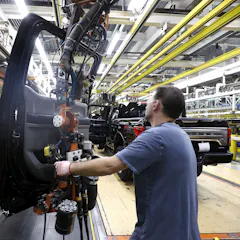
Results already in from the first direct leadership election in the UAW’s 88-year history present a sharply divided leadership.
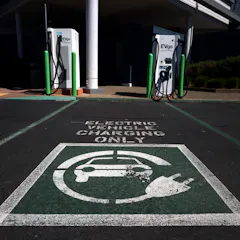
If the EV transition focuses exclusively on drivers in privately owned cars, it won’t meet many Americans’ mobility needs, particularly in underserved communities.
Top contributors
-

Senior Lecturer and Co-Director, Electric Vehicle Centre of Excellence (EVCE), Cardiff University
-
Professor Emeritus of Business, Wayne State University
-
Professor of Environmental Studies, Wellesley College
-
Director, Energy, Climate Justice, and Sustainability Lab, and Research Professor, New York University; Tufts University
-
Professor of International Relations, American University School of International Service
-
Professor of Economics, University of Minnesota Duluth
-
Associate professor, The University of Western Australia
-
Co-director, STEPS (Sustainable Transportation Energy Pathways), University of California, Davis
-
Professor of Marketing, University of Southampton
-
Professor of Business Economics, University of Birmingham
-
Associate Professor, Global Management Studies, Toronto Metropolitan University
-
Professor of Marketing, UMass Lowell
-
Senior Lecturer in Product Design, Nottingham Trent University
-
Assistant Professor of Entrepreneurship, University of Southern California
-
Professor of Law, Drake University