

Parents want to see if medicinal cannabis can help their child’s behavioural or emotional problems. But the evidence isn’t in and there are potential safety concerns.
Articles on Autistic
Displaying 1 - 20 of 29 articles

Sometimes the bravest and most important thing you can do is cook dinner and gather with the people you love.

A new survey shows parents and carers have strong ideas about how a program for kids with disability could be designed.
There are lots of myths about autistic people who don’t talk. Here are three and why they’re so wrong.

Autistic kids need love, to learn through everyday activities and strong connections with family, culture and community. Here’s what’s best practice to support them.

Parents of autistic children have much higher levels of stress than parents of children with other disabilities. And it’s not just about the autism itself.

The core features of autism can’t and don’t need to be altered. But medications can help manage autistic people’s physical and mental health conditions.

A better understanding of why parents of children with special needs choose homeschooling can provide insights to help improve public schools.
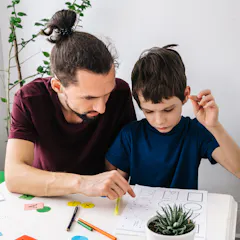
The strategy’s success will depend on maintaining a clear focus on implementation, equity and inclusion.

Amanda Tink is one of many autistic people with reservations about Mark Haddon’s bestseller, which perpetuates harmful myths. But new productions starring autistic actors are a positive development.

A research project led entirely by autistic people aims to change the way autism research is conducted.

A one-off trip to a day spa is unlikely to transform your mental health. But these expert tips might help you cut yourself some slack.
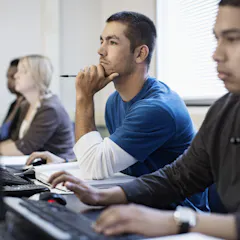
Self-advocacy and taking initiative have proven critical for autistic students who are also gifted, new research shows.

New research sheds light on how autism affects how we feed our babies, and vice versa.

Autism health passports are a tool designed to help autistic people access healthcare more easily.

Agatha Christie never explicitly said so, but many of her Belgian detective’s character traits could be interpreted as being autistic.

Masking or camouflaging is where people conceal certain traits and replace them with neurotypical ones to avoid being recognised as visibly neurodiverse.

We see a lot about the challenges and limitations associated with autism – but less about the real strengths autistic people bring to the workplace. Here’s how to make workplaces more autism-friendly.

This is just one example of how being ‘different’ can lead to being treated differently.
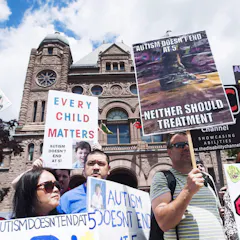
An autism policy researcher and the mother of an affected child weighs in on the recent changes announced to the Ontario Autism Program.
Top contributors
-

Associate Professor in Public Health and Wellcome Trust Career Development Fellow, Swansea University
-
Professor of Inclusive Practice, Sheffield Hallam University
-
Assistant Researcher in Public Health, Swansea University
-
Lecturer, Nursing Science, Edinburgh Napier University
-
PhD Researcher in Autism, Family and Communication, Northumbria University, Newcastle
-
Associate Professor of Health Studies, Research Associate, International Migration Research Centre, Wilfrid Laurier University
-
Professor of the Archaeology of Human Origins, University of York
-
Lecturer in Psychology, specialising in the development and disorders of language, University of York
-
PhD Candidate in Access to Healthcare for Autistic Adults, Cardiff University
-
Senior Lecturer in Inclusive Education, University of Glasgow
-
Senior Lecturer in Psychology, The University of Melbourne
-
Professor, Public Service Research, UNSW
-
Senior Lecturer of Wellbeing Science, The University of Melbourne
-
Research fellow, The University of Melbourne
-
Senior Lecturer in Animal Science, Nottingham Trent University