

Levees protect more than 7 million buildings in the US today, yet they got a D-plus grade in 2025. A new study found 487 cases where rising water overtopped levees in the past 15 years.
Articles on Atmospheric rivers
Displaying 1 - 20 of 21 articles

Health systems are made up of people who are often members of the same disaster-stricken communities they serve. They respond to climate-related events, but are affected by them too.
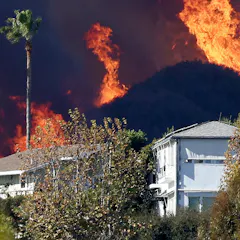
The state is seeing a sharp water divide this year, with lots of rain in the north while the south has stayed dry. A hydrologist explains what’s happening.

A powerful storm hitting the West Coast combines these phenomena for a wet week of erratic weather, as a meteorologist explains.

These powerful ‘rivers in the sky’ provide a huge share of annual precipitation in many regions, including California. They can also melt sea ice, with global climate implications.
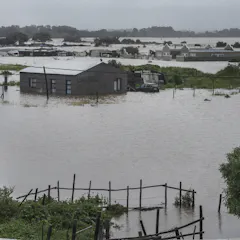
Cape Town’s storms caused severe flooding and extreme winds that fan wildfires. Early warning systems are important in protecting people from these dangers.
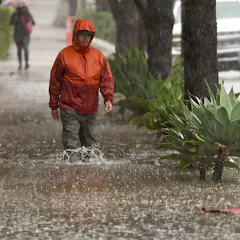
The strong El Niño that started in 2023 will still have big impacts at least through March. Here’s what to watch for next.

These giant rivers in the sky are both destructive and essential for the Western U.S. water supply.
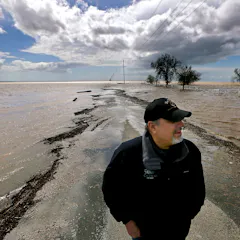
This year’s Sierra snowpack is looking a lot like 1983’s, and that was a year of flooding and mudslide disasters. A meteorologist explains what’s ahead.
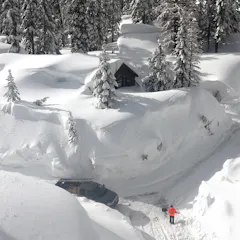
Rain falling on deep snow from a series of atmospheric rivers has heightened California’s flood risk. It’s a growing problem as the planet warms.

Atmospheric rivers can melt fragile new sea ice. When these storms arrive in waves, the sea ice doesn’t have a chance to recover.
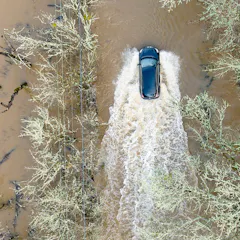
The majority of flood-related deaths involve vehicles in water. What if flood models could warn of the risks street by street using real-time storm forecasts? Machine learning can make it possible.
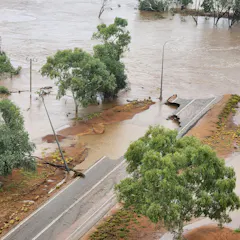
The Kimberley region of Western Australia is currently being devastated by flooding. Remote communities need more support with prevention and recovery plans.
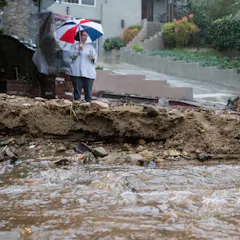
Mudslides start with destabilized land, often from wildfires, and then rain drives the cascading disaster.
Urban infrastructure was designed to take stormwater out to the ocean quickly. Now, California needs that precious water.
This seemingly one-off heatwave may be a harbinger for the future under climate change.

Industrial-sized confinement farming systems pose massive challenges during hurricanes, floods or wildfires, including significant public health, animal welfare and socio-economic implications.

Food supply chains had already taken a serious hit by panic-purchasing during the COVID-19 pandemic. The B.C. floods remind us how effective supply chain management planning can help avert crises.
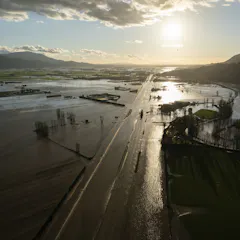
An atmospheric river is a band of warm, moisture-laden air many hundreds of kilometres long and hundreds of kilometres wide. It can dump prodigious amounts of rain over a large area.

Studies show climate change is raising the risk of cascading hazards that alone might not be extreme but add up to human disasters. Communities and government agencies aren’t prepared.
Top contributors
-

Professor of Civil & Environmental Engineering and Earth System Science, University of California, Irvine
-
Research and Operations Meteorologist, Center for Western Weather and Water Extremes, University of California, San Diego
-
Principal Advisor at Indigenous Climate Change, Indigenous Knowledge
-
Professor of Hydrosystems Engineering, University of Michigan
-
Professor of Earth and Planetary Sciences, University of California, Santa Cruz
-
Assistant Professor, Beedie School of Business, Department of Technology & Operations Management, Simon Fraser University
-
Professor of Civil and Environmental Engineering, Tufts University
-
Assistant Professor, Operations and Supply Chain Management at Haskayne School of Business, University of Calgary
-
Honorary Senior Fellow in Ecology, University of Wollongong
-
Expert in Indigenous climate adaptation, Indigenous Knowledge
-
Professor of Atmospheric and Environmental Sciences, University at Albany, State University of New York
-
Emeritus Professor, Earth Sciences, Simon Fraser University
-
Assistant Research Professor of Atmospheric Science, Penn State
-
Hydrologist, Center for Western Weather and Water Extremes, University of California, San Diego
-
Research Officer, Climate System Analysis Group, University of Cape Town