
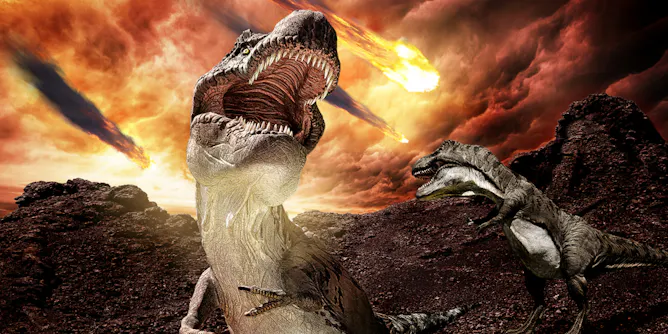
A week after the asteroid impact, rotting vegetation, smoke and sulphur create a stinky planet. Plant and animal survivors succumb to the corrosive acid rain.
Articles on Asteroid impact
Displaying all articles
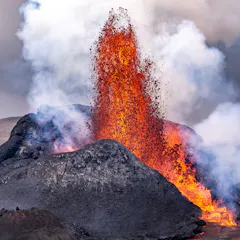
New research suggests that a mystery platinum signature found in Greenland’s ice may have come from a volcanic eruption in Iceland.
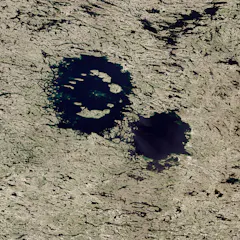
Cubic zirconia, a popular diamond substitute, only occurs naturally under extreme conditions. Finding cubic zirconia in craters reveals parts of the Earth’s history.

In mid-February, asteroid 2024 YR4 was spotted and originally believed to have a 3.1 per cent of hitting Earth in 2032. Further calculations revealed this was not the case.
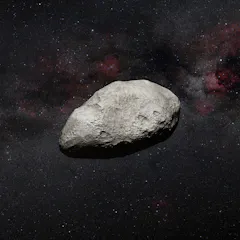
The chances of asteroid 2024 YR4 hitting Earth are small but fluctuating.
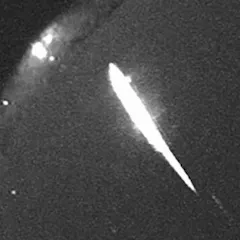
Get past the fake science, and the Taurid meteor shower foreshadows what could, one day, pose a troubling scenario.
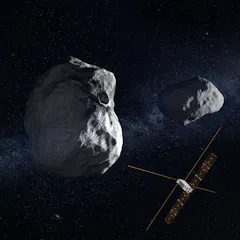
NASA’s DART was the first time we tried planetary defence – attempting to redirect an asteroid. The data from this landmark mission is still yielding new insights today.
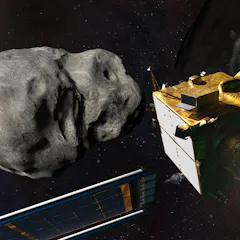
The mission provided details about how to deflect an asteroid should one threaten Earth in future.
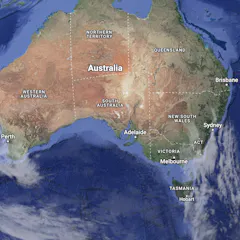
Research on the Deniliquin structure points to an asteroid impact that would have been more than double the scale of the one that killed the dinosaurs.
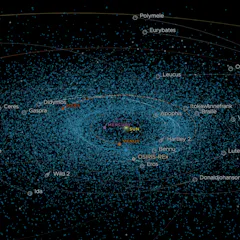
Barely a week goes by without headlines about a giant asteroid coming past Earth. Here’s what really makes an asteroid pass notable – it’s not just size.
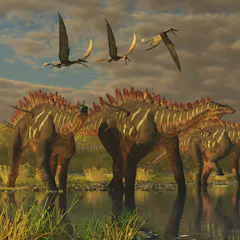
Birds and dinosaurs lived together for millions of years, but only toothless birds survived the asteroid impact that upended life on Earth.
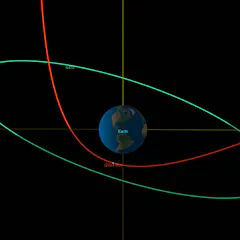
Discovered less than a week ago, the truck-sized asteroid skimmed much closer to Earth’s surface than most satellites.
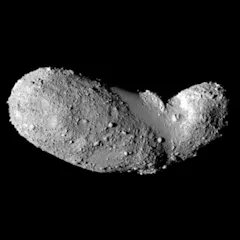
Rubble pile asteroids are like giant space cushions, floating around the Solar System for billions of years. Here’s what that means for planetary defence.
Top contributors
-

Professor in Earth and Planetary Science, Western University
-
John Curtin Distinguished Professor (Radio Astronomy), Curtin University
-
Associate Professor, School of Earth and Planetary Sciences, Curtin University
-
Research Associate, Curtin University
-
Senior Lecturer in Physics, Nottingham Trent University
-
Associate Professor of Wildlife and Fisheries Resources, West Virginia University
-
Research Associate Professor of Earth and Planetary Sciences, University of New Mexico
-
Research Fellow, School of Physics and Astronomy, University of Nottingham
-
PhD, Earth and Planetary Science and Exploration, Western University
-
Visting Research Associate, School of Earth and Planetary Sciences, Curtin University
-
Professor in Earth Sciences, Durham University
-
Professor of Vertebrate Palaeontology, University of Bristol
-
Adjunct professor, UNSW
-
Professor of Planetary and Space Sciences, The Open University
-
Professor, Curtin University