
There’s a reason you sometimes wake up in the middle of the night.
Articles on Artificial light
Displaying all articles
Folklore suggests that a full moon has a strong effect on sleep. But the reality is more complex, and lifestyle habits like screen use before bedtime are likely to have a larger effect.
Our nights are getting brighter and we are all paying the price.

Here are just some of the ways light is important for our wellbeing and mental health.
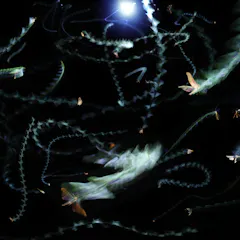
A new study shows how artificial light at night scrambles insects’ normal flight patterns, pulling them off course into orbit around the light.
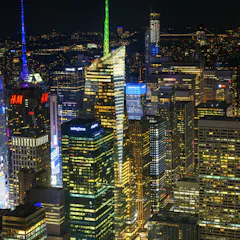
Migrating birds need stopover locations en route where they can rest and feed. A new study shows that artificial light draws them away from sites they would normally use and into risky zones.

A new report from the Biodiversity Council reveals the disturbing effects of artificial light on
Australia’s nocturnal animals. Here’s how you can help wildlife at Christmas and all year round.
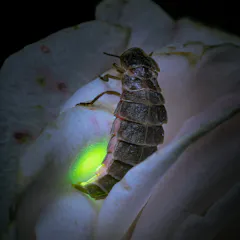
Artificial light is making it harder for male glow-worms to find bioluminescent females.

Machine learning may not seem to have much connection with wildlife, but it’s starting to play a central role in bird conservation.
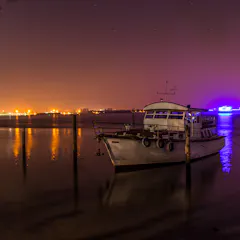
Artificial lighting from cities illuminates coastal waters and can change the physiology and behaviour of marine organisms.
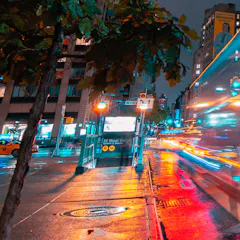
Artificial light is upending trees’ ability to use the natural day-night cycle as a signal of seasonal change.
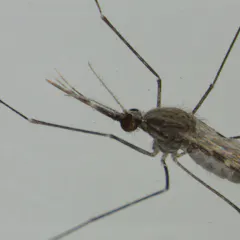
Artificial lights could trick malaria-transmitting mosquito species that feed nocturnally into behaving as if it’s daytime.

Towns and cities create an orange glow on the horizon at night. It’s so widespread that it even disturbs sea creatures.
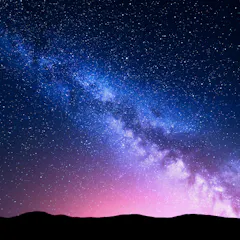
We have transformed the night-time environment in a very short time, relative to evolutionary timescales. Most wildlife hasn’t had time to adjust.
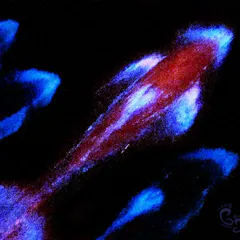
The spectacle of glowing dolphins should serve as a timely reminder of our need to conserve the darkness we have left.
We haven’t heard anything from alien civilisations, but perhaps they’ve heard us.

Clownfish eggs exposed to artificial light completely fail to hatch, highlighting the growing problem of light pollution.
Turning street lights off at midnight could save money, energy and help nocturnal ecosystems thrive.

Whether you’re a night owl or a morning lark, circadian rhythms control just about every aspect of your health.
Top contributors
-

Senior Environmental Scientist, Flinders University
-
Senior Lecturer in marine ecology, UNSW
-
Senior lecturer, University of Pretoria
-
Ph.D. student in Ecology, Colorado State University
-
Associate professor, Macquarie University
-
University Fellow in Biodiversity, Charles Darwin University
-
Professor, Urban Ecology and Biodiversity, The University of Melbourne; RMIT University
-
PhD Candidate in Biology, Aberystwyth University
-
Whale Scientist and Lecturer, Faculty of Science and Engineering, Macquarie University
-
Professor of Marine Ecology, Bangor University
-
Postdoctoral Researcher in Marine Biology, University of Plymouth
-
Former Postdoctoral Research Associate
-
Associate Professor of Environmental Science, Iowa State University
-
Convergence Research Coordinator, Department of Fish, Wildlife, and Conservation Biology, Colorado State University
-
Professor of Biological Sciences, Florida International University