
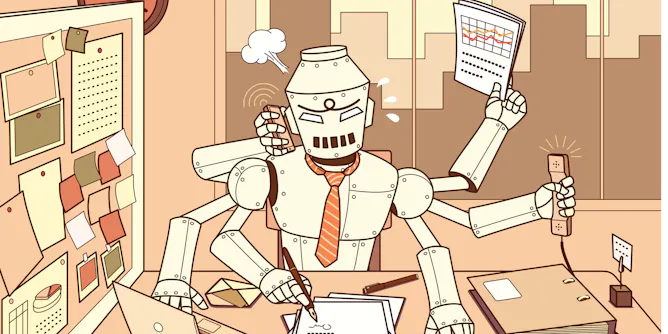
The latest buzz phrase coming from technology companies is ‘AI agents.’ A computer scientist explains what that means – and how ChatGPT and your Roomba fit into the picture.
Articles on Artificial intelligence (AI)
Displaying 301 - 320 of 631 articles

A narrower, more personalized ‘normal range’ could help doctors better diagnose and treat disease in individual patients.
AI shopping agents are coming. They could hunt for deals, find the right items and even make purchases – if you trust them to ‘get’ you, protect your privacy and not coax you into buying too much.

Utilities have options for addressing surging power demand from AI data centers, but there’s no silver bullet.
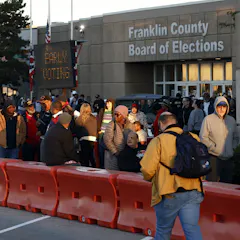
Like it or not, AI is now part and parcel of elections, from helping with mundane campaign functions to enabling politicians to speak to constituents in multiple languages at once.

Where are the limits to using AI honestly and transparently? 3 philosophies can help the debate: deontological ethics, consequentialism and virtue ethics.
Research on artificial intelligence in marketing overwhelmingly neglects its potential negative consequences, a new study finds.
The damage AI algorithms cause is not easily remedied. Breaking algorithmic harms into four categories results in pieces that better align with the law and points the way to better regulation.

In a world where algorithms increasingly shape everyday life, many works of art are beginning to reflect how intertwined we’ve become with computational systems.
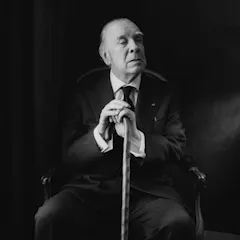
Borges imagined an endless library that contained every possible permutation of letters. The truth is out there, but it’s embedded among hordes of lies and gibberish.

As more people turn to ChatGPT instead of Google, research shows AI can be a better tool for creative problem-solving – though it still has its limits.
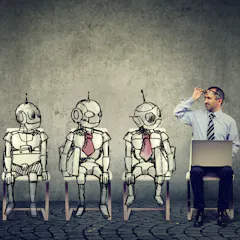
AI is already widespread and garnering billions of dollars in investment. But that doesn’t mean its ubiquity is predetermined. Society can decide when and how it’s used.
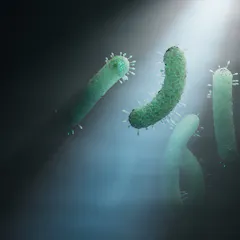
By analyzing the resistance genes and proteins of E. coli, researchers can optimize treatments to address both current and future antimicrobial resistance.

Scientists use jargon and complicated language to describe their work. Regular folks ‘get it’ more when descriptions are simpler – and think better of the researchers themselves.
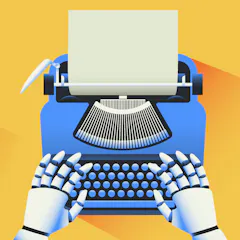
Good storytelling relies on sound writing, believability, creativity and lived experience. AI has become skilled at the first two but still falls short on the second two.

Schistosomiasis is a neglected tropical disease that triggers specific immune responses in the body. Identifying those hidden immune signatures can help improve detection and treatment.

How worried should you be?
Unlike other big tech companies, OpenAI is the for-profit subsidiary of a nonprofit overseen by the nonprofit’s board of directors. Many media outlets report that this arrangement could soon change.
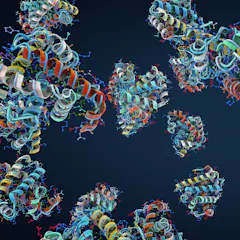
The prize honors innovation at Google DeepMind and in academia. Three researchers share the award for using machine learning to predict proteins’ 3D shapes and design the molecules from scratch.
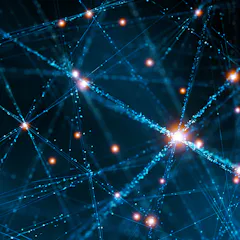
Two researchers whose work has led to the AI revolution won the 2024 Nobel Prize in physics. A materials physicist explains statistical mechanics, the physics field behind their discoveries.
Top contributors
-

Professor of AI, Research Group Leader, UNSW
-
Professorial Fellow, University of Canberra
-
Associate Professor of Visual Communication & Digital Media, RMIT University
-
Adjunct Senior Lecturer, Applied Ethics and CyberSecurity, Griffith University
-
Professor of Information Systems, Michigan State University
-
Professor in Robotics, Queensland University of Technology
-
Adjunct Lecturer in Public Policy, Harvard Kennedy School; University of Toronto
-
Senior Research Fellow in AI Accountability, Queensland University of Technology
-
Professor of Philosophy and Director of Applied Ethics Center, UMass Boston
-
Professor in Business Information Systems, University of Sydney
-
Director of Sydney Executive Plus, Business School, University of Sydney
-
Professor of Information Technology and Organisation, University of Sydney
-
PhD in machine ethics, University of Canterbury
-
Professor in Computational Intelligence, Australian Catholic University
-
Senior Lecturer, School of Engineering, Australian National University