
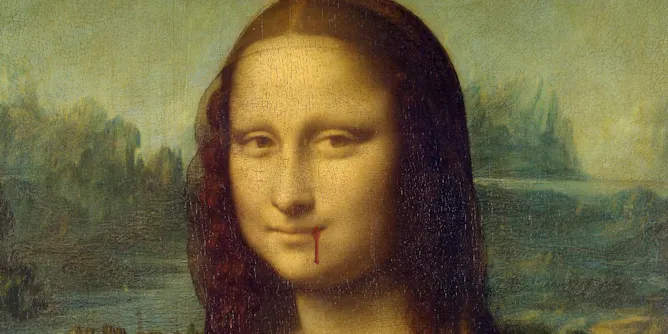
John Ruskin, England’s preeminent mid-Victorian critic, wrote off the Mona Lisa as a total mess.
Articles on Art
Displaying 121 - 140 of 668 articles
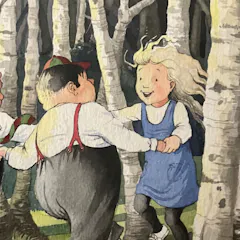
The world depicted through Oxenbury’s illustrations is one of family gatherings, mealtimes and activities, but also of oceans, forests, night skies and caves.

Making and analyzing art helps students learn English on a more personal and emotional level than traditional approaches do.
Hate speech can harm, but where does art cross the line from thought-provoking into genuinely harmful?
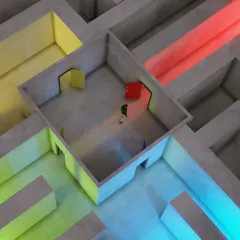
The technology is always on call and is quite competent. But it lacks the contemplation and attention to detail that yield great works of art.
Meet the Scottish colourists, stop and smell the flowers and follow the story of the cancer-journey influencer who was a fraud, as we bring you this week’s cultural highlights.
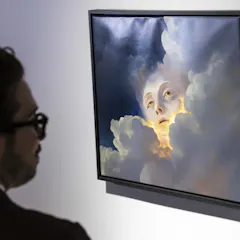
A sale of AI art at famed auction house Christie’s could change how we think about creativity – if it’s not cancelled first.

Entering Flowers, you might think that you have just walked into a supersized florist’s shop.
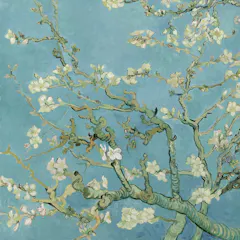
Artists and scientists explore how we subconsciously perceive subtle proportions in trees.
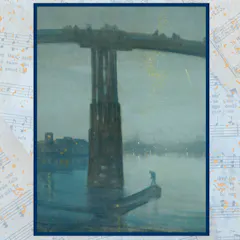
Whistler’s paintings were first compared to music in 1863 when the French critic Paul Manz described his haunting portrait, The White Girl as a ‘symphony in white’.
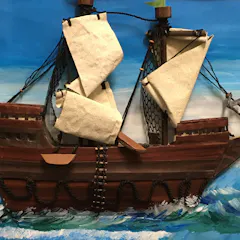
Using tea bags, mop strands and other camp detritus, detainees used art as a way of escape at the detention center.
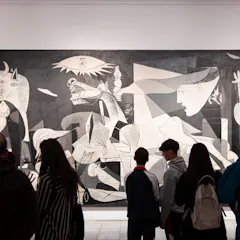
Reading Guernica as a comic positions the painting not as a lofty work of fine art, but as a public narrative of violence.
This series offers insightful new ways to think about and interpret classic books and artworks.

Come too close to Bacon’s portraits and everything dissolves into a powdery splat.
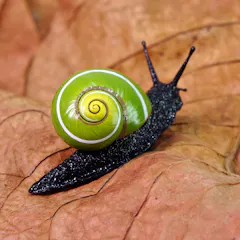
Although animals can’t use human language, art is beyond words. As Edward Hopper wrote, ‘If I could say it in words there would be no reason to paint.’

The exhibition gives an insight into the complex interactions of humans and machines through history.

Disarmament programs rarely collect all weapons, but handing them over is a deeply symbolic gesture.
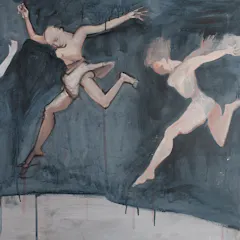
All the artists displayed in the exhibition use choreography in their work.
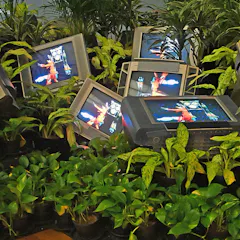
South Korean artist Nam June Paik showed new ways to understand the relationship between nature and technology, including in his 1974 pioneering work ‘TV Garden.’
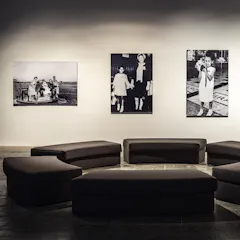
The racism Sulter experienced would strongly register in her work, which melded a striking artistic sensibility with anti-colonial politics.
Top contributors
-
 Joanna Mendelssohn is a Friend of The Conversation.
Honorary Senior Fellow, School of Culture and Communication, The University of Melbourne
-
Honorary Professor, Edith Cowan University
-
Lecturer, School of Art & Design, Nottingham Trent University
-
Personal Chair of 19th-Century Art, History of Art, University of Edinburgh
-
Professor of History and Policy, University of Westminster
-
Senior Lecturer and Programme Leader in Fine Art , University of Lincoln
-
Associate Professor in History of Art, University of Nottingham
-
Visiting Professor of Social Inequities and Injustice, Loughborough University
-
Director, Gender and Women's History Research Centre, Australian Catholic University
-
Senior Lecturer, Art and Public Engagement, King's College London
-
Lecturer in MA Creative Media Practice, University of the West of Scotland
-
Professor of Computer Science and Director of the Art & AI Lab, Rutgers University
-
Associate Professor Visual Communication, University of Technology Sydney
-
Visiting Researcher in Journalism, Media and Cultural Studies, Cardiff University
-
Visual Artist and Lecturer in Teacher Education, University of Canberra