
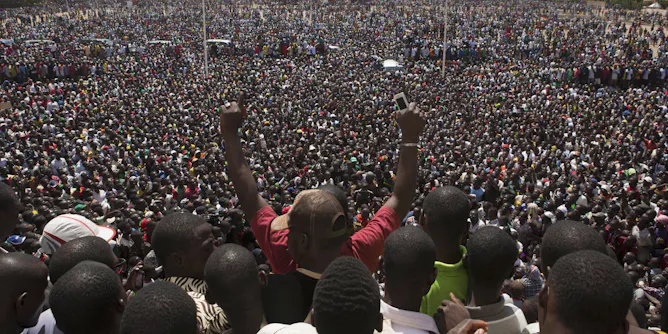
Demonstrations in sub-Saharan Africa have not been met with the same the praise that was poured on the Arab Spring uprisings.
Articles on Arab Spring
Displaying 81 - 100 of 165 articles
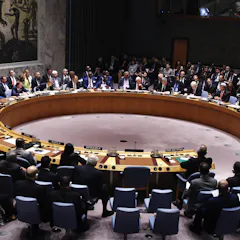
The world is steadily transitioning to a multipolar systemic balance of power. The UN Security Council needs to reflect and be a truer representative of the emerging voices of a contemporary “UN”.
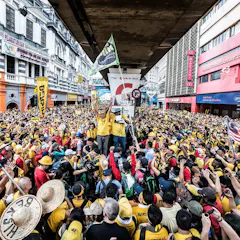
Social media can be an effective tool in mobilising people for social change, as demonstrated by the Bersih movement in Malaysia.
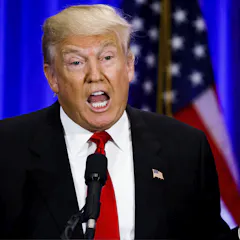
The value of democracy needs to be restated and defended, rather than presumed. In doing so, there is value in adopting a more tempered stance, one that understands its worth but also its flaws.
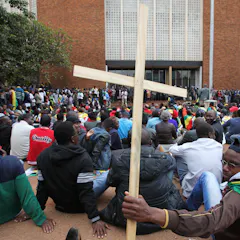
The new forms of protest in Zimbabwe raise the possibility that the country’s long-simmering crisis may have reached boiling point. The time could indeed be ripe for a unique form of politics.

Five years ago, young people in the Middle East and North Africa led a major uprising with hopes for a better life. A University of Texas labor market expert explains why little has changed.
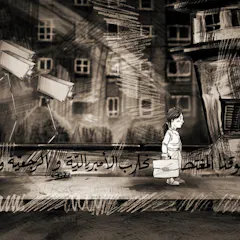
Films provide subtle, personal perspectives on the Arab world that conventional reporting and Hollywood drama simply cannot match.
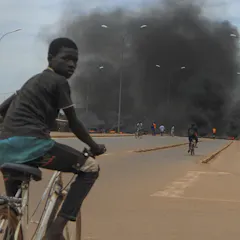
Grassroots protesters are questioning the logic of export-led ‘growth’ and renewed fiscal austerity pushed through the ‘Africa rising’ narrative. They want policies that meet their basic needs.
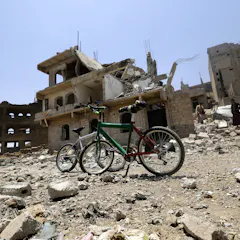
Thousands killed, millions displaced, a country in ruins: when will the international community act to end the violence?

In the wake of the Arab Spring the international community lauded Tunisia’s political transition to democracy. But a plethora of challenges may threaten democratic consolidation in the country.
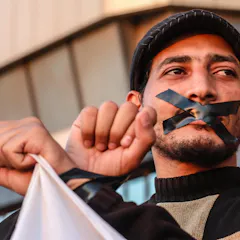
The rise of Islamic State and its declaration of the caliphate can be read as part of a wider story that has unfolded since the formation of modern nation states in the Muslim world.
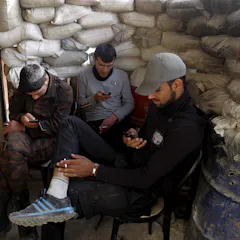
As usage continues to grow in the region, what’s the ongoing dynamic between the Middle East and social media? It’s complicated.
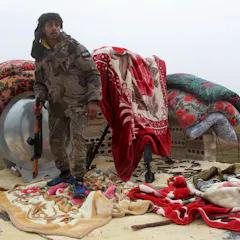
On February 11 a Syrian ceasefire was signed in Munich. Few are optimistic it will hold. Why? Because, argues one Middle Eastern scholar, world leaders are ignoring key realities.
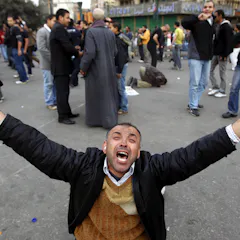
The demands of the Tahrir Square protests could scarcely have been clearer – and the crackdown since 2011 could hardly have been more galling.
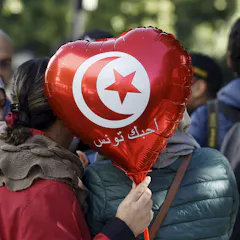
It was the poor state of local government that kicked off Tunisia’s revolution – and now the country is fixing itself where it counts.
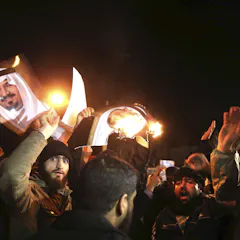
The executions on the weekend are notable for the sheer number of people killed. However, they maintain a policy of political crackdown that was reinvigorated in Saudi Arabia during the Arab Spring.
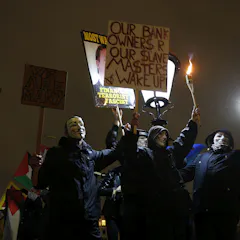
Why did a hacktivist collective like Anonymous repurpose the image of Guy Fawkes for its ubiquitous masks? A scholar looks at how a 17th-century English villain became the face of resistance.
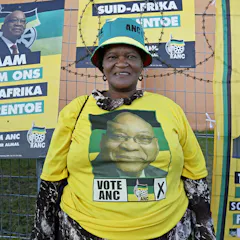
The annulment of the Tlokwe byelection results is a blow for the governing ANC. It has had a torrid 2015 and faces difficult local government elections early next year.
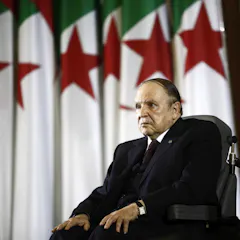
The “deep state” has been a problem in Algeria for decades, but at last it’s being turfed out. Or is it?
We don’t really know how much international migration will be prompted by climate change. But everyone agrees the issue is big - perhaps too big to resolve at the Paris talks.
Top contributors
-

Senior Lecturer in International Relations, University of Aberdeen
-
Director of the Centre for Global Development and Professor in the School of Education, University of Aberdeen
-
Professor of International Relations, Lancaster University
-
Senior Lecturer, School of Social Sciences, UNSW
-
ESRC PhD candidate, Lancaster University
-
Lecturer in Middle East Studies, Deakin University
-
Professor in the Department of Government, University of Essex
-
Assistant Professor of Politics, Pomona College
-
Professor of Middle Eastern Studies and Public Policy and Director of the Interdisciplinary Studies Institute, UMass Amherst
-
Associate Teaching Professor, School of Interdisciplinary Arts and Sciences, University of Washington, Bothell
-
Adjunct Professor, Geopolitics and International Political Economy, Georgetown University
-
Honorary Research Fellow, School of Social Sciences, University of Aberdeen
-
Professor of Politics, University of Sydney
-
Visiting professor, Georgetown University
-
PhD Candidate in Political Science, University of Oregon