

When foreign firms divest and sell their assets off cheaply, sometimes it’s the sanctioned regime that benefits.
Articles on Apartheid
Displaying 41 - 60 of 500 articles

South Africa’s historical honeybush herbal tea farmers were dispossessed of their land during colonialism and apartheid. Steps must be taken to right this wrong.
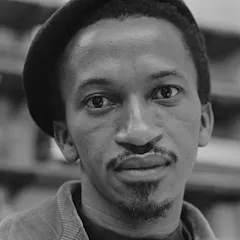
Ernest Cole: Lost and Found by Raoul Peck is a meditative film that draws on Cole’s own notebooks and letters in a bold attempt to have him tell his own story.

The story is told from the inner sanctum of the state security apparatus that fought an urban terror campaign in South Africa between 1998 and 2002.
Globally, we’re witnessing a rise in far-right governments increasingly hostile towards universities, historically springboards for progressive change. What should the future look like for universities in Canada?

End of the Game sparks critical conversations on wildlife conservation and responsible tourism.
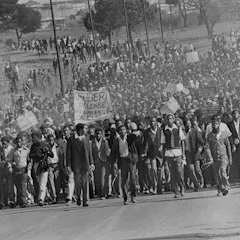
Together Apart: The Story of Living in Apartheid was written by two academics for readers of all ages to know about the pain and the triumph of South Africa’s past.
His characters – tramps, discarded people, poor people, people on the fringes – are connected with all the people we know of today who are refugees.
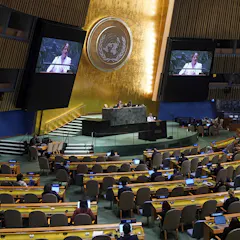
The past holds lessons for how Canada can sustain global order in an ‘America First’ world.
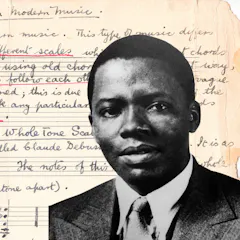
The true depth of Michael Mosoeu Moerane’s work as a composer and educator is revealed in a stunning new biography called The Times Do Not Permit.
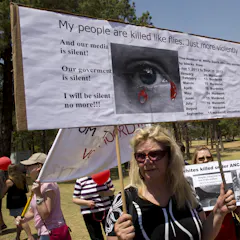
Rural violence is a huge problem in South Africa that deserves a strong response. But white people are not the only casualties.

There has been a growing recognition that psychology, as a discipline, must engage more deeply with local contexts.

The expropriation of property for land reform purposes is a potential tool for reducing land inequality.

Deep South, a small publisher with big influence, has expanded its website with easy-to-access information about its poets and their work.

The study of (mostly white) residents and (mostly black) workers in an old age home in South Africa took place over seven years and it upended stereotypes.

Rashid Vally gave voice to the new Black jazz of the 1970s through his record label As-Shams, named by pianist Abdullah Ibrahim.

Netumbo Nandi-Ndaitwah seems unlikely to deviate from Swapo’s policy framework, offering few, if any, surprises.

Robert Sobukwe was committed to individual rights, a key tenet of liberalism.
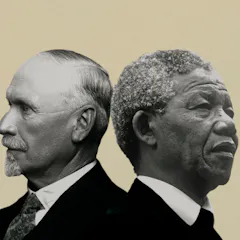
Whereas Jan Smuts was to be largely forgotten after his defeat in South Africa’s 1948 election, Nelson Mandela became an international icon.

Travelling remains time-consuming, precarious, and shockingly dangerous for most South Africans 30 years after apartheid has ended.
Top contributors
-

Professor of Political Studies, University of Johannesburg
-
Associate of the Gordon Institute for Business Science, University of Pretoria
-
Extraordinary Professor, Department of Political Sciences, University of Pretoria
-
Associate Professor Sport History, Stellenbosch University
-
Professor of Sociology, University of the Witwatersrand
-
Senior Lecturer (Radical Humanities Laboratory, University College Cork), University College Cork
-
Senior Research Fellow, Centre for the Advancement of Scholarship, University of Pretoria., University of Pretoria
-
Political Scientist, University of the Western Cape
-
Distinguished Reserach Professor, Southern Centre for Inequality Studies, University of the Witwatersrand
-
Senior Research Fellow, Horn of Africa and Southern Africa, Institute of Commonwealth Studies, School of Advanced Study, University of London
-
Professor, Sociology, University of the Western Cape, Nelson Mandela University
-
Honorary Professor of International Relations, University of the Witwatersrand
-
Professor of Urban Governance, University of the Witwatersrand
-
Senior Lecturer in History, University of Dundee
-
Professor of Public Affairs, Tshwane University of Technology