
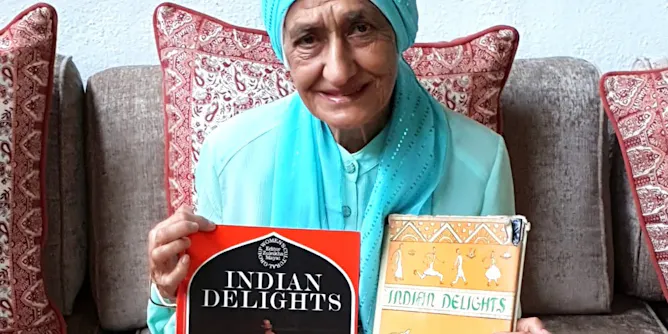
Mayat embodied principled, faith-based, socially committed, inspired leadership.
Articles on Apartheid
Displaying 101 - 120 of 500 articles
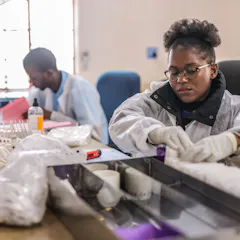
Agincourt, the University of the Witwatersrand’s rural research centre 500km from Johannesburg, has documented the lives of 120,000 people over decades.

The West no longer has credibility when it criticizes Russia, China or any other state for human rights abuses or breaches of international law due to its feeble response to Israel’s assault on Gaza.
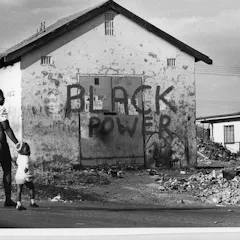
Magubane’s photographs testify to the hope that is at the heart of the struggle for a just world.

Coca-Cola has often been entangled with key political moments in Africa since its arrival in the early 1900s.
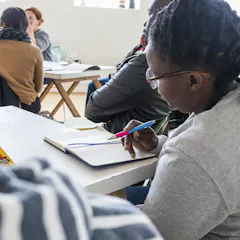
The benefits of creative writing are particularly important in countries where there’s a need to build a caring society and there are limited resources.

Anna “Kakurukaze” Mungunda became the most widely acknowledged face of the resistance to the apartheid policy of forced removal.
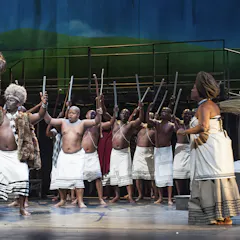
A new book explores how Cape Town became a hub for African opera.
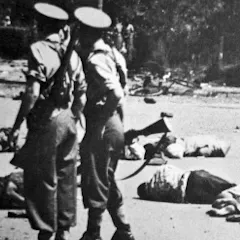
Despite its historic importance, Sharpeville itself has remained unknown and its residents anonymous, yet they have a story to tell.

The European bourgeoisie could not forgive Hitler because he applied in Europe colonialist procedures previously reserved for the supposedly inferior Arabs, Indians, and Africans.
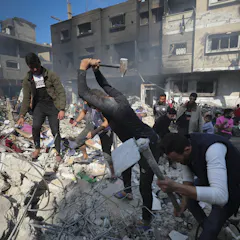
Without independent evidence, the ABC is right not to adopt for itself terms such as ‘genocide’ and ‘apartheid’, but equally it is right to report others making such allegations.
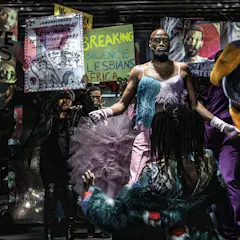
A 26-member theatre ensemble aims to bring history to light in a fresh way.
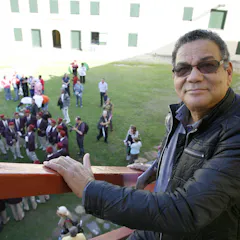
The father of Khoisan revivalism became a public historian as his academic work met activism.

This is South Africa’s fifth semi-final at the tournament. Is 2023 the year they reach the finals and win?

It’s about more than wasteful destruction; it’s a way of restoring dignity to marginalised young lives.
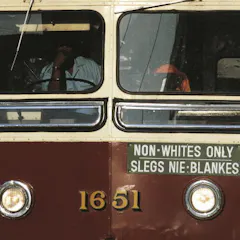
Critics of the 1994 political settlement largely hail from the black middle class, even though it has been one the principal beneficiaries of South Africa’s social democracy.

Social media is a lifeline for community radio, helping it grow by being shaped by young listeners.

A psychologist analyses the rugby star’s life to extract lessons.
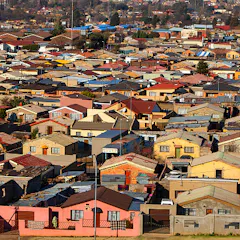
The transfer of township rental houses to inhabitants did not necessarily give families greater security. “Family houses” were frequently acquired by individuals.

Efforts have been made to change the patterns of inequality in South Africa. But not enough has been done. Race-based inequality is still a real problem.
Top contributors
-

Professor of Political Studies, University of Johannesburg
-
Associate of the Gordon Institute for Business Science, University of Pretoria
-
Extraordinary Professor, Department of Political Sciences, University of Pretoria
-
Associate Professor Sport History, Stellenbosch University
-
Professor of Sociology, University of the Witwatersrand
-
Senior Lecturer (Radical Humanities Laboratory, University College Cork), University College Cork
-
Senior Research Fellow, Centre for the Advancement of Scholarship, University of Pretoria., University of Pretoria
-
Political Scientist, University of the Western Cape
-
Distinguished Reserach Professor, Southern Centre for Inequality Studies, University of the Witwatersrand
-
Senior Research Fellow, Horn of Africa and Southern Africa, Institute of Commonwealth Studies, School of Advanced Study, University of London
-
Professor, Sociology, University of the Western Cape, Nelson Mandela University
-
Honorary Professor of International Relations, University of the Witwatersrand
-
Professor of Urban Governance, University of the Witwatersrand
-
Senior Lecturer in History, University of Dundee
-
Professor of Public Affairs, Tshwane University of Technology