

Are the best co-workers really the ones with four legs and a tail? Science says it depends.
Articles on Animals
Displaying 381 - 400 of 615 articles

Pets might not protect us from the coronavirus, but they can help us get better.
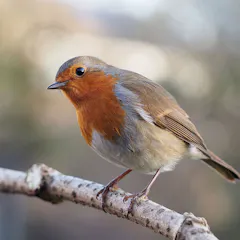
Climate change is affecting our planet’s biodiversity, yet some species can find ways to adapt. Using citizen-science data, a French research team is studying how birds adjust to local heat levels.
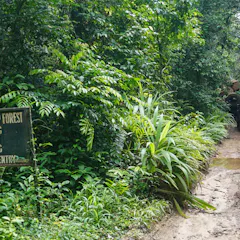
Protected areas in Nigeria are generally hampered by limited funds and resources.
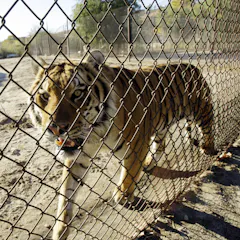
There are more captive tigers in the US than there are in the wild around the world – and they can be bought for less than some breeds of dog puppies.
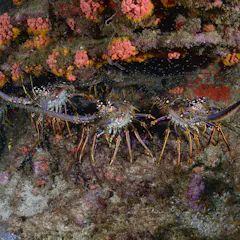
Using distance to avoid getting sick has deep evolutionary roots for humans and many other species.

A closer look at Canada’s hit TV show, ‘Hudson & Rex’, invites us to think differently about animals’ minds, work and contributions to our shared communities.
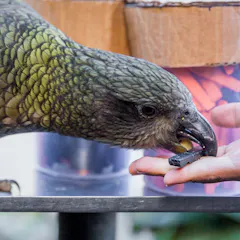
Kea were able to correctly guess the most probable scenarios, by evaluating various physical and social cues. Previously, only great apes and humans were known to be able to understand probability.
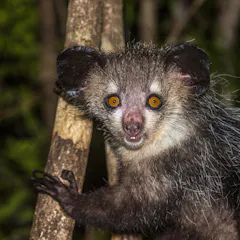
Previously undocumented, this tiny extra digit – called a “pseudothumb” – is a structure on each wrist made of bone and cartilage.

Research suggests that people can learn to read cats’ facial expressions.
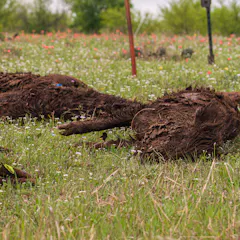
Death is a natural part of ecosystems. But it’s unusual for a large number of animals to all die at once. Researchers are investigating how a mass mortality event affects what’s left afterwards.

Negro Matapacos became famous in Chile in 2011 for joining student protests. His image has now popped up around the world.
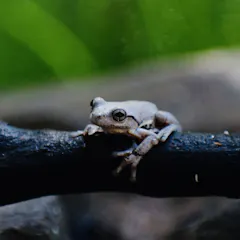
Wildlife can smell and hear a fire coming, and have developed novel ways to evade it. But they must watch out for cunning predators rushing in for a feed.

A new study analyzes the language in nearly 680,000 pet adoption ads.

Trump’s recent comments echo a troubled history of the use of dogs against people of color, as well as pejorative depictions of people of color as animals.

Species counts drive conservation science and policy, yet a major component of biodiversity is excluded from the data: non-native species.
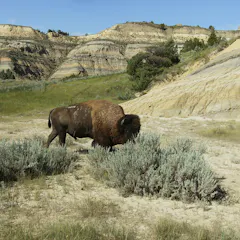
Scientists have tracked endangered species for years. Now they’re figuring out how to highlight animals and plants that have recovered – but what does that mean?
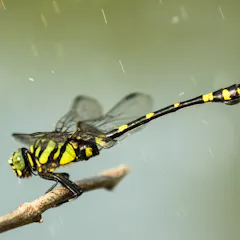
Prey species rely on camouflage and escape to avoid getting eaten. How can they make them work together?
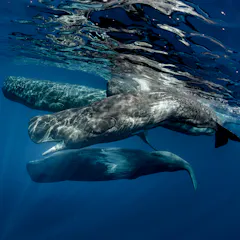
Do animals have their own culture? A researcher studying the culture of whales argues that they do. She says understanding that may be one way to save them from extinction.

Pet theft can devastate families and cause animals significant distress – the law needs to change.
Top contributors
-

Principal Lecturer in Wildlife Conservation, Nottingham Trent University
-
Senior Lecturer in Animal Science, Nottingham Trent University
-
Professor, Management and Organizational Studies, Huron University College and Coordinator of Animal Ethics and Sustainability Leadership, Western University
-
Associate Professor, School of Animal and Veterinary Science, Adelaide University
-
Lecturer in Animal Behaviour and Welfare, School of Psychology, Queen's University Belfast
-
Senior Lecturer in Zoology, Nottingham Trent University
-
Professor in Wildlife Ecology and Conservation, School of Life & Environmental Sciences, Deakin University
-
Professor of Zoo Animal Welfare & Legislation, Nottingham Trent University
-
Visiting Research Fellow, Animal Behaviour and Welfare, Nottingham Trent University
-
Lecturer, Chemistry and Forensic Science, Nottingham Trent University
-
Professor of Wildlife Conservation, University of Salford
-
Professor of Behavioural Ecology, UCL
-
Animal Geographer, Keele University
-
Associate Professor Emerita of Comparative Literature, University of California, San Diego
-
Associate Professor, Ecology, Northumbria University, Newcastle