

Tens of millions of Americans who have been telecommuting during the pandemic may have to head back to the office as governors lift stay-at-home orders. Here’s what you can do if you’d rather not.
Articles on Americans with Disabilities Act (ADA)
Displaying 21 - 40 of 41 articles

Airbnb’s platform perpetuates the social exclusion of people with disabilities, while the 30-year-old ADA doesn’t apply to the sharing economy.

With vast swaths of society forced to work from home, people with disabilities can overcome many of the challenges they face in a normal office environment.
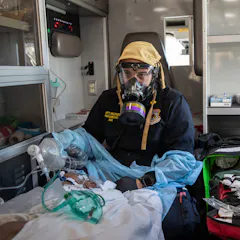
Doctors face difficult choices about rationing medical care. A scholar who studies discrimination argues that those with chronic illnesses and disabilities will be hit the hardest.

Trained service dogs are fundamentally different from emotional support animals – and certification could make sure the public understands the difference.

Artificial intelligence holds great promise for medicine, but safeguards are needed to ensure it does not harm patients.

Ambiguities in the Americans with Disabilities Act have allowed employers to sidestep a major component of the law: the requirement to provide workers with ‘reasonable accommodations.’

In most states, employers aren’t required to accommodate the unique needs of pregnant women except in limited circumstances.
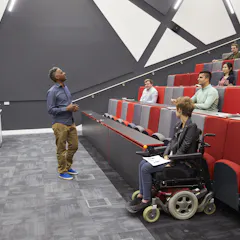
The case of a student with Down Syndrome who was denied entry into all eight of the sororities at her school illustrates a broader problem of exclusion for college students with disabilities.

What can be done to prevent employers from rejecting individuals based on concern about future illnesses? Currently, nothing.
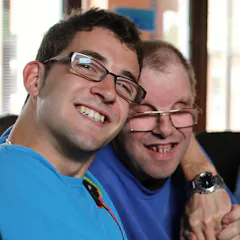
Numerous measures are in place to help young disabled children thrive, but the transition beyond school can be a difficult one. Here are some tips for families to help their children prepare for life beyond.
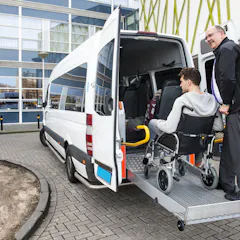
Depending on where you live, having a disability can cost thousands of additional dollars per year. Government programs often don’t account for that.

The story of a six-year-old boy with dyslexia who, with support from friends and teachers, became a successful professor. Now he teaches teachers how to help children like him.

For many disabled students, college is the first time that they’re put to the test of making their own way. The experience can be challenging, but there are strategies to help ease the way.
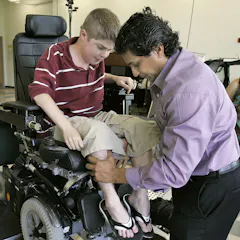
The Americans with Disabilities Act turns 27 this year. But true equality is still out of reach for many – and it’s everyone’s responsibility to fulfill the promise of the law.
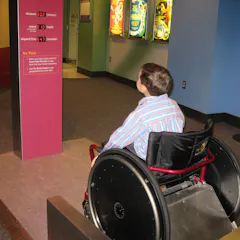
Today’s violence and prejudice against people with disabilities goes back to the practice of institutionalization, which started in Europe and the United States a century ago.

The growing problem of pregnancy discrimination has received barely any attention on the campaign trail or among researchers, possibly because it disproportionately affects poor women.

In 2012, nearly one-third of voters with a disability had trouble voting. A 2002 law was supposed to fix this problem. New technology may have the answer at last.

Although the medical profession must make hard choices about how to allocate care, these decisions need not and should not be shrouded in mystery.

The Americans with Disabilities Act turned 25 on July 26. Some of the changes that it ushered in are reflected every day on our campuses, through technologies that allow people to learn and to work.
Top contributors
-

Distinguished Professor, Rutgers University
-
Professor of Special Education, University of Florida
-
Professor of Law, University of Oregon
-
Professor of Health Law and Bioethics, Case Western Reserve University
-
Associate Professor, Tarleton State University
-
Professor of Economics, Fordham University
-
Professor of English and Comparative Literature, Columbia University
-
Adolph S. Ochs Professor of Government and Head of Political Science and Public Service, University of Tennessee at Chattanooga
-
Director UCL International Disability Research Centre, UCL
-
Andrew Banks Family Preeminence Endowed Chair, Associate Chair of Research Computer & Information Science & Engineering Department, University of Florida
-
Associate Dean for Research and Faculty Development and Professor of Law, College of Law, Georgia State University
-
Assistant Professor of Special Education, Villanova University
-
Principal Research Associate in Epidemiology and Public Health, UCL
-
Senior Lecturer in Economics, RMIT University Vietnam
-
Professor of Law and Director, Center for Law Health and Society, College of Law, Georgia State University