
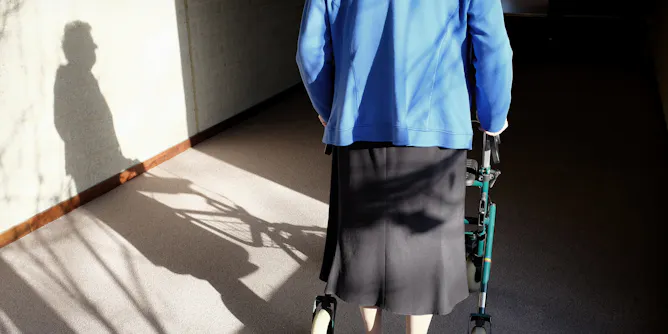
The aged care royal commission’s interim report paints a picture of a system in deep crisis. Its recommendations for action have some merit, but won’t address what are underlying, systemic problems.
Articles on Aged Care Royal Commission
Displaying 41 - 60 of 68 articles

Michelle Grattan discusses this week in politics with University of Canberra Deputy Vice-Chancellor Leigh Sullivan.

The aged care workforce is 90% women and 30% migrant. The royal commission might find that’s why it lacks clout.
Around 6,000 Australians aged under 65 still live in nursing homes, cut off from their families and peers, with inadequate support for their disabilities.

Bureaucratic ‘red tape’ has contributed to the current crisis in our aged care system. We need a system of accountability that focuses more on residents’ outcomes, and less on processes.

Cost-cutting, funding that doesn’t reward good food, and residents not having a voice contribute to poor quality nutrition in our aged care homes. That can be devastating. But there is a better way.
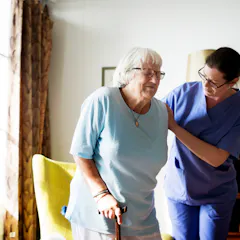
Aged care facilities are employing fewer registered and enrolled nurses and more carers, which saves money but results in sub-standard care.

As the Aged Care Royal Commission shifts its focus to aged care for Indigenous Australians, access isn’t the only challenge. Often problems arise when services don’t accommodate their cultural needs.
While the majority of aged care funding comes from government, residents also have to contribute. Here’s how the payment system works.

Sedative medications and restraint belts are too often given to aged care residents with dementia to stop them wandering, prevent falls, or manage “difficult” behaviour.

Creative arts therapies allow people with dementia to express joy and sadness through painting, dance, music and drama.
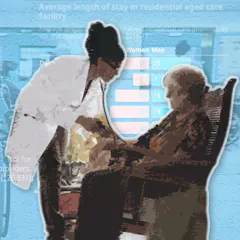
The aged care royal commission begins hearing evidence today about the quality of care in nursing homes. These 10 charts show how the current system works and the challenges it faces.

This week the aged care royal commission heard evidence of long waits for home care, poorly trained staff and high fees. These 10 charts explain how the system works and why it’s under such pressure.

If you don’t plan for your aged care and make your wishes known, you may be admitted to a hospital or aged care facility when something goes wrong. That’s where most Australians end up dying.
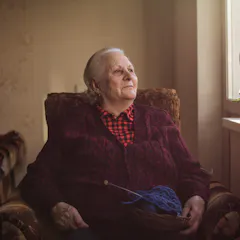
An elderly lady needs to change the time a carer visits to help her shower. The reality of today’s market-driven home care system means she has to call a centralised 1800 number to arrange this.
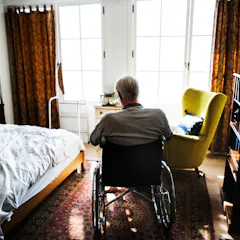
The government will keep increasing the number of subsidised home care services, but it needs to find the right funding balance for the system to remain sustainable.
Antipsychotic drugs are often used to “chemically restrain” aged care residents and control their behaviour. The system needs to change – but lessons from the US tell us it’s not going to be easy.

Home care packages are a viable alternative to residential aged care for many older Australians. But the process to secure these packages can be long and complicated.
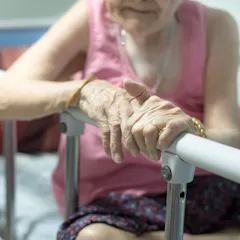
New regulations to stop the use of physical restraint on the elderly recognise a serious problem in our aged care system. But in order to really fix this issue, we need to address what’s causing it.
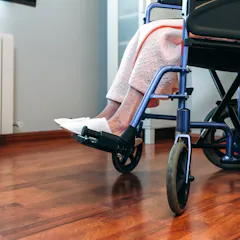
The biggest system failure in aged care is staffing. We don’t need to wait until the royal commission is over to fix it – this can be done now.
Top contributors
-

Professor of Health Economics, University of Technology Sydney
-
Honorary Enterprise Professor, School of Population and Global Health, and Department of General Practice and Primary Care, The University of Melbourne
-
Professorial Fellow, University of Canberra
-
Professor, Aged Care Medical Research Australian Centre for Evidence Based Aged Care, La Trobe University
-
Senior Associate, Grattan Institute
-
Senior Lecturer in Dementia Care, University of Tasmania
-
Professor of Nursing Aged Care (Dementia), University of Technology Sydney
-
Emeritus Professor of Public Health, La Trobe University
-
Visiting Fellow, Crawford School of Public Policy, Australian National University
-
Professor in Ageing and Health, University of Sydney
-
Associate Professor of Accounting, University of Technology Sydney
-
Senior Lecturer in Human Resources, Griffith University
-
Professor of Management and HRM, Southern Cross University
-
Violet Marshman Professor of Rural Health, La Trobe University
-
Associate Professor, School of Law, University of Canberra