

Accessing care often means long wait lists, complex forms and significant out-of-pocket costs. So start planning early, before a crisis hits.
Articles on Home care
Displaying 1 - 20 of 48 articles

A bat biologist walks through the steps for persuading a bat to leave your home, and what to do when a whole family decides to roost in your attic.

Computers promise to replace fallible human judgement with something more consistent, efficient and fair. But this isn’t always the case.

Silver economy: an in-home help service provider in the Netherlands is revolutionising care delivery for the elderly with a streamlined, patient-centred approach that trusts community nurses and caregivers.
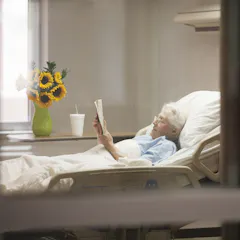
More than 3,000 patients are stranded in hospital waiting for discharge to a more appropriate aged care facility. Here’s why.

Home care is essential to Ontario’s health- care system, but its failures are offloaded onto underpaid personal support workers — mostly racialized immigrant women —who often work in unsafe conditions.
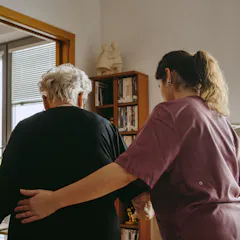
A contested component of the new system is that older Australians will pay for more of their non-clinical care, such as showering, cleaning and meal delivery.

Some 20,000 home care packages will be brought forward to be delivered before the end of October.

Home care packages help older people with complex needs to live at home for longer. The problem is, more people want packages than the number the government funds.

A new payment system requires wealthier people to contribute more for non-clinical services. Here’s what it means for Australians planning for in-home or residential aged care.

Most people would prefer to die at home than in hospital. If dying at home could be made more feasible and well resourced, both the dying and the living would benefit.

Three-quarters of health care in Canada is provided at home by unpaid family caregivers. Not only is this essential health-care work often unrecognized and under-supported, it is rapidly changing.
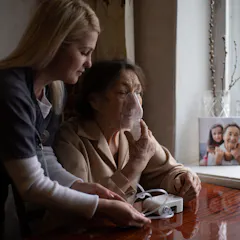
As part of the recent aged care reforms, older Australians will be eligible for $25,000 worth of palliative support when they have three months or less left to live.

Overall, the government’s investment in home care is a positive step toward improving quality of life for older Australians. But these reforms will face some challenges.

The federal government caps the number of home care packages it provides. When demand exceeds supply, waiting times blow out.
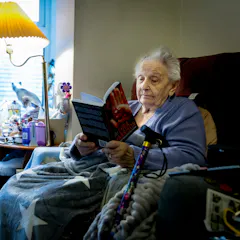
Australia’s aged care system is undergoing significant change, but is still governed by an act more than 25 years old. Can the government meet its mid-year deadline for the next round of reforms?

Publicly funded primary and home care should be accessible to all older adults, regardless of where they live.

An accurate prediction of survival can enable earlier conversations about preferences and wishes at the end of life, and earlier introduction of palliative care.

While both nursing homes and home care impose financial burdens, their differing structures can influence how older Canadians save money.
One proposal to fund the rising costs of aged care is a Medicare-style levy. However, this seemingly neat solution isn’t the answer to our aged care funding problems. Here’s why.
Top contributors
-

Professor of Health Economics, University of Technology Sydney
-
Emeritus Professor of Public Health, La Trobe University
-
Honorary Enterprise Professor, School of Population and Global Health, and Department of General Practice and Primary Care, The University of Melbourne
-
Associate Professor in Aged Care, Corporate Governance and Accounting, University of Technology Sydney
-
Professor, School of Public Health, The University of Queensland; The University of Melbourne
-
Associate Professor of Sociology, UMass Lowell
-
Associate Professor of Accounting, University of Technology Sydney
-
Professeure titulaire en Sciences Economiques, Université du Québec à Montréal (UQAM)
-
Research director (CNRS), Toulouse School of Economics – École d'Économie de Toulouse
-
Associate Professor | Schlegel Chair in Clinical Epidemiology & Aging | Canada Research Chair in Integrated Care for Seniors, McMaster University
-
Senior Associate, Grattan Institute
-
Assistant Professor, Department of Finance, HEC Montréal
-
Assistant Professor, Economics, Carleton University
-
Assistant Professor, Economics, University of Groningen
-
Senior Research Fellow, Macquarie University Centre for the Health Economy, Macquarie University