
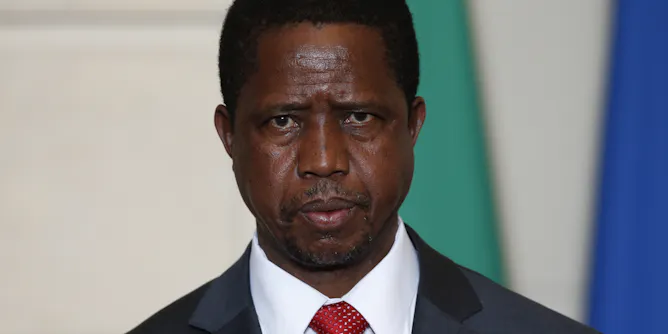
Zambia has gone from a country where people engaged freely in open political debate to one where most people now look over their shoulders to see who’s listening.
Articles on Afrobarometer
Displaying 21 - 31 of 31 articles
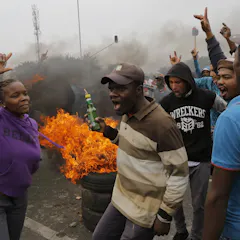
Protests in South Africa are about more than just service delivery of basic services such as water and electricity. They reflect a wider crisis about the failure to build a more equitable society.
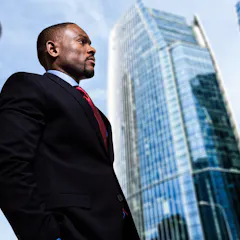
The middle class concept in Africa has remained vague and limited to number crunching. The minimum threshold for entering it in monetary terms was critically vulnerable to a setback into poverty.

Most Africans see courts as legitimate but only a slim majority trust them while one in three people believe judges are corrupt.
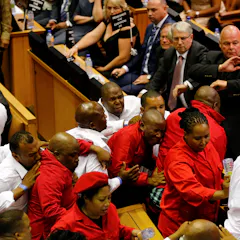
Opposition parties in sub-Saharan Africa struggle to prove themselves worthy to skeptical voters who, unlike in Western competitive systems, don’t trust them over former liberation movements.
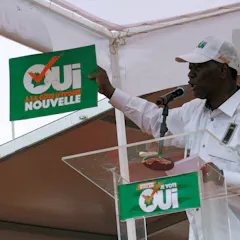
The proposed new constitution would allow Alassane Ouattara to remain as president. Opposition parties see this move as a constitutional “coup” that will also protect his allies.
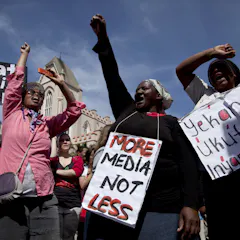
While some African countries have shown an improvement in press freedom and freedom of expression ratings, others, including South Africa, are seeing worrying trends and a drop in rankings.
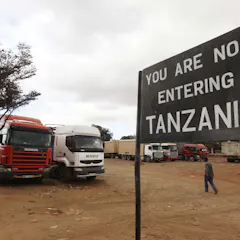
Resistance to free movement across borders in many countries suggests that large numbers of African citizens see foreign migrants as competition to local labour and businesses.
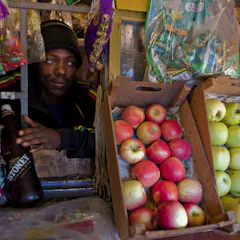
Some economists have touted the rising middle class as a panacea for Africa’s challenges. But a more realistic diagnosis of what makes up a middle class is needed.
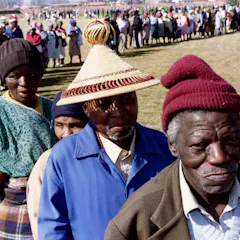
As South Africa celebrates 22 years since the end of apartheid this month, a new survey by Afrobarometer suggests the country still has a long way to go in fulfilling the promises of freedom.
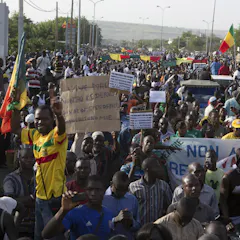
What are the early warning signs of threats to the stability of African democracies? The signs could be seen in Mali before it exploded in 2012. Ghana and others would do well learn from Mali.
Top contributors
-

Extraordinary Professor, Department of Political Sciences, University of Pretoria
-
Afrobarometer Senior Analyst/Methodologist, University of Cape Town
-
Director of the Leaders of Africa Institute and Research Affiliate with Davidson College, Davidson College
-
University Distinguished Professor of Political Science and African Studies, Michigan State University
-
Deputy Director of the Afrobarometer & Associate Professor in the Department of Political Science and MSU’s African Studies Center, Michigan State University
-
Senior economist, IFC, World Bank Group
-
Research Fellow, University of Antwerp (Belgium) and University of the Free State (South Africa), University of the Free State
-
Research Associate, Dept of Anthropology & Development Studies and Fellow, Clare Hall, University of Cambridge, University of Johannesburg
-
Honorary Professor of International Relations, University of the Witwatersrand
-
Professor in Government and Public Policy, University of Strathclyde, and Adjunct Professor in the Nelson Mandela School of Public Governance, University of Cape Town, University of Strathclyde
-
Senior Lecturer in International Relations, University of Aberdeen
-
Associate Professor of Political Science, Michigan State University
-
Lecturer of Communication Studies, University of Cape Coast
-
Honorary Research Fellow, School of Social Sciences, University of Aberdeen
-
Associate Professor of Government, University of Oxford