
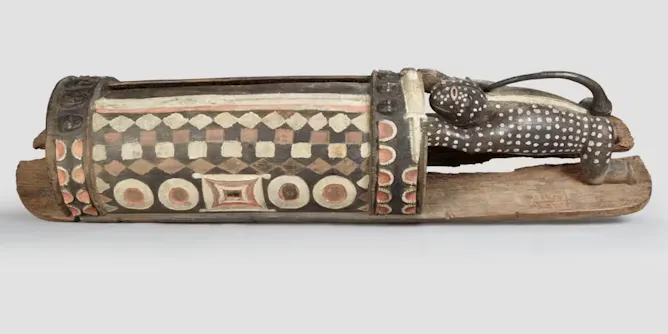
A Kenyan exhibition working with communities in conflict zones offers insights into how Côte d'Ivoire could use the drum for reconciliation.
Articles on African arts
Displaying 1 - 20 of 34 articles

Designed for purpose over profit, these DIY spaces thrive in cities, involve local neighbourhoods in storytelling, and build new possible worlds.

Mbare Art Space has transformed an oppressive colonial building with a vision for the future that’s built on sustainable art practice.
Chosen to direct the world’s most important art show next year, she leaves a legacy of building institutions, uplifting artists and educating through art.
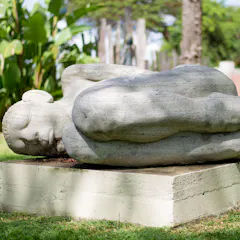
Zimbabwe is named after an ancient stone city and its stone sculpture is world famous.
A new coffee table book explores the ties that bind the work of southern Africa’s contemporary artists.
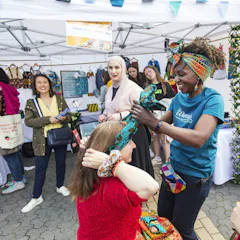
Research finds cultural festivals are meaningful events for the communities they celebrate, as well as enriching experiences for others in attendance.

In the Absence is a meditative exhibition of large-scale installations created by the Wajukuu Art Project.
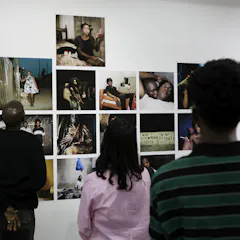
One of the first queer art exhibitions in Mozambique’s history, Manas has been restaged in Maputo, revealing a little-told history of transgender life.

At 88 the artist Esther Mahlangu is world famous and is the subject of a major retrospective exhibition.

The nationalist art of Mobutu Sese Seko and the art nouveau style of King Leopold II both live on in Kinshasa in fascinating ways.

INTERwoven TEXTures is a breakthrough exhibition. Here’s a review of it.
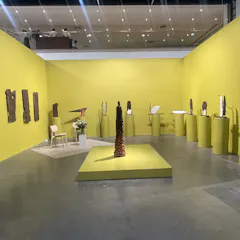
His work can only be fully understood by observing the shared traditions of Botswana, Zimbabwe and South Africa.
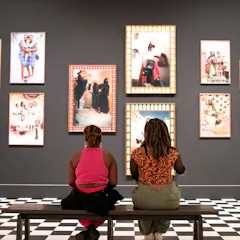
A World in Common is a European exhibition with African content, rather than a space that invites conversations and engagement that go beyond the images themselves.

Western approaches to studying African materials have had a colonial bias. A curator considers what it means to think of the collection as needing to exist in relation to communities.
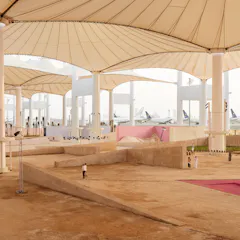
The celebrated South African architect Sumayya Vally is the artistic director of the exhibition.
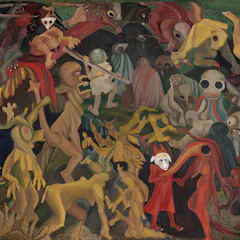
Mwili, Akili na Roho represents 50 years of art from Kenya, Uganda and Tanzania – from 1950 to 2000.

She paved the way for women to play the mbira – and then took the ancient tradition global.

Art stolen from African kingdoms is a knowledge system plundered by colonialists, who must take historical responsibility.
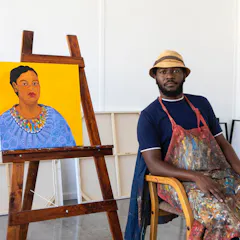
Harare aims to join a growing list of African cities hosting high profile events to sell local art and bolster artists.
Top contributors
-

Assistant Professor, Harvard University
-
Nancy and Robert J. Carney Postdoctoral Associate in Art History, Rice University
-
Lecturer, Kenyatta University
-
Senior Lecturer in Visual Art, University of Johannesburg
-
Senior Researcher, University of the Witwatersrand
-
Associate Professor, Faculty of Humanities, Johannesburg Institute for Advanced Study, University of Johannesburg
-
Associate Professor of Art History and Deputy Head of the Wits School of Arts, University of the Witwatersrand
-
Honorary Professor of Practice, Bartlett School of Architecture, UCL
-
Post-Doctoral Fellow, Stellenbosch University
-
Associate Professor of Musicology, University of Cape Town
-
Assistant Professor, University of Kinshasa
-
Associate Professor and Chair of Department: Art and Music, University of South Africa
-
Associate professor, George Mason University
-
Postdoctoral research fellow, University of the Witwatersrand
-
Senior Lecturer, Anglia Ruskin University