
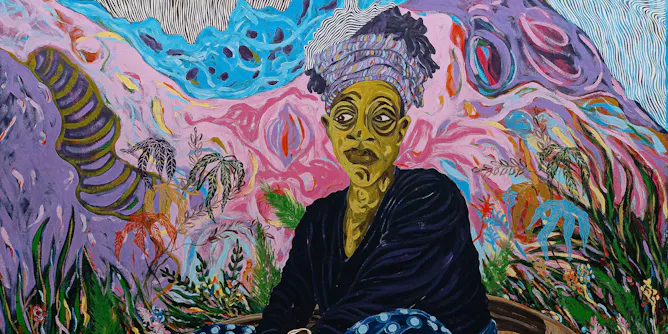
The show’s opening included a ritual performance by the artist, connecting the living with their ancestors.
Articles on African artists
Displaying 1 - 20 of 23 articles

African artists are not only present on the global stage but are shaping the languages of art itself.

Johannesburg’s inner city has seen a surge in creative hub development, driven by artists with an entrepreneurial spirit.

Designed for purpose over profit, these DIY spaces thrive in cities, involve local neighbourhoods in storytelling, and build new possible worlds.
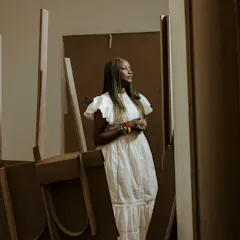
Chosen to direct the world’s most important art show next year, she leaves a legacy of building institutions, uplifting artists and educating through art.
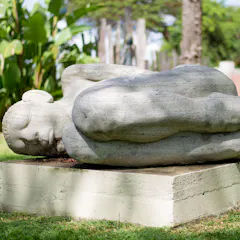
Zimbabwe is named after an ancient stone city and its stone sculpture is world famous.
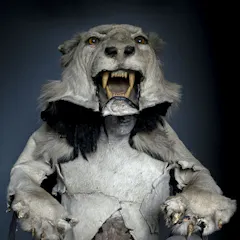
End of the Game sparks critical conversations on wildlife conservation and responsible tourism.

The Dakar Biennale is a gathering of artists, curators, academics and art lovers with a unique form of generosity and inclusion.
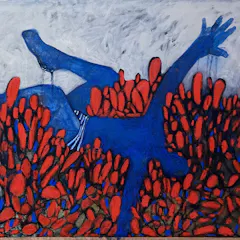
Jo Rogge tackles difficult subjects that society cannot afford to ignore.

In the Absence is a meditative exhibition of large-scale installations created by the Wajukuu Art Project.

At 88 the artist Esther Mahlangu is world famous and is the subject of a major retrospective exhibition.

INTERwoven TEXTures is a breakthrough exhibition. Here’s a review of it.

He worked tirelessly to promote art and teach artists.
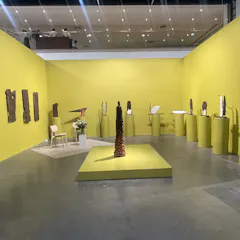
His work can only be fully understood by observing the shared traditions of Botswana, Zimbabwe and South Africa.

An installation at Tate Modern and two other shows in London are cementing the artist’s global reputation.
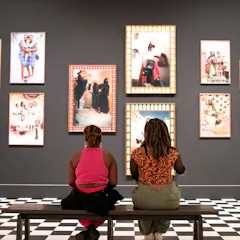
A World in Common is a European exhibition with African content, rather than a space that invites conversations and engagement that go beyond the images themselves.
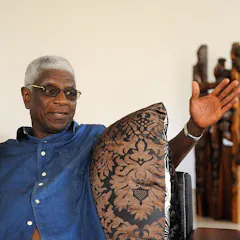
A major new show at the Tate Modern in London in October will further cement his fame as one of the most important African artists in the world.
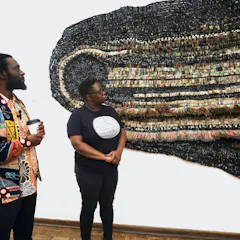
Using found materials from dump sites, the large scale works examine the residues of colonialism.
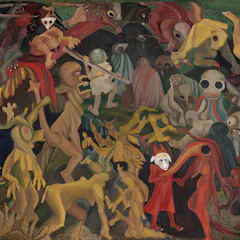
Mwili, Akili na Roho represents 50 years of art from Kenya, Uganda and Tanzania – from 1950 to 2000.
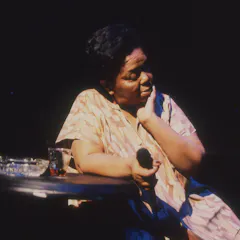
On in South Africa at the Encounters film festival, the documentary is an intimate portrait of the great artist.
Top contributors
-

Nancy and Robert J. Carney Postdoctoral Associate in Art History, Rice University
-
Assistant Professor, Harvard University
-
Lecturer, Kenyatta University
-
Lecturer in Art and researcher, University of Nigeria
-
PhD candidate in Art History, Rhodes University
-
Senior Lecturer, Anglia Ruskin University
-
Lecturer in Fine Arts, Universidade de Lisboa
-
Curator of Urban Room, School for the Creative and Cultural Industries, UCL
-
Senior Researcher, Centre for Humanities Research, University of the Western Cape
-
Lecturer in Innovation & Entrepreneurship, University of Auckland, Waipapa Taumata Rau
-
Senior Lecturer in Film and Television Studies, University of Cape Town
-
Lecturer of Political Science, University of Mpumalanga
-
Doctoral Fellow, University of the Witwatersrand
-
Associate Professor and Director of Christiansborg Archaeological Heritage Project, Associate Graduate Faculty, Rutgers University