
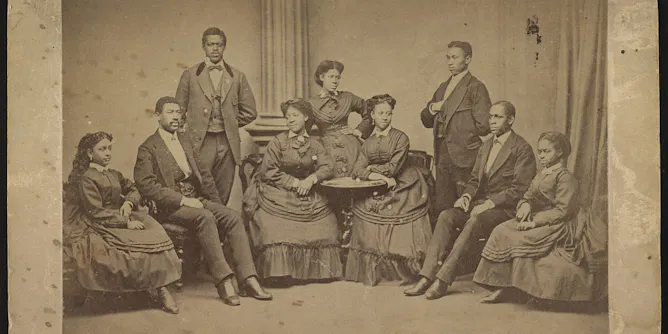
Spirituals were created out of the experience of enslaved people in the US. They weren’t songs of anger – but of an abiding belief in the victory of good over evil.
Articles on African Americans
Displaying 141 - 160 of 333 articles
African American Vernacular English is part and parcel of Black identity. Its distinctive linguistic features are — wrongly — denigrated.

Prince was a musical genius, but he didn’t come of age in a vacuum. A human geographer explains how Minneapolis’ unique musical culture nurtured and inspired the budding star.

A scholar disproves the long-held assumption that black names are a recent phenomenon.

Rather than helping and providing new unbiased tools for policing, police surveillance technologies tend to be reactionary and biased.
Fictional accounts of white Southerners make it seem like it was fun to be a slave on a plantation at holiday time. Many of today’s tours repeat such stories.

Black Americans who grow up in racially segregated areas tend to have worse health, education and future economic prospects. Moving out can make a big difference.

Among Tubman’s most daring feats was helping slaves escape. She believed she went into trances and had visions. These, to her, were God’s way of guiding her, which made her quite fearless.

A new study highlights the importance of the ‘intergroup sensitivity effect’ in comedy, which gives people license to tell certain jokes, but not others.
Several presidential hopefuls have offered proposals to close the racial wealth gap, from baby bonds to reparations. A simulation suggests policies short of direct aid to blacks won’t do the trick.

Major changes in the language of white supremacists have happened in the last decade that provide a window into how the groups mobilize support, shape political perceptions and advance their cause.

According to a new study, about 52 of every 100,000 men and boys, and about 3 of every 100,000 women and girls, are killed by police in the US.
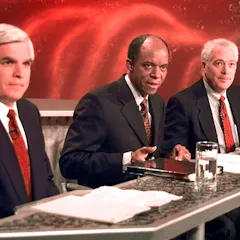
In 26 attempts, no African American has ever defeated an incumbent U.S. senator or governor.
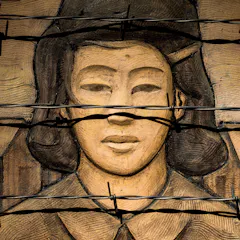
Social movement theory helps to explain why Japanese-Americans received reparations but the same will be much more challenging to provide for African-Americans.

Although financial reparation for African-Americans may be complicated to achieve, steps such as accurate acknowledgement of atrocities as well as public apologies and memorials can be enacted.
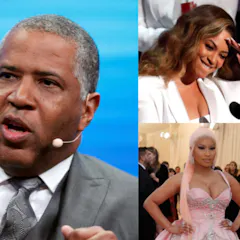
A recent gift by billionaire Robert Smith to pay off the student loans of 2019 graduates of Morehouse points to the potential of America’s black elite to pay off all black students’ college loans.

Municipal swimming pools flourished in the 20th century. But too often, their success was based on the exclusion of African Americans.
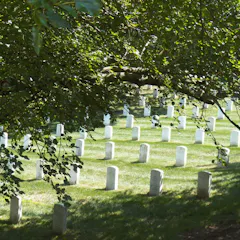
There are many conversations these days around ‘successful dying.’ Two African American scholars argue why these conversations need to include race and how it impacts life span.
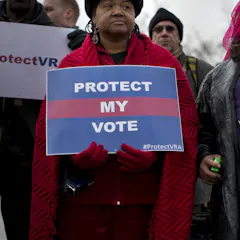
When no one in Mississippi wins a majority of votes in an election, the legislature chooses the winner. This has led to white men winning over and over.

The first truth commission to research lynchings has been established in Maryland. It has the potential to educate the public about and support racial reconciliation. But it also faces obstacles.
Top contributors
-

Professor of Journalism, Indiana University
-
Canada Research Chair, Professor in Performance, Toronto Metropolitan University
-
Derek H. Alderman is a Friend of The Conversation.
Chancellor's Professor of Geography, University of Tennessee
-
Samuel J. and Augusta Spector Professor of History and African and African American Studies, Brandeis University
-
Professor of Political Science, LaGrange College
-
Professor of Social Work, Michigan State University
-
Associate Professor of Hip-Hop, University of Virginia
-
Professor of Geography and Senior Research Associate in the Rock Ethics Institute, Penn State
-
Professor of History, Morehouse College
-
Associate Professor of Communications, Elon University
-
Professor of American History, University of Colorado Colorado Springs
-
Associate Professor of History, University of South Carolina
-
Honorary Professor of International Relations, University of the Witwatersrand
-
Managing Director of the McCourtney Institute of Democracy, Associate Research Professor, Political Science, Co-host of Democracy Works Podcast, Penn State
-
Professor of Religious Studies, Michigan State University