
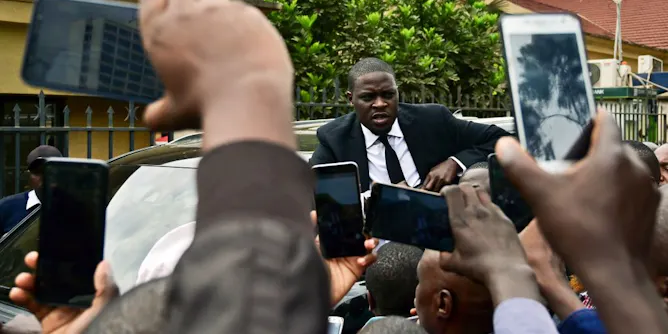
Social media reach is greatest among younger voters, who have integrated online platforms more closely into their personal lives.
Articles on Africa democracy
Displaying 21 - 40 of 75 articles
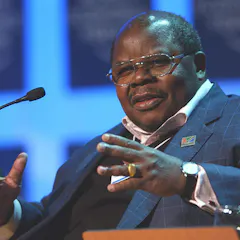
Mkapa, who penned an autobiography, had an impressive record in building state institutions. But his reign was marked by killings and political suppression.

For democracy to work in Kenya the country needs good leadership. Politicians must uphold the constitution to infuse trust and confidence in state institutions.
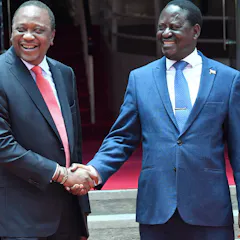
Even in the most tense and dangerous of moments, the elite has found a way to come back together.
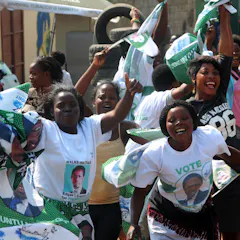
Political legacies generated during authoritarian rule have a tendency to transcend into the multiparty era.

The ICC must not further destroy its credibility by cooperating with the sorts of bad actors who should be before a court themselves.
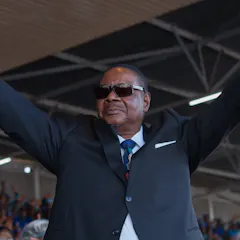
A new round of elections offers an opportunity to strengthen civil and political freedoms.
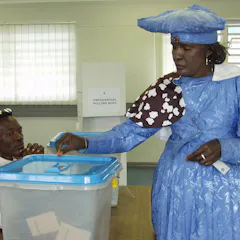
For the first time since independence, Namibia’s ruling party has suffered electoral setbacks in the midst of economic and political crisis.
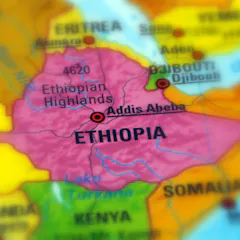
In a country where there are more than 80 ethnic groups, the territorial solution isn’t a feasible solution.

The Khamas have dominated Botswana’s politics since the 1870s, but they are now a discredited, spent force.
The unstable authoritarian pathway that many post-colonial African states followed was facilitated by the way in which European empires undermined democratic elements within African societies.

It’s time for a new approach as it becomes increasingly clear that protests won’t topple the Zanu-PF government.
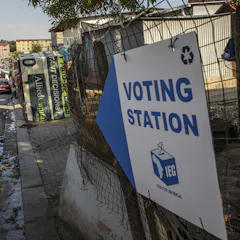
The election’s result endorses other evidence that trust in South Africa’s constitutional settlement and its political institutions is steadily declining.
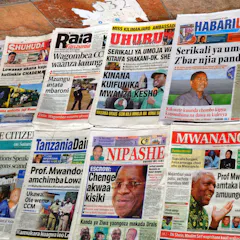
In a surprising change in trends, citizens in many African countries increasingly support government restrictions of press freedom.
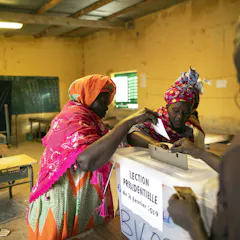
Africa’s democracies have grown stronger during a period in which the world is backsliding on democracy.
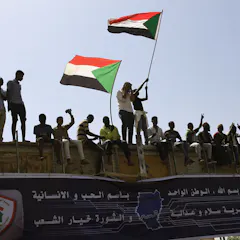
The role of the military in toppling authoritarian rulers, after intensive popular protests, raises questions about how the AU’s policy against coups should be applied.
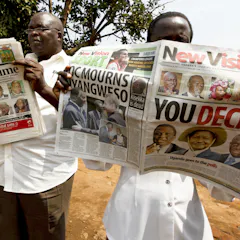
The biggest threats are the concentration of media ownership and attempts to legislate the online media environment.
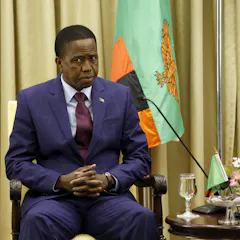
Democratic and authoritarian countries are moving further away from each other.
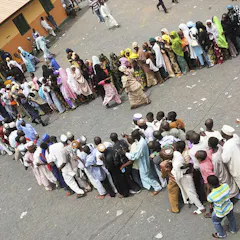
More than half of Nigeria’s 51% registered voters are aged between 18-35 years.
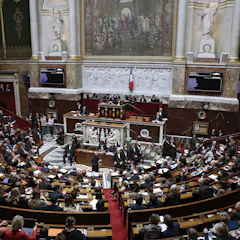
The argument isn’t whether African democracies are better than those in the West. It’s simply that the idea of “real” and “not yet real” democracies expresses a colonial mentality, not reality.
Top contributors
-

Professor of Democracy, University of Birmingham
-
International Relations Scholar, University of the Witwatersrand
-
Professor of Comparative Politics, University of Warwick
-
Lecturer, Tumaini University Makumira
-
Extraordinary Professor, University of Pretoria
-
Assistant Professor of Political Science, Marist College
-
Professor, Weber State University
-
Associate Professor of International Studies, University of Nottingham
-
Professor of History, Durham University
-
Professor of Media Industries, University of Nottingham
-
Associate professor in Politics and International Relations, Leeds Beckett University
-
Senior Lecturer in Politics and International Relations, University of East London
-
Professeur des universités, Université Paris 1 Panthéon-Sorbonne
-
Research Professor, Institute for Development Studies (IDS), University of Nairobi
-
Assistant Professor in Political Science, Trinity College Dublin