
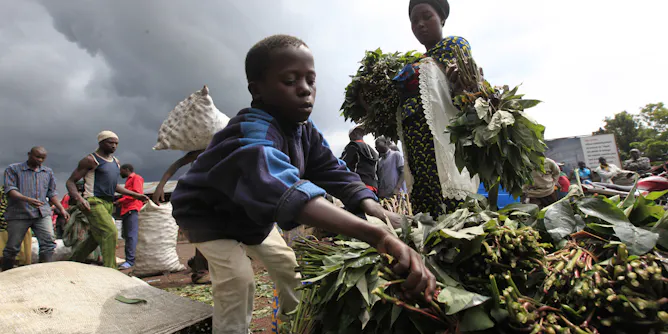
Technology is changing how plant diseases are recognised and dealt with by small scale farmers in Africa.
Articles on Africa Day
Displaying 21 - 40 of 53 articles

In a remarkable extension of technological leapfrogging, Somaliland will become the first country in the world to use iris recognition in a presidential election.
Scholars have started to investigate what it really means to be middle class in Africa.
As we celebrate Africa Day and reflect on how far the continent has come since the Organisation of African Unity was founded in 1963, it’s a good time to assess whether democracy is working.
The adoption of the African Charter on Democracy, Elections and Governance five years ago raised hopes for a new democratic Africa. But its ideals remain elusive for many parts of the continent.
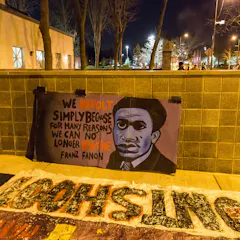
For the revolutionary Frantz Fanon it was not enough to celebrate the achievements of decolonisation. It was necessary to educate, to strain at the limits of national freedom and to provoke debate.
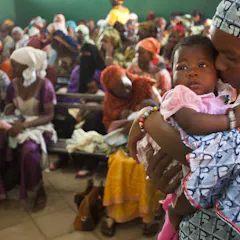
Across the continent, citizens’ perceptions of health care show several barriers to access and better health for all.

More than two million women across the world suffer from obstetric fistula – a hole in the birth canal that makes them incontinent – but this can be avoided.
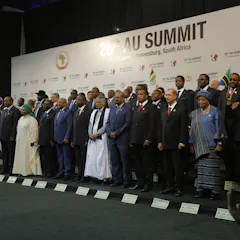
Silencing the guns in Africa by 2020 will require a Herculean effort on the part of the AU Peace and Security Council, whose remit is to prevent, manage and resolve conflicts.
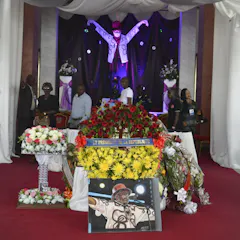
Papa Wemba was one of the most active ambassadors of Congolese urban music on the global stage. He did this by fusing international musical styles with authentic Congolese grooves.
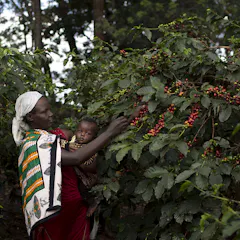
The downturn in the commodity boom will not automatically lead to diversification of Africa’s economies. This can only be achieved through a focus on creating learning economies driven by innovation.
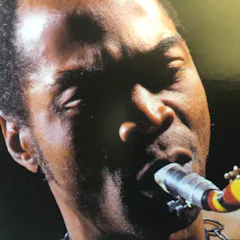
Nigerian superstar Fela Kuti used his music as an art form that provoked. This wasn’t only through politics, but also sex.

Namibia’s rise in the World Press Freedom rankings is stunning. The media environment in Africa, too, has improved. But media closures and the harassment of journalists are not yet things of the past.
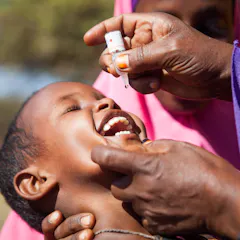
Every year hundreds of thousands of children die from vaccine-preventable diseases. Africa leaders could change this if they improved vaccination efforts.
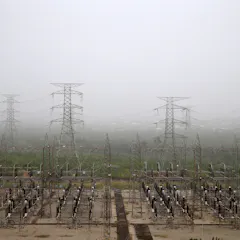
Africa still has numerous electricity challenges to overcome, but several countries are getting it right when it comes to providing electricity to their people.
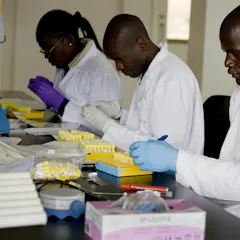
Successful economies are led by innovation and driven by knowledge. For Africa to advance, it needs to make more substantial investments in its research and development sector.
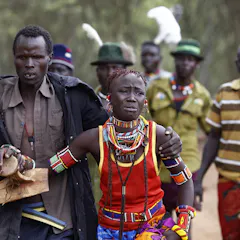
Education can be a powerful tool to stop the practice of child marriage. It empowers girls, and their success can ultimately boost their communities.
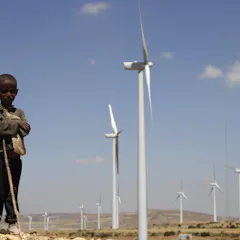
African mathematicians and scientists have an important role to play in establishing and protecting a democratic continent.

Agriculture can only contribute to rural growth and development to the benefit of all if it links with an inclusive and diverse rural non-farm economy.
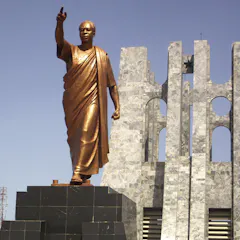
Nobel laureate and Kwame Nkrumah’s economic adviser Arthur Lewis saw Ghana as a testing ground for his ideas on economic development. But he was met with fierce resistance.
Top contributors
-

Professor of International Law, University of Pretoria
-
Professor of the Practice of International Development, Harvard Kennedy School
-
Extraordinary Professor, Global Health, Stellenbosch University; South African Medical Research Council
-
Professor, Department of Political Sciences, University of South Africa
-
Director of the Leaders of Africa Institute and Research Affiliate with Davidson College, Davidson College
-
Emeritus Professor of African Linguistics, University of Leipzig
-
Professor of Human Geography, Lund University
-
Associate professor, Cape Peninsula University of Technology
-
Lecturer Social Work, University of Wollongong
-
Lecturer in Environmental Sustainability, University of Energy and Natural Resources
-
Professor of Mathematical Physics, University of Cape Town
-
Professor of Ethnomusicology, Kent State University
-
Lecturer, University of Queensland, The University of Queensland
-
Director, Institute for Poverty, Land and Agrarian Studies, University of the Western Cape
-
Research Fellow, Department of Political Sciences, University of Pretoria