
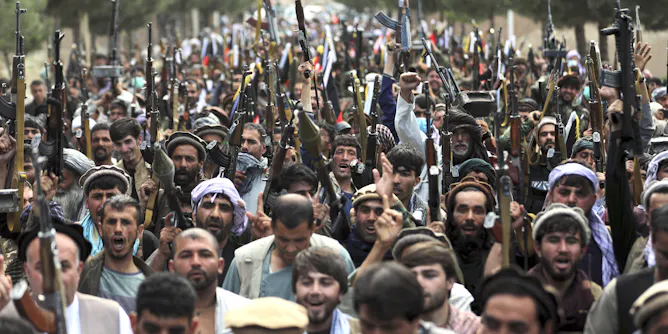
In Afghanistan, it does not pay to be on the losing side. There is a danger that a spreading perception the Taliban are poised to take over could trigger a wave of government and army defections.
Articles on Afghanistan
Displaying 241 - 260 of 439 articles

After 20 years in Afghanistan and many promises made, the U.S. does hold responsibility for Afghans’ fate, including their human right to access education.
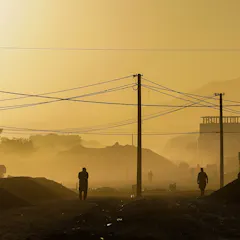
The infrastructure and levels of deprivation in poorer countries have prevented them from benefiting from containment measures as much as richer nations.
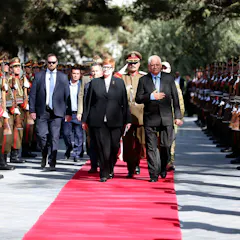
The government said it expected the closure would be temporary, but it appears unlikely a Kabul embassy will reopen anytime soon.
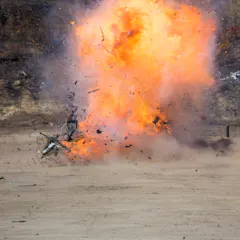
What happens when a bomb explodes? This unique ‘blast lab’ found out.
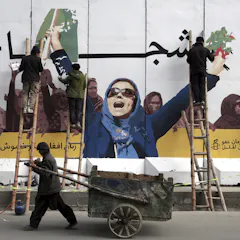
Without women’s inclusion and meaningful participation, any peace agreement between Afghanistan and the Taliban will lack legitimacy.
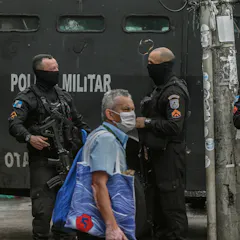
Attempts to wage war on drugs in developing countries which don’t take into account the needs of local people are doomed to fail. Here’s why.
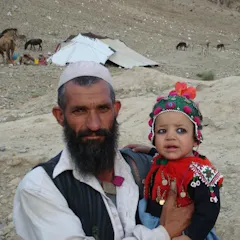
As American troops leave Afghanistan, a scholar of the country’s history and culture reexamines his photos of the nation’s people.
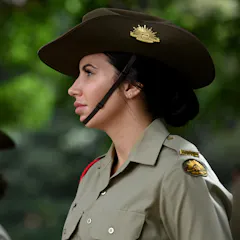
The Brereton report is providing an opportunity for the ADF to rethink its core values. It ignores changing social expectations at its peril.

Western governments have a very poor record when it comes to looking after those foreign nationals who have risked their lives for them.
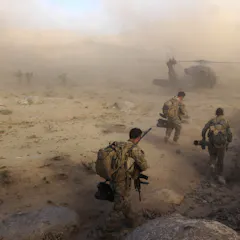
Afghanistan sharpened Australia’s fighting capacity and capability. But we were still part of a spectacular failure of political and military leadership.
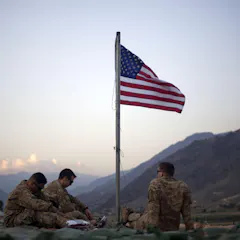
As President Joe Biden said on announcing the US troop withdrawal by September, ‘our reasons for remaining in Afghanistan have become increasingly unclear’.
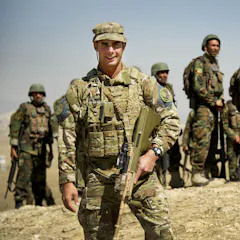
Australia will pull out its remaining 80 troops from Afghanistan by September, marking the end of its longest involvement in a war.
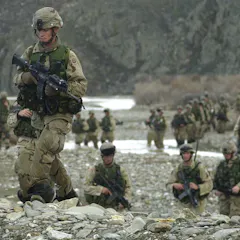
The Afghanistan War now has an end date: 9/11/21. Experts explain the history of US involvement in Afghanistan, the peace process to end that conflict and how the country’s women are uniquely at risk.
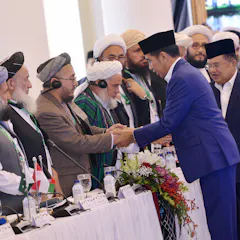
Indonesia needs to consider long-term engagement to produce deeper and more sustainable impacts.
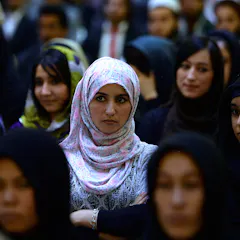
Afghan women interviewed about current talks between the government and the Taliban say, ‘There is no going back.’ Taliban fundamentalist rule in the 1990s forced women into poverty and subservience.
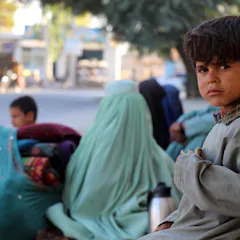
Little was achieved in the first round of talks last year. As round two is set to begin, there are major obstacles to overcome to finally bring peace to Afghanistan.
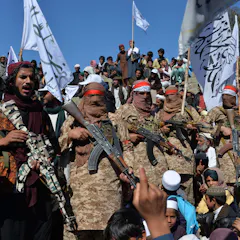
Because the Taliban’s insurgency is so well financed, the Afghan government must spend enormous sums on war, too. A peace accord would free up funds for basic services, economic development and more.
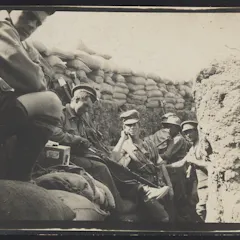
When the honour of Australia’s revered soldiers is questioned, so, too, is the national self-image. But war is an ugly business, and we pay a price for tethering it so tightly to our identity.
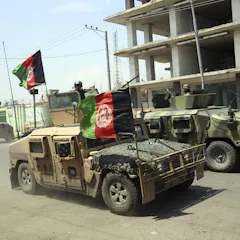
Pulling out roughly half the U.S. troops in Afghanistan is part of an effort to find peace, but may unbalance a precarious stalemate.
Top contributors
-

Reader in Sociology, City St George's, University of London
-
Professorial Fellow, University of Canberra
-
Director, Center for Afghanistan Studies, University of Nebraska Omaha
-
Associate Professor, School of History and Philosophy, UNSW
-
ESRC Postdoctoral Fellow, School of Government and International Affairs, Durham University
-
Chair in Global Islamic Politics, Alfred Deakin Institute for Citizenship and Globalisation, Deakin University
-
Visiting Research Professor, The Senator George J. Mitchell Institute for Global Peace Security and Justice, Queen's University Belfast
-
Senior Research Fellow, Initiative for Peacebuilding, The University of Melbourne
-
Professor of Anthropology, Emerita, Concordia University
-
Non-resident Research Fellow, Graduate School of Development, University of Central Asia
-
Emeritus Professor of Middle Eastern Studies, Australian National University; The University of Western Australia; Victoria University
-
PhD Candidate, International Relations, Australian National University
-
Professor of Social Anthropology, University of Sussex
-
Professor of International Politics, Clinton Institute, University College Dublin
-
Assistant Professor of Political Science, Clemson University