
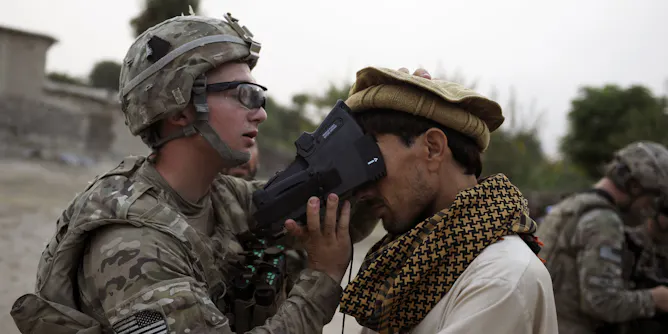
The potential failure of the US military to protect information that can identify Afghan citizens raises questions about whether and how biometric data should be collected in war zones.
Articles on Afghanistan
Displaying 181 - 200 of 439 articles
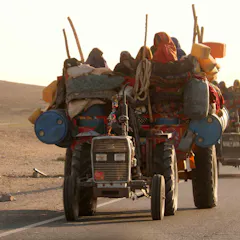
Indonesia, as well as many other countries that will see an increase in Afghan refugees and asylum seekers, will be put to a test of humanity and will have to act quickly.
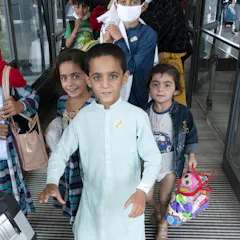
An ‘orderly departure program’ similar to the one set up after the Vietnam War could offer a vital pathway out of Afghanistan for refugees over the next several years.

Researchers have interviewed hundreds of Afghan women about violence and mental health.
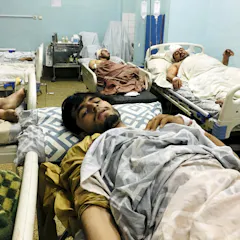
The US president inherited a situation with no good solution in Afghanistan, but the latest bombing will raise questions about his judgment and cloud his presidency.
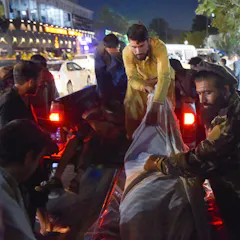
An attack on the Kabul airport has left scores dead and many more injured. Two terrorism scholars explain who the group thought responsible is, and how big of a threat is it.
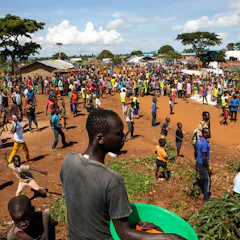
Uganda is making an effort in a neighbourhood where few other countries have the same enthusiasm.
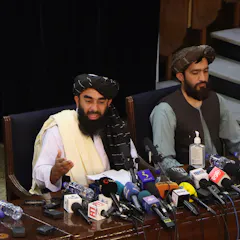
The Taliban has promised an ‘inclusive’ new government. But early signs aren’t promising.
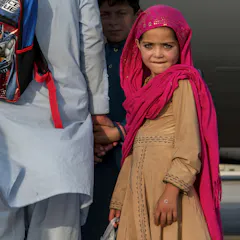
Faith-based organizations have been central partners in resettling refugees in the United States. But there are signs that support may be waning.
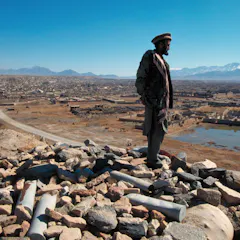
A historian explains how the Taliban emerged out of the decades of chaos that followed the Saur Revolution in Afghanistan in 1978.
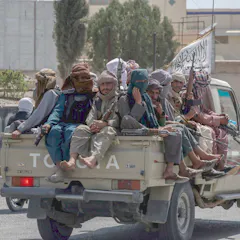
Two Afghan researchers explain what led to the emergence of the Taliban in the 1990s and why that history is crucial to understand what’s happening now. Listen to The Conversation Weekly podcast.
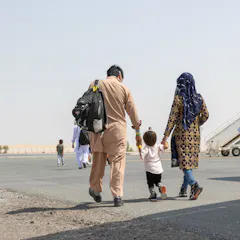
The Afghans people surveyed were optimistic and positive about their lives in Australia — and felt welcome in their communities.
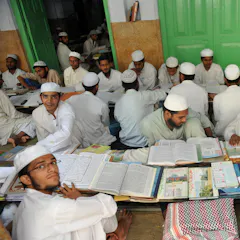
Deobandi Islam, the religious school that the Taliban draw their ideology from, was set up in 19th century India to educate Muslim youth.
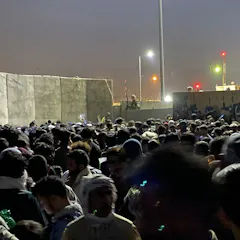
Vague promises to rescue certain groups of people are causing confusion.
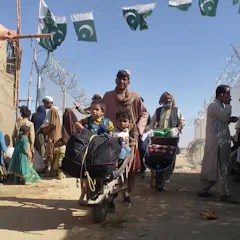
Pakistan covertly backed the Taliban in Afghanistan for years. But if the Taliban fail to ensure stability now, it could trigger another wave of refugees into Pakistan or more insurgent attacks.
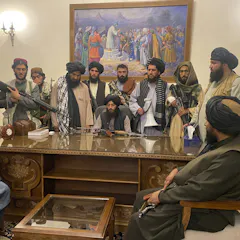
There are many different understandings of shariah law in the Muslim world – the Taliban’s is a particularly hard-line one that is unlikely to change radically.
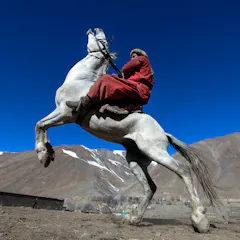
One province is holding out against Taliban rule.
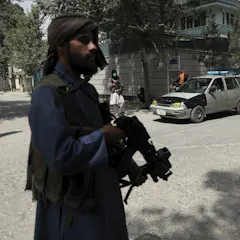
The U.S. military collected biometric data on Afghan civilians. The information may have fallen into the hands of the Taliban, highlighting why collecting the data is too risky in the first place.
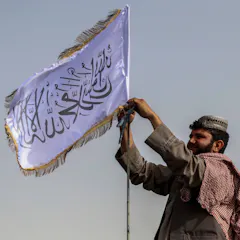
The US, Nato and the EU must support stability on the ground, even if it’s not the type of stability they wanted.
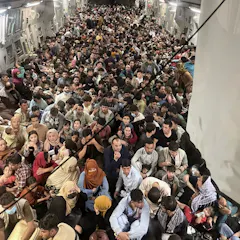
Don’t be misled by the scenes from Kabul airport. Most Afghan refugees don’t leave in an airplane and few will settle in the United States.
Top contributors
-

Reader in Sociology, City St George's, University of London
-
Professorial Fellow, University of Canberra
-
Director, Center for Afghanistan Studies, University of Nebraska Omaha
-
Associate Professor, School of History and Philosophy, UNSW
-
ESRC Postdoctoral Fellow, School of Government and International Affairs, Durham University
-
Chair in Global Islamic Politics, Alfred Deakin Institute for Citizenship and Globalisation, Deakin University
-
Visiting Research Professor, The Senator George J. Mitchell Institute for Global Peace Security and Justice, Queen's University Belfast
-
Senior Research Fellow, Initiative for Peacebuilding, The University of Melbourne
-
Professor of Anthropology, Emerita, Concordia University
-
Non-resident Research Fellow, Graduate School of Development, University of Central Asia
-
Emeritus Professor of Middle Eastern Studies, Australian National University; The University of Western Australia; Victoria University
-
PhD Candidate, International Relations, Australian National University
-
Professor of Social Anthropology, University of Sussex
-
Professor of International Politics, Clinton Institute, University College Dublin
-
Assistant Professor of Political Science, Clemson University