
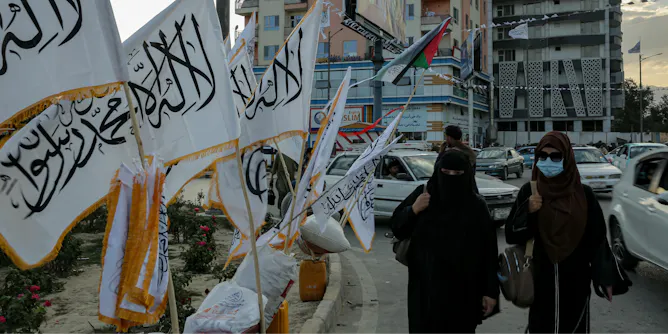
The militant Islamist regime has introduced a series of oppressive laws restricting rights for women and girls.
Articles on Afghan women
Displaying all articles

Silence would mean accepting and surrendering to the Taliban’s power, writes one of these authors. Theirs are the voices of resistance.
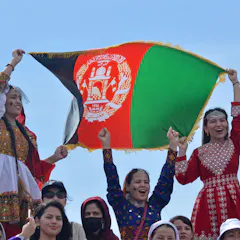
An Afghan women’s cricket team is set to play its first match in years. It could put pressure on the International Cricket Council to do more for Afghan women.
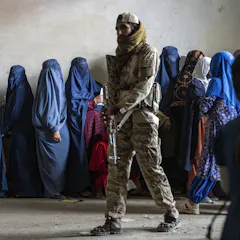
The Taliban have enacted laws that violate human rights since they returned to power. But a new edict goes further.
Afghan women are turning to social media, singing in protest against new Taliban laws banning their voices in public. They sing to prove they still exist.
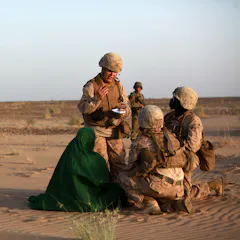
Women who served in unofficial combat and intelligence roles during the Afghanistan war offer brutally honest accounts of their experiences.
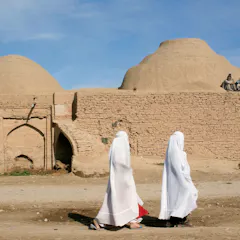
Widows and single women are losing their homes, after being told they can no longer work by the Taliban, and are living on the poverty line.
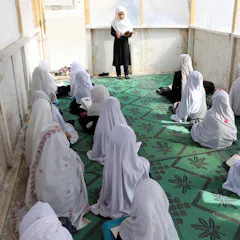
Girls’ secondary schools remain closed in Afghanistan, despite international pressure.
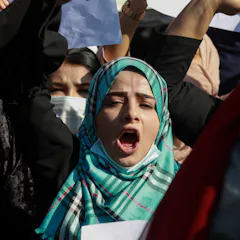
The age-old idea that Afghan women need rescuing from their men is a western construct that ignores the voices of Afghan women.
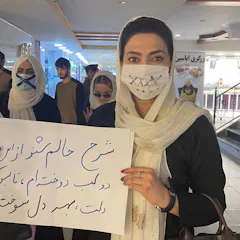
Two Afghan women scholars write about how Afghan women’s groups have been fighting for human rights, both now and historically.
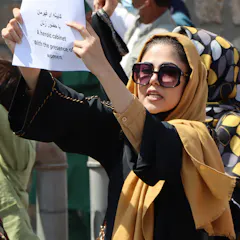
Segregation and other measures being introduced by the Taliban’s hardline new government are being greeted with widespread protests, many of them led by women.

Researchers have interviewed hundreds of Afghan women about violence and mental health.
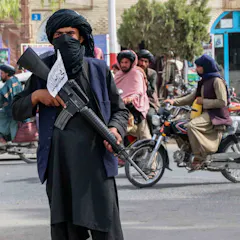
Culture change has been slow and difficult but the will to make life better for Afghan women was there. Now a big question mark hangs over their future.
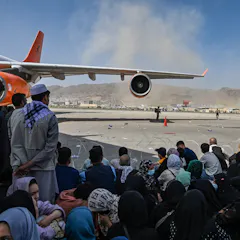
A political philosopher argues why the current situation in Afghanistan should weigh heavily on the American conscience.
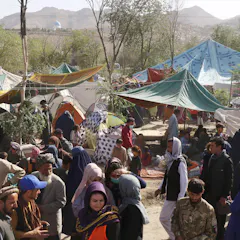
When the US invaded Afghanistan in late 2001, Afghans had endured 22 years of war. The Taliban were on the rise. Little has changed after an additional 20 years of war and suffering.
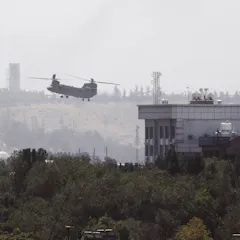
The Taliban ‘expect a complete handover of power.’ Experts explain who the Taliban are, what life is like under their rule and how the US may bear responsibility for Afghanistan’s collapse.
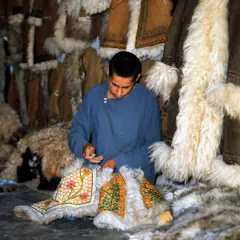
How an item of traditional Afghan dress became a staple of western “hippie” fashion from the 1960s right up to today.
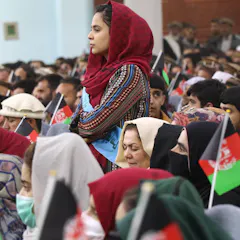
Burqas and male chaperones for women were features of the Taliban’s extremist rule of Afghanistan in the 1990s. Those policies are now back in some districts controlled by these Islamic militants.
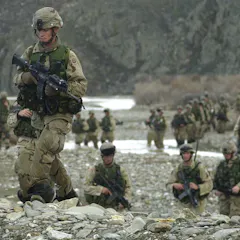
The Afghanistan War now has an end date: 9/11/21. Experts explain the history of US involvement in Afghanistan, the peace process to end that conflict and how the country’s women are uniquely at risk.
Top contributors
-

Associate Professor of International Relations and Women's, Gender, and Sexuality Studies, Stanford University
-
Professor of Anthropology, Emerita, Concordia University
-
Professor of Philosophy, Public Policy and Governance, University of Washington
-
Director, Center for Afghanistan Studies, University of Nebraska Omaha
-
Associate Professor of Political Science and Middle Eastern Studies, Indiana University
-
Professor of History, Vanderbilt University
-
Chair in Global Islamic Politics, Alfred Deakin Institute for Citizenship and Globalisation, Deakin University
-
PhD Candidate in International Relations, University of St Andrews
-
Assistant Professor of Media Studies and Production, Temple University
-
Assistant Professor of Global Studies, University of Virginia
-
Professor of Islamic History, UMass Dartmouth
-
Faculty Lecturer, Johns Hopkins University
-
Lecturer in Law and Socio-legal Studies, Royal Holloway, University of London
-
Associate Professor of Global Health, UCL
-
PhD Candidate, International Relations, Australian National University