
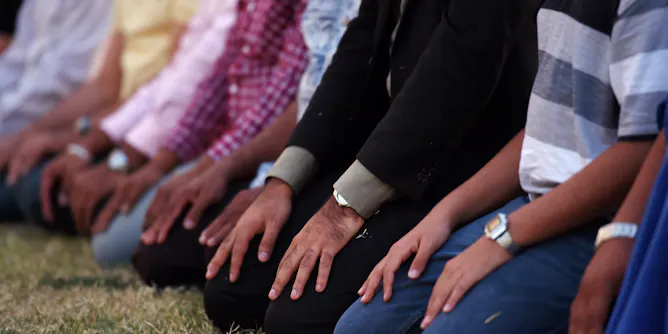
After 9/11, suspicion of Islam hardened into an assumption in Texas that Muslim identity itself signals danger, writes a scholar of constitutional law.
Articles on Sharia
Displaying 1 - 20 of 40 articles
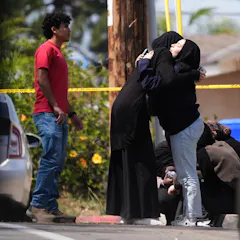
Negative portrayals of Muslims are not without consequence – they lead to increased discrimination, hate crimes and psychological harm, writes a scholar of Islamophobia.
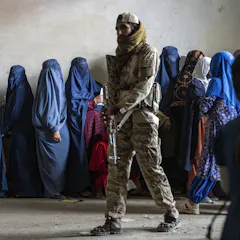
The Taliban have enacted laws that violate human rights since they returned to power. But a new edict goes further.

Omar al-Bashir fell in 2019, but his military successors have preserved much of the authoritarian infrastructure of his regime.
Al-Shabaab’s evolution over nearly two decades has been centred around three major goals.
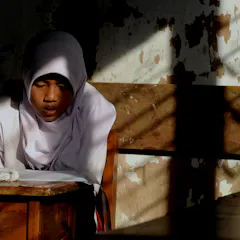
Indonesia can serve as an important model for the Taliban of how Muslim nations and faith-based organisations can play a big role in expanding girls’ education.
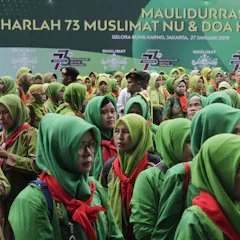
Nahdlatul Ulama is the world’s biggest Islamic organization, initiating a reform movement, which it is calling ‘Humanitarian Islam.’
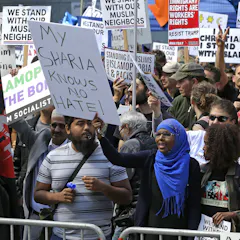
Day 6 of our Understanding Islam series. Sharia constitutes a broad set of rules that guide Muslims on how to lead an ethical life. The way Sharia is interpreted depends on who is using it and why.
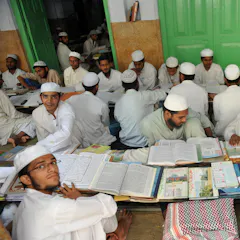
Deobandi Islam, the religious school that the Taliban draw their ideology from, was set up in 19th century India to educate Muslim youth.
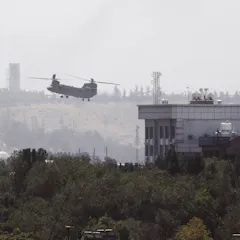
The Taliban ‘expect a complete handover of power.’ Experts explain who the Taliban are, what life is like under their rule and how the US may bear responsibility for Afghanistan’s collapse.
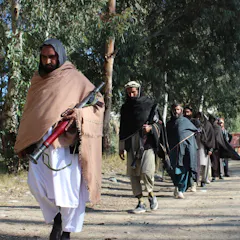
Two decades have passed since the US invasion of Afghanistan toppled the Taliban’s Islamic extremist regime. Despite efforts to update its image, the group still holds hard-line views.
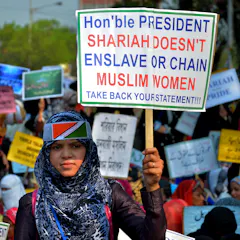
Sharia is often portrayed as being brutal and barbaric. However, in many parts of the world, women are using Sharia to stop oppressive practices.
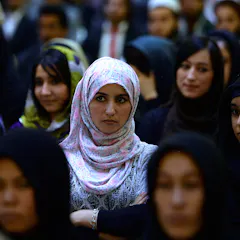
Afghan women interviewed about current talks between the government and the Taliban say, ‘There is no going back.’ Taliban fundamentalist rule in the 1990s forced women into poverty and subservience.
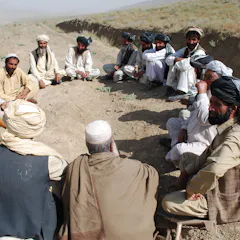
In countries where people access different justice providers, a hybrid model could pull them together and ensure better oversight and human rights.

Some Islamic nations, including Brunei, have harsh punishments under Sharia. In pre-modern times, Sharia was rarely used as criminal law, and standard of proof for any prosecution was very high.
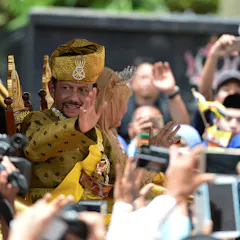
Brunei’s new anti-gay Sharia laws are the harshest in the world. Yet few countries have publicly condemned them, and an international boycott could backfire.
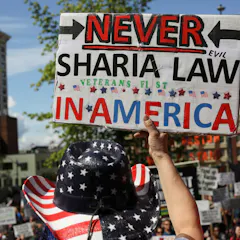
There is no inherent tension between Islam and democratic values. Like any use of religion in politics, the application of Sharia as law depends on who is using it – and why.
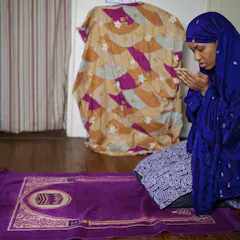
Trump recently tweeted about prayer rugs being left along the border. Many may not know the role and history of Muslim prayer rugs and why they are not likely to be left behind.
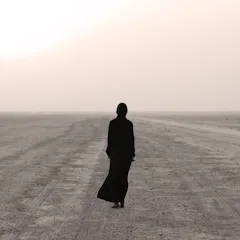
From Turkey to Saudi Arabia, Muslim women are battling for their rights - but religion is not at fault.
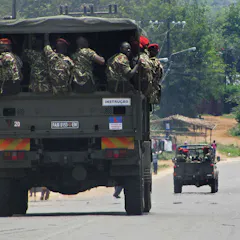
A guerrilla movement in Mozambique could upend the government’s plans for stability and prosperity.
Top contributors
-

Professor of Anthropology, Emerita, Concordia University
-
Professor of African history, Queen's University Belfast
-
Director, Center for Afghanistan Studies, University of Nebraska Omaha
-
Professor of Politics and Legal Studies, University of California, Santa Cruz
-
Associate Professor of International Relations and Women's, Gender, and Sexuality Studies, Stanford University
-
Professor, Department of Middle Eastern Studies, The University of Texas at Austin
-
Professor of Law, University of Warwick
-
PhD Candidate at the School of International, Political and Strategic Studies, Australian National University
-
Assistant Professor of Sociology, UMass Amherst
-
Professor of Emergency Medicine, University of Sheffield
-
Research Fellow, Indonesia Programme, S. Rajaratnam School of International Studies, Nanyang Technological University
-
Lecturer in Islamic Studies and Modernity, School of Humanities and Communication arts, Western Sydney University
-
Honorary Research Associate, Te Kunenga ki Pūrehuroa – Massey University
-
PhD candidate in the Department of Political Science, McMaster University
-
Research Fellow, Middle East Studies, Deakin University