
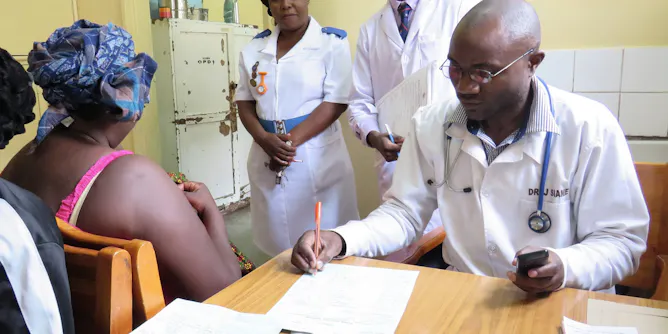
In 2019 Zambia introduced a National Health Insurance Scheme to help more people access healthcare and move the country closer to universal health coverage.
Articles on access to care
Displaying 1 - 20 of 22 articles

Mental health disorders such as ADHD are among the top five causes of disability in Canada, yet spending on mental-health care is often viewed as an economic drain.

To effectively address health disparities, research needs to be grounded in Canada’s realities, not simply adapted from models developed elsewhere.

Canada has quietly become an unexpected leader in global obesity care guidelines, but care at home — where one in four adults now lives with obesity — remains slow and uneven.

Women affected by poverty, racism, trauma, caregiving stress or unstable housing often lack primary health care. They wind up in walk-in clinics or emergency with late-stage serious illnesses.

The narratives embedded in disability policy influence everything from budget priorities to program eligibility and institutional cultures. They also shape how disabled people imagine their futures.

With limited resources and budget constraints, how can policymakers to improve primary care access: Paying doctors more, or increasing their numbers?

A newly created Primary Care Action Team has a lofty goal: to ensure all Ontarians have access to primary health care within five years. Here are five principals to consider to help achieve it.

Women in Alberta with a high school diploma or less have nearly double the rate of hysterectomies than those with a university degree, raising questions about social disparities in medical care.

Cancer diagnoses in adolescents in young adults are rising. These patients are not only navigating the challenges of a life-altering diagnosis, but also other challenges distinct to their life stage.

Research partnerships with the people and communities affected help to challenge health inequities, and support person-centred care in health systems.

In addition to asking health-care systems to prepare to end suffering of mental illness through Medical Assistance in Dying (MAID), we must ask policymakers to support better lives for families.

Improving the health of people who are trans and gender diverse means improving access to family doctors who are supportive, competent and confident in providing access to gender-affirming care.

Bill C-7 has created ethical tensions between MAID providers and palliative care, between transparency and patient privacy, and between offering a dignified death rather than a dignified life.

Rural Canadians face challenges accessing mental health services, and an exodus of psychologists from the public system may make matters worse.

Ambulance response times have not always met targets, but the alarming new pinch point in our health-care system is that there are no ambulances at all available to respond to calls.

The next step in HIV prevention — long-acting injectable pre-exposure prophylaxis (PrEP) — is not yet available in Canada, a year after its approval in the U.S.

Canada ranks 30th out of 38 wealthy nations in supporting the mental health and well-being of children. The need to invest in and prioritize mental health for children and young people is urgent.

For people to access medical assistance in dying (MAID) requires health-care professionals willing to provide the service. The reasons health-care providers choose not to participate are important.

The mental health impact of the pandemic has not affected everyone equally. An equitable approach to mental health promotion, prevention and treatment can help ensure equitable access to services.
Top contributors
-

PhD candidate in English and research assistant with the Trans Research and Navigation Saskatchewan (TRANS) project, University of Saskatchewan
-
Associate Professor, Department of Psychology & Faculty of Education, Mount Saint Vincent University
-
PhD Candidate in Public Health and Social Policy, University of Victoria
-
Associate Professor, Faculty of Education, Mount Saint Vincent University
-
Assistant Professor, Faculty of Nursing, University of Regina
-
Associate Professor, Faculty of Education, Mount Saint Vincent University
-
Associate Professor, School of Leadership, Royal Roads University
-
Clinical Associate Professor, Faculty of Medicine, University of British Columbia
-
Associate Professor, School of Psychology, Scientist, Children's Hospital of Eastern Ontario Research Institute, L’Université d’Ottawa/University of Ottawa
-
Dean and Professor of Social Work, University of Toronto
-
Professor, School of Health Sciences, University of Northern British Columbia; University of Victoria
-
Assistant Professor, Dalla Lana School of Public Health & Joint Centre for Bioethics, University of Toronto
-
Research Associate - Faculty of Health Sciences, University of Lethbridge
-
PhD Candidate, Reproductive and Developmental Sciences, University of British Columbia
-
Assistant Professor in Justice Studies, Royal Roads University